

Holub's Golden-Weaver vs Southern Brown-throated Weaver
Ploceus xanthops contro Ploceus xanthopterus
Fai un quiz con Holub's Golden-Weaver e Southern Brown-throated Weaver
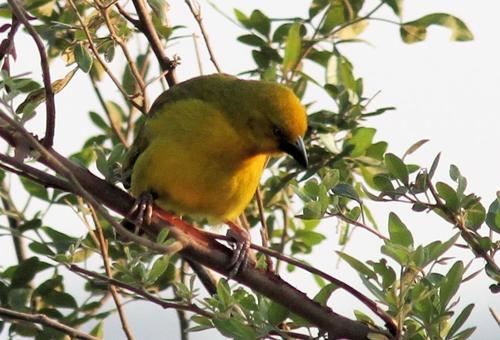 Holub's Golden-Weaver
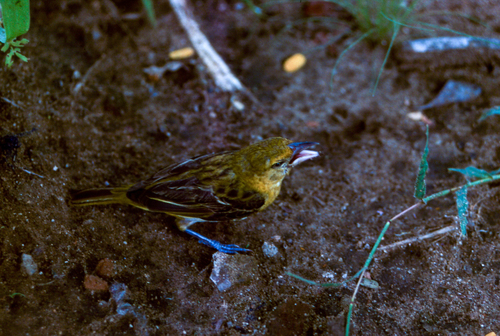 Southern Brown-throated Weaver
In breve
Il segno di campo più affidabile tra Holub's Golden-Weaver e Southern Brown-throated Weaver è la dimensione complessiva: Holub's è quasi due volte più pesante, apparendo più robusto sul campo. Il maschio adulto di Holub's Golden-Weaver mostra una testa e un corpo giallo brillante con un distintivo lavaggio arancione sotto il mento e sul petto superiore, mentre il Southern Brown-throated Weaver manca di questo arancione e ha un giallo complessivamente più opaco. Le femmine e gli immaturi di Holub's sono molto più opachi, ma mostrano comunque più giallo sul viso rispetto al Southern Brown-throated. Entrambe le specie hanno ali superiori marroni e parti inferiori giallastre, ma Holub's è generalmente più luminoso e più saturo. Gli uccelli giovani e immaturi possono essere confusi, ma Holub's tende a mostrare più giallo sul mento e sulla coda, anche quando altrimenti sono oliva. Il colore del becco e degli occhi aiuta anche: gli adulti di Holub's hanno un becco nero e occhi giallo pallido, mentre i dettagli del Southern Brown-throated non sono ben descritti ma non sono notati come particolarmente pallidi.
Consigli di identificazione
- La dimensione è il controllo di campo più veloce: Holub's Golden-Weaver è molto più grande e robusto del Southern Brown-throated Weaver. Se vedi un weaver robusto e massiccio, specialmente tra le specie più piccole, sospetta Holub's.
- Piumaggio del maschio adulto: I maschi di Holub's hanno una testa completamente gialla e un corpo giallo-verde brillante con un distintivo lavaggio arancione sotto il mento e sul petto superiore. I maschi di Southern Brown-throated sono di un giallo più opaco e mancano di arancione sulla gola o sul petto.
- Colore della testa delle femmine e degli immaturi: La femmina di Holub's mostra giallo sulla fronte, mentre le femmine di Southern Brown-throated sono generalmente più opache e mancano di questa caratteristica. L'immaturo di Holub's ha giallo sul mento e sulla coda, anche quando altrimenti è oliva, un segno utile per separarlo dal giovanile uniformemente più opaco di Southern Brown-throated.
- Colore degli occhi negli adulti: Gli adulti di Holub's hanno occhi giallo pallido, che possono risaltare in buona luce. Il colore degli occhi del Southern Brown-throated non è notato come pallido, quindi un weaver con occhi particolarmente pallidi è probabilmente Holub's.
- Colore del becco: L'adulto di Holub's ha un becco nero, mentre gli immaturi hanno un becco marrone pallido. Il colore del becco del Southern Brown-throated non è descritto come distintivo, ma un becco marrone pallido in un uccello oliva opaco indica un giovane Holub's.
- Ali superiori e viste in volo: Entrambe le specie hanno ali superiori marroni opache, ma Holub's mostra giallo sulla parte inferiore dell'ala, che può essere visibile in volo o quando le ali sono spiegate. Southern Brown-throated è generalmente più opaco e manca del giallo esteso.
- Macchia arancione sulla gola: Solo i maschi adulti di Holub's mostrano un chiaro lavaggio arancione sotto il mento e sul petto superiore. L'assenza di arancione in quest'area suggerisce Southern Brown-throated.
- Confusione tra giovanili/immaturi: Se vedi un weaver oliva opaco con giallo sul mento e sulla coda, è probabile che sia un giovane Holub's. I giovanili di Southern Brown-throated sono più uniformemente opachi e mancano di questi accenti gialli.
- Colore delle gambe: Entrambe le specie hanno gambe rosa, quindi questo non è utile per la separazione.
- Aspetto da posato vs. in volo: Holub's appare più robusto e con un becco pesante quando è posato, mentre Southern Brown-throated è più snello e delicato.
- Contesto dell'habitat: Sebbene entrambe si trovino in habitat umidi simili, Holub's ha un'area di distribuzione più ampia e può essere trovato in una varietà più ampia di tipi di habitat umidi. Nel sud dell'Africa, entrambe possono verificarsi insieme, quindi non fare affidamento solo sull'habitat.
- Dimensione del gruppo e comportamento: Entrambe le specie possono essere coloniali e costruire nidi sopra l'acqua, quindi il comportamento di nidificazione non è un separatore affidabile.
- Vocalizzazione: Non sono descritte differenze distintive nelle fonti, quindi non fare affidamento su canto o richiamo.
- Variazione stagionale: I maschi in riproduzione di Holub's sono al loro massimo splendore da settembre ad aprile (varia a seconda della regione), quindi un maschio molto giallo e arancione in questo periodo è probabilmente Holub's. Gli uccelli non in riproduzione e le femmine richiedono maggiore attenzione alla dimensione e ai segni di piumaggio sottili.
- Trappole: Gli immaturi di Holub's possono essere scambiati per Southern Brown-throated a causa del loro colore opaco, ma cerca giallo sul mento e sulla coda, e controlla per occhi giallo pallido negli uccelli più anziani.
Taglia
Holub's Golden-Weaver è sostanzialmente più grande e pesante del Southern Brown-throated Weaver. Con una massa corporea di circa 42,5 g contro 22,15 g, Holub's appare più robusto e massiccio sia posato che in volo. Questa differenza è spesso evidente anche a distanza, specialmente se entrambe le specie vengono viste insieme o con weavers familiari per scala. La dimensione maggiore di Holub's conferisce anche un'impressione più solida e meno delicata, mentre Southern Brown-throated è visibilmente più piccolo e leggero.
Piumaggio
L'immaturo di Holub's Golden-Weaver è oliva opaco sopra ma mostra già giallo sulla coda, sul mento e sulla gola, con un occhio marrone scuro e un becco marrone pallido. Questo contrasta con l'aspetto generalmente più opaco dei giovanili di Southern Brown-throated Weaver, che mancano del distintivo mento e coda gialli. Il maschio adulto di Holub's è giallo-verde brillante con una testa completamente gialla e un chiaro lavaggio arancione sotto il mento e sul petto superiore; le femmine sono più opache ma hanno giallo sulla fronte. Entrambi i sessi hanno ali superiori marroni opache con giallo sulla parte inferiore. Gli adulti di Southern Brown-throated Weaver sono descritti come di un giallo più opaco in generale e mancano della macchia arancione sulla gola. Entrambe le specie hanno becchi neri da adulti, ma Holub's si distingue per i suoi occhi giallo pallido, mentre il colore degli occhi di Southern Brown-throated non è notato come distintivo. In volo, il giallo in Holub's è più esteso e luminoso, specialmente nei maschi, mentre Southern Brown-throated rimane più sobrio.
Comportamento
Entrambe le specie sono nidi coloniali e possono essere viste in piccoli gruppi, specialmente vicino all'acqua. I maschi di Holub's sono noti per il loro comportamento di display, posandosi accanto alle femmine e eseguendo un display di canto e allungamento. Entrambe le specie costruiscono nidi in canne o cespugli sopra l'acqua, ma Holub's è noto per costruire nidi a 2-2,5 metri di altezza. Entrambi si nutrono in habitat simili e possono essere visti foraggiando in branchi al di fuori della stagione di riproduzione. Non sono notate differenze comportamentali maggiori che siano diagnostiche sul campo.
Habitat
Entrambe le specie si trovano nel sud dell'Africa e preferiscono i margini delle zone umide, le canne e la vegetazione lungo le acque. Holub's Golden-Weaver ha un'area di distribuzione più ampia, estendendosi dal Gabon e Uganda a sud fino all'est del Sudafrica, mentre Southern Brown-throated Weaver è più ristretto al sud dell'Africa. Nelle aree di sovrapposizione, entrambe possono essere presenti in habitat simili, ma Holub's è più probabile che si trovi in una gamma più ampia di tipi di habitat umidi. L'habitat da solo non è diagnostico dove le aree di distribuzione si sovrappongono.
Holub's Golden-Weaver · Southern Brown-throated Weaver · I miei uccelli difficili