

holub's golden-weaver vs southern brown-throated weaver
Ploceus xanthops versus Ploceus xanthopterus
Jogue um quiz com holub's golden-weaver e southern brown-throated weaver
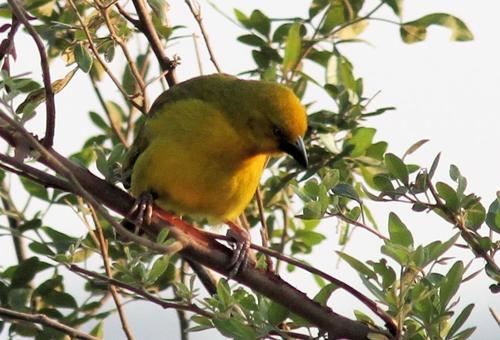 holub's golden-weaver
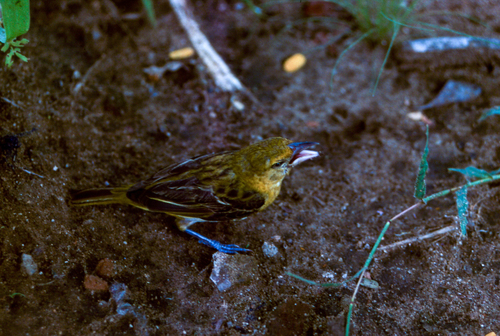 southern brown-throated weaver
Em resumo
A marca de campo mais confiável entre holub's golden-weaver e southern brown-throated weaver é o tamanho geral: holub's é quase duas vezes mais pesado, parecendo mais robusto no campo. O macho adulto de holub's golden-weaver exibe uma cabeça e corpo amarelo brilhante com uma distinta lavagem laranja sob o queixo e no peito superior, enquanto o southern brown-throated weaver não possui essa cor laranja e tem um amarelo mais apagado no geral. As fêmeas e os imaturos de holub's são muito mais apagados, mas ainda mostram mais amarelo no rosto do que o southern brown-throated. Ambas as espécies têm asas superiores marrons e partes inferiores amareladas, mas holub's é geralmente mais brilhante e mais saturado. Pássaros juvenis e imaturos podem ser confusos, mas holub's tende a mostrar mais amarelo no queixo e na cauda, mesmo quando de outra forma são oliva. A cor do bico e dos olhos também ajuda: os adultos de holub's têm um bico preto e olhos amarelos pálidos, enquanto os detalhes do southern brown-throated são menos bem descritos, mas não são notados como olhos strikingly pale.
Dicas de identificação
- O tamanho é a verificação de campo mais rápida: holub's golden-weaver é muito maior e mais robusto que o southern brown-throated weaver. Se você ver um tecelão robusto e corpulento, especialmente entre espécies menores, suspeite de holub's.
- Plumagem do macho adulto: Os machos de holub's têm uma cabeça totalmente amarela e um corpo amarelo-esverdeado brilhante com uma distinta lavagem laranja sob o queixo e no peito superior. Os machos de southern brown-throated são amarelos mais apagados e não possuem laranja na garganta ou no peito.
- Cor da cabeça de fêmeas e imaturos: A fêmea de holub's mostra amarelo na testa, enquanto as fêmeas de southern brown-throated são geralmente mais apagadas e não possuem essa característica. O imaturo de holub's tem amarelo no queixo e na cauda, mesmo quando de outra forma é oliva, uma marca útil para separá-lo do juvenil uniformemente mais apagado de southern brown-throated.
- Cor dos olhos em adultos: Os adultos de holub's têm olhos amarelos pálidos, que podem se destacar em boa luz. A cor dos olhos do southern brown-throated não é notada como pálida, então um tecelão com olhos strikingly pale é provavelmente holub's.
- Cor do bico: O adulto de holub's tem um bico preto, enquanto os juvenis têm um bico marrom pálido. A cor do bico do southern brown-throated não é descrita como distintiva, mas um bico marrom pálido em um pássaro oliva apagado aponta para jovens holub's.
- Visões das asas superiores e em voo: Ambas as espécies têm asas superiores marrons apagadas, mas holub's mostra amarelo na parte inferior da asa, que pode ser visível em voo ou quando as asas estão abertas. Southern brown-throated é geralmente mais apagado e não possui o amarelo extenso.
- Mancha laranja na garganta: Apenas os machos adultos de holub's mostram uma clara lavagem laranja sob o queixo e no peito superior. A ausência de laranja nessa área sugere southern brown-throated.
- Confusão juvenil/imaturo: Se você ver um tecelão oliva apagado com amarelo no queixo e na cauda, é provavelmente um jovem holub's. Os juvenis de southern brown-throated são mais uniformemente apagados e não possuem esses destaques amarelos.
- Cor das pernas: Ambas as espécies têm pernas rosas, então isso não é útil para separação.
- Jizz empoleirado vs. em voo: Holub's parece mais robusto e com bico pesado quando empoleirado, enquanto southern brown-throated é mais esguio e delicado.
- Contexto do habitat: Embora ambas ocorram em habitats úmidos semelhantes, holub's tem uma faixa mais ampla e pode ser encontrado em uma variedade maior de tipos de habitat úmido. No sul da África, ambas podem ocorrer juntas, então não confie apenas no habitat.
- Tamanho do grupo e comportamento: Ambas as espécies podem ser coloniais e construir ninhos sobre a água, então o comportamento de nidificação não é um separador confiável.
- Vocalização: Nenhuma diferença distintiva é descrita nas fontes, então não confie em canções ou chamadas.
- Variação sazonal: Os machos reprodutores de holub's estão em seu brilho máximo de setembro a abril (varia por região), então um macho muito amarelo e laranja nesse período é provavelmente holub's. Pássaros não reprodutores e fêmeas requerem atenção mais próxima ao tamanho e marcas sutis da plumagem.
- Armadilhas: O imaturo de holub's pode ser confundido com o southern brown-throated devido à sua cor apagada, mas procure por amarelo no queixo e na cauda, e verifique se há olhos amarelos pálidos em pássaros mais velhos.
Tamanho
Holub's golden-weaver é substancialmente maior e mais pesado que o southern brown-throated weaver. Com uma massa corporal de cerca de 42,5g contra 22,15g, holub's parece mais robusto e corpulento tanto empoleirado quanto em voo. Essa diferença é frequentemente aparente mesmo à distância, especialmente se ambas as espécies forem vistas juntas ou com tecelões familiares para escala. O tamanho maior de holub's também lhe dá uma impressão mais sólida, menos delicada, enquanto southern brown-throated é visivelmente menor e mais leve.
Plumagem
O juvenil de holub's golden-weaver é oliva apagado por cima, mas já mostra amarelo na cauda, queixo e garganta, com um olho marrom escuro e bico marrom pálido. Isso contrasta com a aparência geralmente mais apagada dos juvenis de southern brown-throated weaver, que não possuem o distinto queixo e cauda amarelos. O macho adulto de holub's é amarelo-esverdeado brilhante com uma cabeça totalmente amarela e uma clara lavagem laranja sob o queixo e no peito superior; as fêmeas são mais apagadas, mas têm amarelo na testa. Ambos os sexos têm asas superiores marrons apagadas com amarelo na parte inferior. Os adultos de southern brown-throated weaver são descritos como amarelos mais apagados no geral e não possuem a mancha laranja na garganta. Ambas as espécies têm bicos pretos como adultos, mas holub's se destaca com seus olhos amarelos pálidos, enquanto a cor dos olhos do southern brown-throated não é notada como distintiva. Em voo, o amarelo em holub's é mais extenso e brilhante, especialmente nos machos, enquanto southern brown-throated permanece mais sutil.
Comportamento
Ambas as espécies são nidificadoras coloniais e podem ser vistas em pequenos grupos, especialmente ao redor da água. Os machos de holub's são conhecidos por seu comportamento de exibição, empoleirando-se ao lado das fêmeas e realizando uma exibição de canto e estiramento. Ambas as espécies constroem ninhos em juncos ou arbustos sobre a água, mas holub's é notado por construir ninhos a 2–2,5 metros de altura. Ambas se alimentam em habitats semelhantes e podem ser vistas forrageando em bandos fora da temporada de reprodução. Nenhuma diferença comportamental significativa é notada que seja diagnóstica em campo.
Habitat
Ambas as espécies ocorrem no sul da África e favorecem as bordas de áreas úmidas, juncos e vegetação à beira da água. Holub's golden-weaver tem uma faixa mais ampla, estendendo-se de Gabão e Uganda ao sul até o leste da África do Sul, enquanto southern brown-throated weaver é mais restrito ao sul da África. Em áreas de sobreposição, ambas podem estar presentes em habitats semelhantes, mas holub's é mais provável de ser encontrado em uma variedade maior de tipos de habitat úmido. O habitat sozinho não é diagnóstico onde as faixas se sobrepõem.
holub's golden-weaver · southern brown-throated weaver · Minhas aves difíceis