

Motmot

オオコガネハタオリ 対 チャノドハタオリ

Ploceus xanthops 対 Ploceus xanthopterus

オオコガネハタオリとチャノドハタオリのクイズ
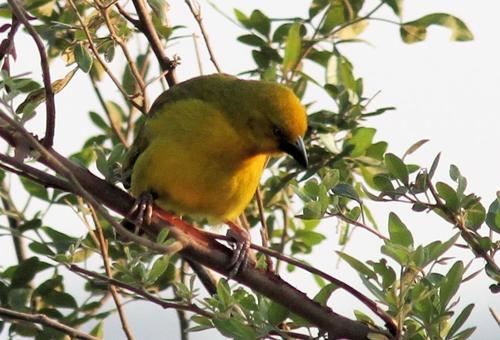
オオコガネハタオリ (Ploceus xanthops) オオコガネハタオリ
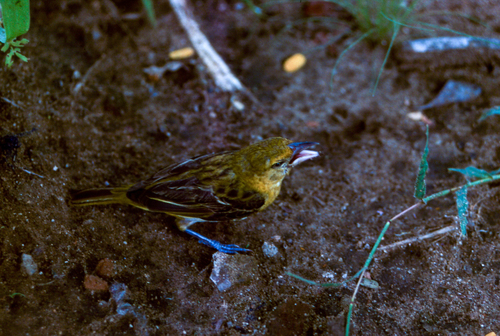
チャノドハタオリ (Ploceus xanthopterus) チャノドハタオリ

メディア

読み込み中…

要点

ホルブのオオコガネハタオリとチャノドハタオリの最も信頼できるフィールドマークは全体のサイズです:ホルブの方がほぼ2倍の重さで、フィールドではより大きく見えます。成鳥のオスのホルブのオオコガネハタオリは、明るい黄色の頭と体を持ち、顎の下と上胸部に明確なオレンジの洗いが見られますが、チャノドハタオリはこのオレンジがなく、全体的に鈍い黄色です。ホルブの雌と幼鳥ははるかに鈍いですが、チャノドハタオリよりも顔により多くの黄色を示します。両種は茶色の上翼と黄色がかった下部を持っていますが、ホルブの方が一般的に明るく、より飽和しています。幼鳥と未成熟の鳥は混乱を招くことがありますが、ホルブは顎と尾により多くの黄色を示す傾向があります。くちばしと目の色も役立ちます:ホルブの成鳥は黒いくちばしと淡い黄色の目を持ち、チャノドハタオリの詳細はあまり記述されていませんが、際立って淡い目とは記載されていません。

識別のコツ

  1. サイズは最も迅速なフィールドチェック:ホルブのオオコガネハタオリはチャノドハタオリよりもはるかに大きく、がっしりとしています。特に小型種の中で頑丈で重いハタオリを見た場合は、ホルブを疑ってください。
  2. 成鳥のオスの羽色:ホルブのオスは、顎の下と上胸部に明確なオレンジの洗いがある、完全な黄色の頭と明るい緑がかった黄色の体を持っています。チャノドハタオリのオスは鈍い黄色で、喉や胸にオレンジがありません。
  3. 雌と未成熟の頭の色:ホルブの雌は額に黄色を示しますが、チャノドハタオリの雌は一般的に鈍く、この特徴がありません。未成熟のホルブは、他がオリーブ色であっても顎と尾に黄色を持っており、均一に鈍いチャノドハタオリの幼鳥と区別するための有用なマークです。
  4. 成鳥の目の色:ホルブの成鳥は淡い黄色の目を持ち、良い光の中で際立つことがあります。チャノドハタオリの目の色は淡いとは記載されていないので、際立って淡い目のハタオリはおそらくホルブです。
  5. くちばしの色:成鳥のホルブは黒いくちばしを持ち、幼鳥は淡い茶色のくちばしを持っています。チャノドハタオリのくちばしの色は特徴的とは記載されていませんが、鈍いオリーブ色の鳥に淡い茶色のくちばしがある場合は若いホルブを指します。
  6. 上翼と飛行時の視点:両種は鈍い茶色の上翼を持っていますが、ホルブは下翼部分に黄色を示し、飛行中や翼を広げた時に見えることがあります。チャノドハタオリは一般的に鈍く、広範な黄色がありません。
  7. オレンジの喉の斑点:ホルブの成鳥のオスだけが顎の下と上胸部に明確なオレンジの洗いを示します。この領域にオレンジがない場合はチャノドハタオリを示唆します。
  8. 幼鳥/未成熟の混乱:鈍いオリーブ色のハタオリで顎と尾に黄色がある場合は、若いホルブの可能性が高いです。チャノドハタオリの幼鳥はより均一に鈍く、これらの黄色のハイライトがありません。
  9. 足の色:両種はピンクの足を持っているため、これでは区別できません。
  10. 止まっている時と飛んでいる時の印象:ホルブは止まっている時により頑丈で重いくちばしに見え、チャノドハタオリはよりスリムで繊細です。
  11. 生息地の文脈:両種は似たような湿地生息地に生息しますが、ホルブはより広い範囲を持ち、より多様な湿地タイプで見られる可能性があります。南アフリカでは、両種が一緒に見られることがあるため、生息地だけに頼らないでください。
  12. 群れのサイズと行動:両種はコロニーを形成し、水上に巣を作ることがあるため、巣作りの行動は信頼できる区別要因ではありません。
  13. 鳴き声:ソースには特に異なる違いが記述されていないため、歌や鳴き声に頼らないでください。
  14. 季節的変動:ホルブの繁殖期のオスは、9月から4月まで(地域によって異なる)最も明るく、非常に明るい黄色とオレンジのオスはこの期間中にホルブの可能性が高いです。非繁殖の鳥や雌は、サイズと微妙な羽色のマークにより注意が必要です。
  15. 落とし穴:未成熟のホルブは鈍い色のためチャノドハタオリと間違えられることがありますが、顎と尾に黄色があるかどうかを確認し、古い鳥の淡い黄色の目をチェックしてください。

大きさ

ホルブのオオコガネハタオリはチャノドハタオリよりもかなり大きく、重いです。体重は約42.5g対22.15gで、ホルブは止まっている時も飛んでいる時もよりがっしりとして見えます。この違いは、特に両種が一緒に見られたり、スケールのために馴染みのあるハタオリと一緒に見られたりする場合、距離があってもしばしば明らかです。ホルブの大きなサイズは、より堅固で繊細でない印象を与え、チャノドハタオリは明らかに小さく、軽量です。

羽色

幼鳥のホルブのオオコガネハタオリは上面が鈍いオリーブ色ですが、すでに尾、顎、喉に黄色を示し、暗い茶色の目と淡い茶色のくちばしを持っています。これは、明確な黄色の顎と尾が欠けているチャノドハタオリの幼鳥の一般的に鈍い外観と対照的です。成鳥のオスのホルブは明るい緑がかった黄色で、完全な黄色の頭と顎の下と上胸部に明確なオレンジの洗いを持っています。雌は鈍いですが、額に黄色があります。両性ともに鈍い茶色の上翼を持ち、下部に黄色があります。チャノドハタオリの成鳥は全体的に鈍い黄色と記述され、オレンジの喉の斑点が欠けています。両種は成鳥として黒いくちばしを持っていますが、ホルブは淡い黄色の目で際立ち、チャノドハタオリの目の色は特徴的とは記載されていません。飛行中、ホルブの黄色はより広範で明るく、特にオスでは、チャノドハタオリはより控えめです。

行動

両種はコロニーを形成して巣を作り、水の近くで小さな群れで見られることがあります。ホルブのオスは、雌の隣に止まり、歌を伸ばすディスプレイを行うことで知られています。両種は水上の葦や茂みの中に巣を作りますが、ホルブは2〜2.5メートルの高さに巣を作ることで知られています。両種は似たような生息地で餌を探し、繁殖期以外に群れで採餌しているのが見られることがあります。フィールドで診断的な主要な行動の違いは記載されていません。

生息環境

両種は南アフリカに生息し、湿地の縁、葦、水辺の植生を好みます。ホルブのオオコガネハタオリは、ガボンとウガンダから南アフリカ東部まで広い範囲を持っていますが、チャノドハタオリは南アフリカにより制限されています。重複する地域では、両種が似たような生息地に存在することがありますが、ホルブはより多様な湿地タイプで見られる可能性が高いです。生息地だけでは重複する範囲では診断的ではありません。

より良い説明を送る

比較と同じ項目を使ってください。文章はすぐに公開されます。

The most reliable field mark between Holub's Golden-Weaver and Southern Brown-throated Weaver is overall size: Holub's is nearly twice as heavy, appearing bulkier in the field. Adult male Holub's Golden-Weaver shows a bright yellow head and body with a distinct orange wash under the chin and onto the upper breast, while the Southern Brown-throated Weaver lacks this orange and has a duller yellow overall. Females and immatures of Holub's are much duller, but still show more yellow on the face than the Southern Brown-throated. Both species have brown upperwings and yellowish underparts, but Holub's is generally brighter and more saturated. Juvenile and immature birds can be confusing, but Holub's tends to show more yellow on the chin and tail, even when otherwise olive. Bill and eye color also help: Holub's adults have a black bill and pale yellow eye, while Southern Brown-throated's details are less well described but are not noted as strikingly pale-eyed.

  1. Size is the quickest field check: Holub's Golden-Weaver is much larger and bulkier than Southern Brown-throated Weaver. If you see a robust, heavy-set weaver, especially among smaller species, suspect Holub's.
  2. Adult male plumage: Holub's males have a full yellow head and bright greenish-yellow body with a distinct orange wash under the chin and upper breast. Southern Brown-throated males are duller yellow and lack any orange on the throat or breast.
  3. Female and immature head color: Female Holub's shows yellow on the forehead, while Southern Brown-throated females are generally duller and lack this feature. Immature Holub's has yellow on the chin and tail, even when otherwise olive, a useful mark for separating from the uniformly duller Southern Brown-throated juvenile.
  4. Eye color in adults: Holub's adults have pale yellow eyes, which can stand out in good light. Southern Brown-throated's eye color is not noted as pale, so a strikingly pale-eyed weaver is likely Holub's.
  5. Bill color: Adult Holub's has a black bill, while juveniles have a pale brown bill. Southern Brown-throated's bill color is not described as distinctive, but a pale brown bill in a dull olive bird points to young Holub's.
  6. Upperwing and flight views: Both species have dull brown upperwings, but Holub's shows yellow on the lower wing portion, which can be visible in flight or when wings are spread. Southern Brown-throated is generally duller and lacks the extensive yellow.
  7. Orange throat patch: Only Holub's adult males show a clear orange wash under the chin and onto the upper breast. Absence of orange in this area suggests Southern Brown-throated.
  8. Juvenile/immature confusion: If you see a dull olive weaver with yellow on the chin and tail, it's likely a young Holub's. Southern Brown-throated juveniles are more uniformly dull and lack these yellow highlights.
  9. Leg color: Both species have pink legs, so this is not helpful for separation.
  10. Perched vs. in-flight jizz: Holub's appears more robust and heavy-billed when perched, while Southern Brown-throated is slimmer and more delicate.
  11. Habitat context: While both occur in similar wetland habitats, Holub's has a broader range and may be found in a wider variety of wetland types. In southern Africa, both may occur together, so don't rely on habitat alone.
  12. Group size and behavior: Both species can be colonial and build nests over water, so nesting behavior is not a reliable separator.
  13. Vocalization: No distinctive differences are described in the sources, so do not rely on song or call.
  14. Seasonal variation: Holub's breeding males are at their brightest from September to April (varies by region), so a very bright yellow and orange male in this period is likely Holub's. Non-breeding birds and females require closer attention to size and subtle plumage marks.
  15. Pitfalls: Immature Holub's can be mistaken for Southern Brown-throated due to their dull color, but look for yellow on the chin and tail, and check for pale yellow eyes in older birds.

Holub's Golden-Weaver is substantially larger and heavier than the Southern Brown-throated Weaver. With a body mass of about 42.5g versus 22.15g, Holub's appears bulkier and more robust both perched and in flight. This difference is often apparent even at a distance, especially if both species are seen together or with familiar weavers for scale. The larger size of Holub's also gives it a more solid, less delicate impression, while Southern Brown-throated is noticeably smaller and lighter-built.

Juvenile Holub's Golden-Weaver is dull olive above but already shows yellow on the tail, chin, and throat, with a dark brown eye and pale brown bill. This contrasts with the generally duller appearance of Southern Brown-throated Weaver juveniles, which lack the distinct yellow chin and tail. Adult male Holub's is bright greenish-yellow with a full yellow head and a clear orange wash under the chin and upper breast; females are duller but have yellow on the forehead. Both sexes have dull brown upperwings with yellow on the lower portion. Southern Brown-throated Weaver adults are described as duller yellow overall and lack the orange throat patch. Both species have black bills as adults, but Holub's stands out with its pale yellow eyes, while Southern Brown-throated's eye color is not noted as distinctive. In flight, the yellow in Holub's is more extensive and brighter, especially in males, while Southern Brown-throated remains more subdued.

Both species are colonial nesters and may be seen in small groups, especially around water. Holub's males are known for their display behavior, perching beside females and performing a song-stretch display. Both species build nests in reeds or bushes over water, but Holub's is noted for building nests 2–2.5 meters up. Both feed in similar habitats and may be seen foraging in flocks outside the breeding season. No major behavioral differences are noted that are diagnostic in the field.

Both species occur in southern Africa and favor wetland edges, reeds, and waterside vegetation. Holub's Golden-Weaver has a broader range, extending from Gabon and Uganda south to eastern South Africa, while Southern Brown-throated Weaver is more restricted to southern Africa. In areas of overlap, both may be present in similar habitats, but Holub's is more likely in a wider range of wetland types. Habitat alone is not diagnostic where ranges overlap.

変更を破棄しますか?

保存していない編集があります。今離れると失われます。

オオコガネハタオリ · チャノドハタオリ · 苦手な鳥