

Highland Elaenia vs Small-billed Elaenia
Elaenia obscura versus Elaenia parvirostris
Play a quiz with Highland Elaenia and Small-billed Elaenia
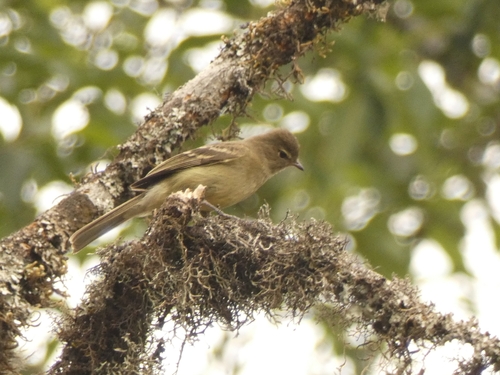 Highland Elaenia
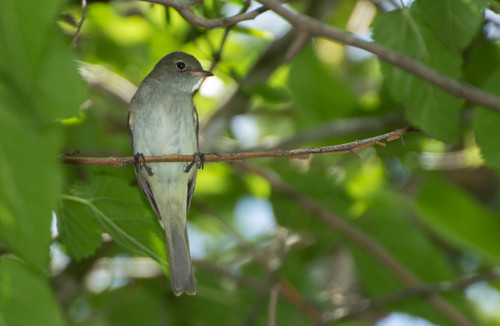 Small-billed Elaenia
In short
The most reliable way to separate Highland Elaenia from Small-billed Elaenia is by their overall size and wing pattern: Highland Elaenia is notably larger and heavier, with only two yellowish wingbars, while Small-billed Elaenia is smaller, more delicate, and shows three whitish wingbars. Bill size and head color also help: Small-billed Elaenia has a distinctly smaller, finer bill and a brighter olive-green crown with a partial white median stripe, while Highland Elaenia’s bill is stubbier and its head is a darker grayish olive without a crest. Juvenile Highland Elaenia are darker and rufous-toned above, which can be a trap for the unwary. Both species lack a crest, but their subtle differences in wing pattern, bill, and head color are key for field separation, especially when seen perched or in good light.
Identification tips
- Size and Structure: Highland Elaenia is significantly larger and bulkier than Small-billed Elaenia. Use this when both are seen together or with known size references.
- Bill Size: Small-billed Elaenia has a distinctly smaller, finer, and more delicate bill, with a slightly curved upper mandible. Highland Elaenia’s bill is stubbier and heavier. This is a key mark when the head is visible in profile.
- Wingbars: Highland Elaenia shows only two yellowish wingbars (formed by the tips of the wing coverts), while Small-billed Elaenia has three whitish wingbars. Count the bars carefully in good light, as this is one of the most reliable field marks.
- Head Color and Pattern: Small-billed Elaenia has a bright olive-green crown with a partially visible white median stripe (not always obvious), and a thin but distinct white eyering. Highland Elaenia’s head is darker grayish olive, with lighter cheeks and a thinner, less distinct whitish eyering.
- Upperparts: Highland Elaenia is dark grayish olive above, while Small-billed Elaenia is much brighter olive-green. This difference is most obvious in good light and on fresh-plumaged birds.
- Tail: Highland Elaenia’s tail is dusky with white tips on fresh feathers, while Small-billed Elaenia’s tail is dusky without white tips. This mark is subtle and may be lost on worn birds.
- Underparts: Highland Elaenia has a pale yellow chin, throat, belly, and undertail, with dull olive breast and flanks. Small-billed Elaenia has a gray throat and breast (sometimes with an olive wash), and whitish belly and undertail. The contrast between the gray breast and whitish belly is more marked in Small-billed Elaenia.
- Juvenile Plumage: Juvenile Highland Elaenia is dark rufescent brown above and dirty grayish white below, which is much duller and darker than any Small-billed Elaenia. If you see a rufous-toned, dull young elaenia, Highland is more likely.
- Crest: Neither species has a crest, so this is not helpful for separation, but it rules out other Elaenia species with obvious crests.
- Habitat and Range: If you are in highland forests of the Andes in Argentina, Bolivia, Ecuador, or Peru, Highland Elaenia is more likely. In lowland or open, disturbed habitats across much of South America, especially outside the Andes, Small-billed Elaenia is more probable.
- Behavior: Small-billed Elaenia is more likely to join mixed-species flocks and forage in small groups, sometimes hovering to glean prey. Highland Elaenia is less often described in flocks.
- Flight Views: In flight, look for the number and color of wingbars and the overall size. Highland Elaenia will look larger and show two yellowish bars; Small-billed Elaenia will look smaller and show three whitish bars.
- Bill Base Color: Both species have a pinkish base to the mandible, but this is not a strong separator.
- Sex and Season: Both species are sexually monomorphic, so sex is not a useful field mark. Seasonal variation is not described as significant for either species.
- Pitfalls: Beware of worn plumage (loss of tail tips or faded wingbars) and poor light, which can obscure key marks. Juvenile Highland Elaenia can be especially confusing if you expect a brighter bird.
Size
Highland Elaenia is the larger of the two, with a body mass around 23.9g and a length of 16–19 cm. Small-billed Elaenia is smaller and more delicate, measuring 13–15 cm in length (no direct mass data, but consistently described as small and slight). In the field, Highland Elaenia will look bulkier, with a heavier body and proportionally stubbier bill, while Small-billed Elaenia appears more petite and slim overall.
Plumage
- Juveniles: Juvenile Highland Elaenia are dark rufescent brown above with dirty grayish white below, lacking the bright olive tones of adult Small-billed Elaenia. Juvenile Small-billed Elaenia are not specifically described, but adults are already much brighter and greener above.
- Adults: Highland Elaenia shows a dark grayish olive head and upperparts, with lighter cheeks and a thin whitish eyering. Its wings are dusky with pale edges and two yellowish wingbars. The tail is dusky with white tips (on fresh feathers). Underparts are dull olive on the breast/flanks, pale yellow on the belly and undertail. Small-billed Elaenia has a bright olive-green crown (with a partial white median stripe), bright olive-green upperparts, and a thin but distinct white eyering. The wings are dusky with three whitish wingbars, and the flight feathers have narrow whitish edges. Its throat and breast are gray (sometimes with olive wash), and the belly/undertail are whitish. The tail is dusky, lacking the white tips of fresh Highland Elaenia. Bill color is similar in both, but Small-billed Elaenia's is notably smaller and more delicate.
Behaviour
Both species are typical elaenias in their behavior, foraging for insects and fruit, often in the midstory or canopy. Small-billed Elaenia is noted for joining mixed-species flocks and sometimes foraging in small groups of its own kind, and it can hover briefly to glean prey. Highland Elaenia’s foraging behavior is less specifically described but is likely similar. Neither species is particularly conspicuous in flight style, but Small-billed Elaenia may appear more active and restless due to its smaller size and lighter build.
Habitat
Highland Elaenia is found in montane and foothill regions of Argentina, Bolivia, Ecuador, and Peru, typically in forest edges, open woodlands, and similar habitats at higher elevations. Small-billed Elaenia is much more widespread, occurring in almost all mainland South American countries (except Chile), and is common in open landscapes, forest edges, secondary growth, parks, gardens, and even savanna during the austral winter. In areas of overlap, Small-billed Elaenia prefers more open, disturbed, or edge habitats, while Highland Elaenia is more tied to higher elevation or less disturbed woodland.