

Motmot

Hermit Warbler vs Black-throated Green Warbler

Setophaga occidentalis versus Setophaga virens

Play a quiz with Hermit Warbler and Black-throated Green Warbler
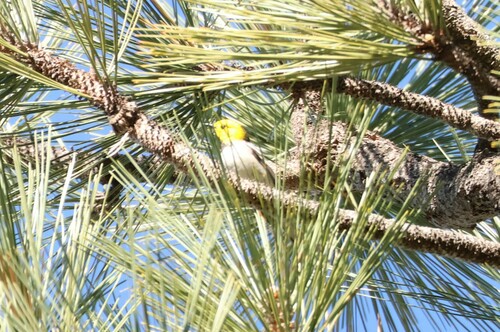
Hermit Warbler (Setophaga occidentalis) Hermit Warbler
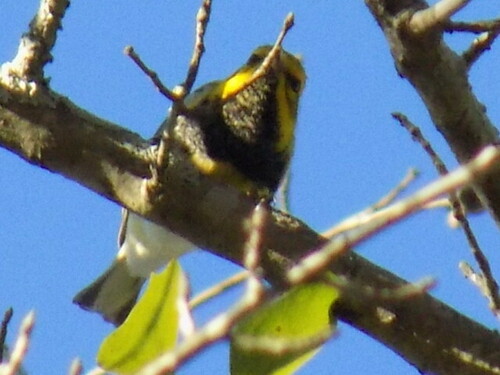
Black-throated Green Warbler (Setophaga virens) Black-throated Green Warbler

Media

Loading…

In short

The most reliable field mark between Hermit Warbler and Black-throated Green Warbler is the head and throat pattern: Hermit Warbler males show a bright yellow head with a sharply defined black throat, while Black-throated Green males have a yellow face with olive crown and a black throat that extends onto the upper breast. Immature and female Hermit Warblers lack the black throat entirely, whereas female and immature Black-throated Greens show a pale throat with black markings on the breast. Both species have white wing bars, but Hermit Warbler is generally grayer above and lacks the olive tones of Black-throated Green. Size is similar, but Hermit Warbler averages slightly larger and heavier. Pay close attention to head color, throat pattern, and the presence or absence of olive tones to separate these two, especially in non-male birds.

Identification tips

  1. Head color and pattern: Hermit Warbler of all ages shows a bright, clean yellow head with little to no olive, while Black-throated Green Warbler has a yellow face but an olive-green crown and often olive on the sides of the face. This is most obvious in good light.
  2. Throat pattern (adult males): Male Hermit Warbler has a sharply defined black throat that does not extend onto the breast; Black-throated Green male has a black throat that merges into the upper breast and is less crisply bordered.
  3. Throat and breast (females/immatures): Female and immature Hermit Warblers lack black on the throat—look for a plain yellow head and white throat. Female and immature Black-throated Green Warblers have a pale throat but show black streaking or mottling on the breast, and the face is always yellow with olive.
  4. Back color: Hermit Warbler is dark gray above, lacking olive tones. Black-throated Green Warbler has an olive-green back and crown, which is often visible even at a distance.
  5. Wing bars: Both species have two white wing bars, so this is not a useful separator.
  6. Flank streaking: Both species show black streaks on the flanks, but Hermit Warbler's are on a whiter background, while Black-throated Green's underparts may look more washed with yellow or olive, especially on the sides.
  7. Bill and structure: Both have thin, pointed bills typical of wood-warblers. Hermit Warbler may appear slightly longer-winged and bulkier, but this is subtle.
  8. Size: Hermit Warbler is slightly larger and heavier, but this is rarely useful unless birds are side by side.
  9. Upperwing pattern (all ages): No distinctive upperwing or flight marks separate these two; both show white wing bars but lack unique panels or trailing edges.
  10. Habitat context: In the Pacific Northwest and California, Hermit Warbler is expected in coniferous forests; Black-throated Green is rare there. In the east, Black-throated Green is common, and Hermit Warbler is a rarity.
  11. Seasonal context: During migration, both can occur outside their core ranges, so do not rely solely on location.
  12. Sex differences: Only adult males of either species show a full black throat; females and immatures require careful attention to head color and back tone.
  13. Face pattern: Black-throated Green often shows a broken or blurry dark line through the eye due to olive wash, while Hermit Warbler's face is clean yellow with a dark eye standing out.
  14. Pitfalls: Immature Hermit Warblers can be confused with female Black-throated Greens, but look for the lack of olive on the head and the absence of black streaking on the breast.
  15. Mixed flocks: Both species may join mixed warbler flocks in migration, so check each bird carefully for the above marks.

Size

Hermit Warbler is slightly larger, measuring about 5.5 in (14 cm) in length and weighing 0.3–0.5 oz (8.5–14.2 g), with a wingspan of 7.9 in (20 cm). Black-throated Green Warbler is smaller, at 4.3–4.7 in (11–12 cm) long, 0.3–0.4 oz (8.5–11.3 g) in weight, and a wingspan of 6.7–7.9 in (17–20 cm). In the field, this size difference is subtle and not usually diagnostic unless seen side by side, but Hermit Warbler may appear slightly bulkier and longer-winged.

Plumage

For all ages, Hermit Warbler shows a mostly gray back and upperparts, with two white wing bars and a clean, bright yellow head. Adult males have a sharply defined black throat, while females have much less black and immatures lack black on the throat. The underparts are white with black streaks on the flanks. In contrast, Black-throated Green Warbler has an olive-green crown and back, a yellow face with olive markings, and two white wing bars. Adult males have a black throat and upper breast, but the black is less sharply demarcated than in Hermit Warbler and extends onto the upper breast. Females and immatures have a pale throat with black streaks on the breast, and the face is always yellow with some olive. In flight or perched, Hermit Warbler lacks the olive tones and has a cleaner, more contrasting head pattern. Both species have similar wing bars, so focus on head and back color for separation.

Behaviour

Both species are active foragers in the canopy and mid-levels, often gleaning insects from foliage. There are no strong behavioral differences noted in the sources that reliably separate them in the field. Both may join mixed-species flocks during migration.

Habitat

Hermit Warbler breeds in coniferous forests along the west coast of the United States, especially in mature pine and fir forests. Black-throated Green Warbler is found in a wider range of forest types, often in mixed or deciduous woods, and is not restricted to the Pacific coast. If you are birding in the far west, Hermit Warbler is much more likely; Black-throated Green is more common in the east and central parts of North America. However, both can occur as migrants outside their breeding ranges.

Submit a better description

Use the same sections as the comparison. Your text is published immediately.

The most reliable field mark between Hermit Warbler and Black-throated Green Warbler is the head and throat pattern: Hermit Warbler males show a bright yellow head with a sharply defined black throat, while Black-throated Green males have a yellow face with olive crown and a black throat that extends onto the upper breast. Immature and female Hermit Warblers lack the black throat entirely, whereas female and immature Black-throated Greens show a pale throat with black markings on the breast. Both species have white wing bars, but Hermit Warbler is generally grayer above and lacks the olive tones of Black-throated Green. Size is similar, but Hermit Warbler averages slightly larger and heavier. Pay close attention to head color, throat pattern, and the presence or absence of olive tones to separate these two, especially in non-male birds.

  1. Head color and pattern: Hermit Warbler of all ages shows a bright, clean yellow head with little to no olive, while Black-throated Green Warbler has a yellow face but an olive-green crown and often olive on the sides of the face. This is most obvious in good light.
  2. Throat pattern (adult males): Male Hermit Warbler has a sharply defined black throat that does not extend onto the breast; Black-throated Green male has a black throat that merges into the upper breast and is less crisply bordered.
  3. Throat and breast (females/immatures): Female and immature Hermit Warblers lack black on the throat—look for a plain yellow head and white throat. Female and immature Black-throated Green Warblers have a pale throat but show black streaking or mottling on the breast, and the face is always yellow with olive.
  4. Back color: Hermit Warbler is dark gray above, lacking olive tones. Black-throated Green Warbler has an olive-green back and crown, which is often visible even at a distance.
  5. Wing bars: Both species have two white wing bars, so this is not a useful separator.
  6. Flank streaking: Both species show black streaks on the flanks, but Hermit Warbler's are on a whiter background, while Black-throated Green's underparts may look more washed with yellow or olive, especially on the sides.
  7. Bill and structure: Both have thin, pointed bills typical of wood-warblers. Hermit Warbler may appear slightly longer-winged and bulkier, but this is subtle.
  8. Size: Hermit Warbler is slightly larger and heavier, but this is rarely useful unless birds are side by side.
  9. Upperwing pattern (all ages): No distinctive upperwing or flight marks separate these two; both show white wing bars but lack unique panels or trailing edges.
  10. Habitat context: In the Pacific Northwest and California, Hermit Warbler is expected in coniferous forests; Black-throated Green is rare there. In the east, Black-throated Green is common, and Hermit Warbler is a rarity.
  11. Seasonal context: During migration, both can occur outside their core ranges, so do not rely solely on location.
  12. Sex differences: Only adult males of either species show a full black throat; females and immatures require careful attention to head color and back tone.
  13. Face pattern: Black-throated Green often shows a broken or blurry dark line through the eye due to olive wash, while Hermit Warbler's face is clean yellow with a dark eye standing out.
  14. Pitfalls: Immature Hermit Warblers can be confused with female Black-throated Greens, but look for the lack of olive on the head and the absence of black streaking on the breast.
  15. Mixed flocks: Both species may join mixed warbler flocks in migration, so check each bird carefully for the above marks.

Hermit Warbler is slightly larger, measuring about 5.5 in (14 cm) in length and weighing 0.3–0.5 oz (8.5–14.2 g), with a wingspan of 7.9 in (20 cm). Black-throated Green Warbler is smaller, at 4.3–4.7 in (11–12 cm) long, 0.3–0.4 oz (8.5–11.3 g) in weight, and a wingspan of 6.7–7.9 in (17–20 cm). In the field, this size difference is subtle and not usually diagnostic unless seen side by side, but Hermit Warbler may appear slightly bulkier and longer-winged.

For all ages, Hermit Warbler shows a mostly gray back and upperparts, with two white wing bars and a clean, bright yellow head. Adult males have a sharply defined black throat, while females have much less black and immatures lack black on the throat. The underparts are white with black streaks on the flanks. In contrast, Black-throated Green Warbler has an olive-green crown and back, a yellow face with olive markings, and two white wing bars. Adult males have a black throat and upper breast, but the black is less sharply demarcated than in Hermit Warbler and extends onto the upper breast. Females and immatures have a pale throat with black streaks on the breast, and the face is always yellow with some olive. In flight or perched, Hermit Warbler lacks the olive tones and has a cleaner, more contrasting head pattern. Both species have similar wing bars, so focus on head and back color for separation.

Both species are active foragers in the canopy and mid-levels, often gleaning insects from foliage. There are no strong behavioral differences noted in the sources that reliably separate them in the field. Both may join mixed-species flocks during migration.

Hermit Warbler breeds in coniferous forests along the west coast of the United States, especially in mature pine and fir forests. Black-throated Green Warbler is found in a wider range of forest types, often in mixed or deciduous woods, and is not restricted to the Pacific coast. If you are birding in the far west, Hermit Warbler is much more likely; Black-throated Green is more common in the east and central parts of North America. However, both can occur as migrants outside their breeding ranges.

Discard your changes?

You have unsaved edits. If you leave now, those changes will be lost.

Hermit Warbler · Black-throated Green Warbler · My Tricky Birds