

hermit warbler vs mariquita-de-garganta-preta
Setophaga occidentalis versus Setophaga virens
Jogue um quiz com hermit warbler e mariquita-de-garganta-preta
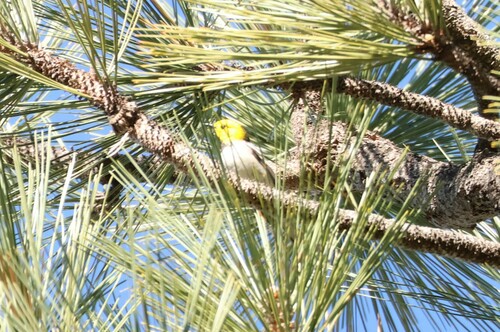 hermit warbler
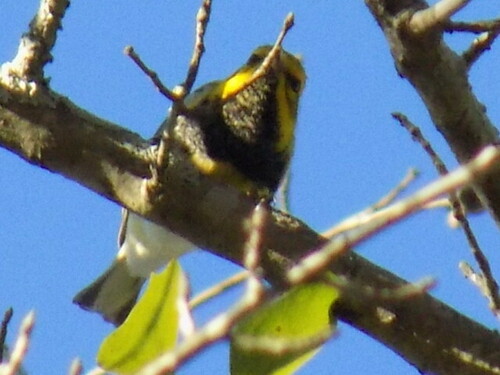 mariquita-de-garganta-preta
Em resumo
A marca de campo mais confiável entre o hermit warbler e a mariquita-de-garganta-preta é o padrão da cabeça e da garganta: os machos do hermit warbler apresentam uma cabeça amarela brilhante com uma garganta preta bem definida, enquanto os machos da mariquita-de-garganta-preta têm um rosto amarelo com coroa oliva e uma garganta preta que se estende até o peito superior. Os hermit warblers imaturos e fêmeas não têm a garganta preta, enquanto as fêmeas e imaturos da mariquita-de-garganta-preta apresentam uma garganta pálida com marcas pretas no peito. Ambas as espécies têm barras brancas nas asas, mas o hermit warbler é geralmente mais cinza por cima e não possui os tons oliva da mariquita-de-garganta-preta. O tamanho é semelhante, mas o hermit warbler é ligeiramente maior e mais pesado. Preste atenção à cor da cabeça, ao padrão da garganta e à presença ou ausência de tons oliva para separar esses dois, especialmente em aves não machos.
Dicas de identificação
- Cor e padrão da cabeça: O hermit warbler de todas as idades apresenta uma cabeça amarela limpa e brilhante com pouco ou nenhum oliva, enquanto a mariquita-de-garganta-preta tem um rosto amarelo, mas uma coroa verde oliva e frequentemente oliva nas laterais do rosto. Isso é mais óbvio em boa luz.
- Padrão da garganta (machos adultos): O macho do hermit warbler tem uma garganta preta bem definida que não se estende até o peito; o macho da mariquita-de-garganta-preta tem uma garganta preta que se funde ao peito superior e é menos nitidamente contornada.
- Garganta e peito (fêmeas/imaturos): As fêmeas e imaturos do hermit warbler não têm preto na garganta—procure uma cabeça amarela simples e uma garganta branca. As fêmeas e imaturos da mariquita-de-garganta-preta têm uma garganta pálida, mas mostram listras ou manchas pretas no peito, e o rosto é sempre amarelo com oliva.
- Cor das costas: O hermit warbler é cinza escuro por cima, sem tons oliva. A mariquita-de-garganta-preta tem um dorso e coroa verde oliva, que muitas vezes é visível mesmo à distância.
- Barras nas asas: Ambas as espécies têm duas barras brancas nas asas, então isso não é um separador útil.
- Listras nos flancos: Ambas as espécies mostram listras pretas nos flancos, mas as do hermit warbler estão em um fundo mais branco, enquanto as partes inferiores da mariquita-de-garganta-preta podem parecer mais lavadas com amarelo ou oliva, especialmente nas laterais.
- Bico e estrutura: Ambas têm bicos finos e pontudos típicos dos wood-warblers. O hermit warbler pode parecer ligeiramente mais robusto e com asas mais longas, mas isso é sutil.
- Tamanho: O hermit warbler é ligeiramente maior e mais pesado, mas isso raramente é útil, a menos que as aves estejam lado a lado.
- Padrão da asa superior (todas as idades): Não há marcas distintivas na asa superior ou de voo que separem esses dois; ambos mostram barras brancas nas asas, mas carecem de painéis ou bordas únicas.
- Contexto de habitat: No Noroeste do Pacífico e na Califórnia, espera-se que o hermit warbler esteja em florestas coníferas; a mariquita-de-garganta-preta é rara lá. No leste, a mariquita-de-garganta-preta é comum, e o hermit warbler é uma raridade.
- Contexto sazonal: Durante a migração, ambos podem ocorrer fora de suas áreas principais, então não confie apenas na localização.
- Diferenças sexuais: Apenas os machos adultos de ambas as espécies mostram uma garganta preta completa; fêmeas e imaturos requerem atenção cuidadosa à cor da cabeça e ao tom das costas.
- Padrão do rosto: A mariquita-de-garganta-preta frequentemente mostra uma linha escura quebrada ou borrada através do olho devido ao lavado oliva, enquanto o rosto do hermit warbler é amarelo limpo com um olho escuro se destacando.
- Armadilhas: Os hermit warblers imaturos podem ser confundidos com fêmeas da mariquita-de-garganta-preta, mas procure a falta de oliva na cabeça e a ausência de listras pretas no peito.
- Bandos mistos: Ambas as espécies podem se juntar a bandos mistos de warblers durante a migração, então verifique cada ave cuidadosamente para as marcas acima.
Tamanho
O hermit warbler é ligeiramente maior, medindo cerca de 5,5 pol (14 cm) de comprimento e pesando 0,3–0,5 oz (8,5–14,2 g), com uma envergadura de 7,9 pol (20 cm). A mariquita-de-garganta-preta é menor, com 4,3–4,7 pol (11–12 cm) de comprimento, 0,3–0,4 oz (8,5–11,3 g) de peso e uma envergadura de 6,7–7,9 pol (17–20 cm). No campo, essa diferença de tamanho é sutil e geralmente não é diagnóstica, a menos que vistas lado a lado, mas o hermit warbler pode parecer ligeiramente mais robusto e com asas mais longas.
Plumagem
Para todas as idades, o hermit warbler apresenta um dorso e partes superiores predominantemente cinzas, com duas barras brancas nas asas e uma cabeça limpa e amarela brilhante. Os machos adultos têm uma garganta preta bem definida, enquanto as fêmeas têm muito menos preto e os imaturos não têm preto na garganta. As partes inferiores são brancas com listras pretas nos flancos. Em contraste, a mariquita-de-garganta-preta tem uma coroa e dorso verde oliva, um rosto amarelo com marcas oliva e duas barras brancas nas asas. Os machos adultos têm uma garganta preta e peito superior, mas o preto é menos nitidamente demarcado do que no hermit warbler e se estende até o peito superior. As fêmeas e imaturos têm uma garganta pálida com listras pretas no peito, e o rosto é sempre amarelo com um pouco de oliva. Em voo ou empoleirado, o hermit warbler não possui os tons oliva e tem um padrão de cabeça mais limpo e contrastante. Ambas as espécies têm barras de asas semelhantes, então concentre-se na cor da cabeça e das costas para separação.
Comportamento
Ambas as espécies são forrageadoras ativas na copa e nos níveis intermediários, frequentemente coletando insetos da folhagem. Não há diferenças comportamentais fortes observadas nas fontes que separam de forma confiável no campo. Ambas podem se juntar a bandos de espécies mistas durante a migração.
Habitat
O hermit warbler se reproduz em florestas coníferas ao longo da costa oeste dos Estados Unidos, especialmente em florestas maduras de pinheiros e abetos. A mariquita-de-garganta-preta é encontrada em uma gama mais ampla de tipos de floresta, frequentemente em bosques mistos ou decíduos, e não está restrita à costa do Pacífico. Se você estiver observando aves no extremo oeste, é muito mais provável encontrar o hermit warbler; a mariquita-de-garganta-preta é mais comum no leste e nas partes centrais da América do Norte. No entanto, ambos podem ocorrer como migrantes fora de suas áreas de reprodução.
hermit warbler · mariquita-de-garganta-preta · Minhas aves difíceis