

Motmot

キガシラアメリカムシクイ 対 ノドグロミドリアメリカムシクイ

Setophaga occidentalis 対 Setophaga virens

キガシラアメリカムシクイとノドグロミドリアメリカムシクイのクイズ
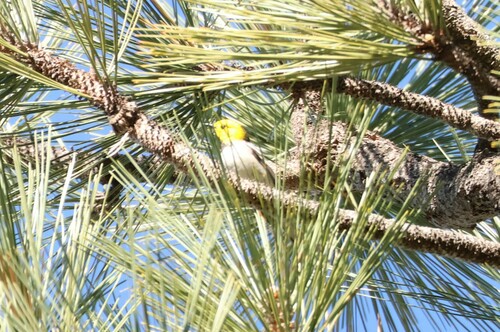
キガシラアメリカムシクイ (Setophaga occidentalis) キガシラアメリカムシクイ
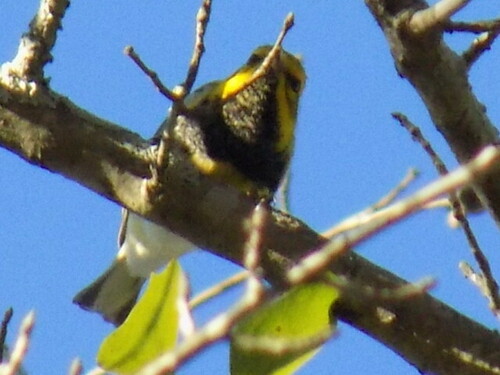
ノドグロミドリアメリカムシクイ (Setophaga virens) ノドグロミドリアメリカムシクイ

メディア

読み込み中…

要点

キガシラアメリカムシクイとノドグロミドリアメリカムシクイの最も信頼できるフィールドマークは、頭部と喉のパターンです:キガシラアメリカムシクイのオスは鮮やかな黄色の頭と明確に定義された黒い喉を示しますが、ノドグロミドリアメリカムシクイのオスはオリーブ色の冠を持つ黄色い顔と、上胸部にまで伸びる黒い喉を持っています。未成熟および雌のキガシラアメリカムシクイは黒い喉が全くありませんが、雌および未成熟のノドグロミドリアメリカムシクイは胸に黒い模様のある淡い喉を示します。両種は白い翼帯を持っていますが、キガシラアメリカムシクイは一般的に上面が灰色で、ノドグロミドリアメリカムシクイのオリーブ色のトーンが欠けています。サイズは似ていますが、キガシラアメリカムシクイは平均してやや大きく、重いです。特にオス以外の鳥を区別するためには、頭の色、喉のパターン、およびオリーブ色のトーンの有無に注意を払ってください。

識別のコツ

  1. 頭の色とパターン:すべての年齢のキガシラアメリカムシクイは、オリーブがほとんどない明るくきれいな黄色の頭を示しますが、ノドグロミドリアメリカムシクイは黄色い顔を持っていますが、オリーブ色の冠と顔の側面にオリーブがよく見られます。これは良い光の中で最も明らかです。
  2. 喉のパターン(成鳥のオス):オスのキガシラアメリカムシクイは、胸にまで伸びない明確に定義された黒い喉を持っています;ノドグロミドリアメリカムシクイのオスは、上胸部に溶け込む黒い喉を持ち、境界があまりはっきりしていません。
  3. 喉と胸(雌/未成熟):雌および未成熟のキガシラアメリカムシクイは喉に黒がありません—平坦な黄色の頭と白い喉を探してください。雌および未成熟のノドグロミドリアメリカムシクイは淡い喉を持っていますが、胸に黒い筋や斑点を示し、顔は常にオリーブを伴う黄色です。
  4. 背中の色:キガシラアメリカムシクイは上面が暗い灰色で、オリーブ色のトーンがありません。ノドグロミドリアメリカムシクイはオリーブ色の背中と冠を持ち、遠くからでもよく見えます。
  5. 翼帯:両種は2つの白い翼帯を持っているため、これは有用な区別にはなりません。
  6. 脇の筋:両種は脇に黒い筋を示しますが、キガシラアメリカムシクイのものは白っぽい背景にあり、ノドグロミドリアメリカムシクイの下部は特に側面で黄色やオリーブ色に洗われたように見えることがあります。
  7. くちばしと構造:両方ともウッドワーブラーに典型的な細く尖ったくちばしを持っています。キガシラアメリカムシクイはやや長い翼を持ち、ずんぐりして見えることがありますが、これは微妙です。
  8. サイズ:キガシラアメリカムシクイはやや大きく、重いですが、これは通常、鳥が並んでいない限り有用ではありません。
  9. 上翼のパターン(すべての年齢):これらの2種を区別する独特の上翼や飛行マークはありません;両方とも白い翼帯を示しますが、独自のパネルや後縁はありません。
  10. 生息地の文脈:太平洋北西部とカリフォルニアでは、キガシラアメリカムシクイは針葉樹林に期待されます;ノドグロミドリアメリカムシクイは珍しいです。東部では、ノドグロミドリアメリカムシクイは一般的で、キガシラアメリカムシクイは珍しいです。
  11. 季節的文脈:渡りの間、両方ともコア範囲の外で発生する可能性があるため、場所にのみ依存しないでください。
  12. 性差:どちらの種の成鳥のオスのみが完全な黒い喉を示します;雌と未成熟は頭の色と背中のトーンに注意を払う必要があります。
  13. 顔のパターン:ノドグロミドリアメリカムシクイは、オリーブの洗浄によって目を通る壊れたまたはぼやけた暗い線を示すことがよくありますが、キガシラアメリカムシクイの顔はきれいな黄色で、暗い目が際立っています。
  14. 落とし穴:未成熟のキガシラアメリカムシクイは雌のノドグロミドリアメリカムシクイと混同されることがありますが、頭にオリーブがないことと胸に黒い筋がないことを探してください。
  15. 混合群れ:両種は渡りの際に混合のムシクイの群れに参加することがあるため、上記のマークを注意深く確認してください。

大きさ

キガシラアメリカムシクイはやや大きく、長さ約5.5インチ(14 cm)、体重0.3〜0.5オンス(8.5〜14.2 g)、翼幅は7.9インチ(20 cm)です。ノドグロミドリアメリカムシクイは小さく、長さ4.3〜4.7インチ(11〜12 cm)、体重0.3〜0.4オンス(8.5〜11.3 g)、翼幅は6.7〜7.9インチ(17〜20 cm)です。フィールドでは、このサイズの違いは微妙で、通常は隣同士で見ない限り診断的ではありませんが、キガシラアメリカムシクイはややずんぐりして長い翼に見えることがあります。

羽色

すべての年齢のキガシラアメリカムシクイは、主に灰色の背中と上面を示し、2つの白い翼帯ときれいで明るい黄色の頭を持っています。成鳥のオスは明確に定義された黒い喉を持っていますが、雌は黒が少なく、未成熟は喉に黒がありません。下部は白で、脇に黒い筋があります。対照的に、ノドグロミドリアメリカムシクイはオリーブ色の冠と背中、オリーブの模様のある黄色い顔、2つの白い翼帯を持っています。成鳥のオスは黒い喉と上胸部を持っていますが、黒はキガシラアメリカムシクイほど明確に区切られておらず、上胸部にまで伸びています。雌と未成熟は胸に黒い筋のある淡い喉を持ち、顔は常にオリーブを伴う黄色です。飛行中または止まっているとき、キガシラアメリカムシクイはオリーブ色のトーンがなく、よりクリーンで対照的な頭のパターンを持っています。両種は似たような翼帯を持っているため、区別するためには頭と背中の色に焦点を当ててください。

行動

両種はキャノピーと中層で活発に採餌し、しばしば葉から昆虫を採取します。フィールドで彼らを確実に区別する強い行動の違いは、情報源には記載されていません。両方とも渡りの際に混合種の群れに参加することがあります。

生息環境

キガシラアメリカムシクイは、特に成熟した松やモミの森のアメリカ合衆国西海岸の針葉樹林で繁殖します。ノドグロミドリアメリカムシクイは、混合林や落葉樹林など、より広範な森林タイプで見られ、太平洋沿岸に限定されません。もしあなたが極西でバードウォッチングをしているなら、キガシラアメリカムシクイの方がはるかに可能性が高いです;ノドグロミドリアメリカムシクイは北アメリカの東部および中央部でより一般的です。しかし、両方とも繁殖範囲の外で移動することがあります。

より良い説明を送る

比較と同じ項目を使ってください。文章はすぐに公開されます。

The most reliable field mark between Hermit Warbler and Black-throated Green Warbler is the head and throat pattern: Hermit Warbler males show a bright yellow head with a sharply defined black throat, while Black-throated Green males have a yellow face with olive crown and a black throat that extends onto the upper breast. Immature and female Hermit Warblers lack the black throat entirely, whereas female and immature Black-throated Greens show a pale throat with black markings on the breast. Both species have white wing bars, but Hermit Warbler is generally grayer above and lacks the olive tones of Black-throated Green. Size is similar, but Hermit Warbler averages slightly larger and heavier. Pay close attention to head color, throat pattern, and the presence or absence of olive tones to separate these two, especially in non-male birds.

  1. Head color and pattern: Hermit Warbler of all ages shows a bright, clean yellow head with little to no olive, while Black-throated Green Warbler has a yellow face but an olive-green crown and often olive on the sides of the face. This is most obvious in good light.
  2. Throat pattern (adult males): Male Hermit Warbler has a sharply defined black throat that does not extend onto the breast; Black-throated Green male has a black throat that merges into the upper breast and is less crisply bordered.
  3. Throat and breast (females/immatures): Female and immature Hermit Warblers lack black on the throat—look for a plain yellow head and white throat. Female and immature Black-throated Green Warblers have a pale throat but show black streaking or mottling on the breast, and the face is always yellow with olive.
  4. Back color: Hermit Warbler is dark gray above, lacking olive tones. Black-throated Green Warbler has an olive-green back and crown, which is often visible even at a distance.
  5. Wing bars: Both species have two white wing bars, so this is not a useful separator.
  6. Flank streaking: Both species show black streaks on the flanks, but Hermit Warbler's are on a whiter background, while Black-throated Green's underparts may look more washed with yellow or olive, especially on the sides.
  7. Bill and structure: Both have thin, pointed bills typical of wood-warblers. Hermit Warbler may appear slightly longer-winged and bulkier, but this is subtle.
  8. Size: Hermit Warbler is slightly larger and heavier, but this is rarely useful unless birds are side by side.
  9. Upperwing pattern (all ages): No distinctive upperwing or flight marks separate these two; both show white wing bars but lack unique panels or trailing edges.
  10. Habitat context: In the Pacific Northwest and California, Hermit Warbler is expected in coniferous forests; Black-throated Green is rare there. In the east, Black-throated Green is common, and Hermit Warbler is a rarity.
  11. Seasonal context: During migration, both can occur outside their core ranges, so do not rely solely on location.
  12. Sex differences: Only adult males of either species show a full black throat; females and immatures require careful attention to head color and back tone.
  13. Face pattern: Black-throated Green often shows a broken or blurry dark line through the eye due to olive wash, while Hermit Warbler's face is clean yellow with a dark eye standing out.
  14. Pitfalls: Immature Hermit Warblers can be confused with female Black-throated Greens, but look for the lack of olive on the head and the absence of black streaking on the breast.
  15. Mixed flocks: Both species may join mixed warbler flocks in migration, so check each bird carefully for the above marks.

Hermit Warbler is slightly larger, measuring about 5.5 in (14 cm) in length and weighing 0.3–0.5 oz (8.5–14.2 g), with a wingspan of 7.9 in (20 cm). Black-throated Green Warbler is smaller, at 4.3–4.7 in (11–12 cm) long, 0.3–0.4 oz (8.5–11.3 g) in weight, and a wingspan of 6.7–7.9 in (17–20 cm). In the field, this size difference is subtle and not usually diagnostic unless seen side by side, but Hermit Warbler may appear slightly bulkier and longer-winged.

For all ages, Hermit Warbler shows a mostly gray back and upperparts, with two white wing bars and a clean, bright yellow head. Adult males have a sharply defined black throat, while females have much less black and immatures lack black on the throat. The underparts are white with black streaks on the flanks. In contrast, Black-throated Green Warbler has an olive-green crown and back, a yellow face with olive markings, and two white wing bars. Adult males have a black throat and upper breast, but the black is less sharply demarcated than in Hermit Warbler and extends onto the upper breast. Females and immatures have a pale throat with black streaks on the breast, and the face is always yellow with some olive. In flight or perched, Hermit Warbler lacks the olive tones and has a cleaner, more contrasting head pattern. Both species have similar wing bars, so focus on head and back color for separation.

Both species are active foragers in the canopy and mid-levels, often gleaning insects from foliage. There are no strong behavioral differences noted in the sources that reliably separate them in the field. Both may join mixed-species flocks during migration.

Hermit Warbler breeds in coniferous forests along the west coast of the United States, especially in mature pine and fir forests. Black-throated Green Warbler is found in a wider range of forest types, often in mixed or deciduous woods, and is not restricted to the Pacific coast. If you are birding in the far west, Hermit Warbler is much more likely; Black-throated Green is more common in the east and central parts of North America. However, both can occur as migrants outside their breeding ranges.

変更を破棄しますか?

保存していない編集があります。今離れると失われます。

キガシラアメリカムシクイ · ノドグロミドリアメリカムシクイ · 苦手な鳥