

Hermit Warbler vs Black-throated Green Warbler
Setophaga occidentalis contro Setophaga virens
Fai un quiz con Hermit Warbler e Black-throated Green Warbler
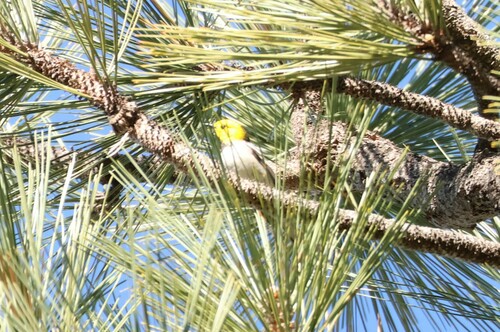 Hermit Warbler
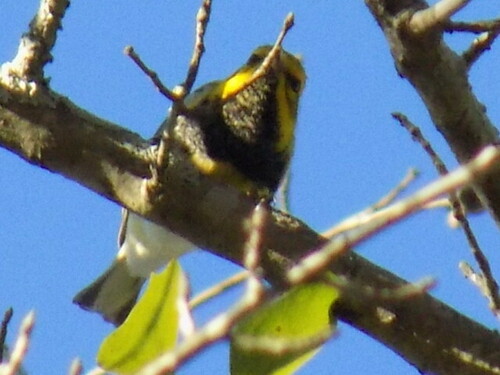 Black-throated Green Warbler
In breve
Il segno distintivo più affidabile tra Hermit Warbler e Black-throated Green Warbler è il modello della testa e della gola: i maschi di Hermit Warbler mostrano una testa gialla brillante con una gola nera ben definita, mentre i maschi di Black-throated Green hanno un volto giallo con una corona oliva e una gola nera che si estende sul petto superiore. I giovani e le femmine di Hermit Warbler mancano completamente della gola nera, mentre le femmine e i giovani di Black-throated Green mostrano una gola pallida con segni neri sul petto. Entrambe le specie hanno barre alari bianche, ma Hermit Warbler è generalmente più grigio sopra e manca delle tonalità olive di Black-throated Green. La dimensione è simile, ma Hermit Warbler è in media leggermente più grande e pesante. Fai attenzione al colore della testa, al modello della gola e alla presenza o assenza di tonalità olive per separare questi due, specialmente negli uccelli non maschi.
Consigli di identificazione
- Colore e modello della testa: Hermit Warbler di tutte le età mostra una testa gialla brillante e pulita con poco o nessun oliva, mentre Black-throated Green Warbler ha un volto giallo ma una corona verde oliva e spesso oliva sui lati del volto. Questo è più evidente in buona luce.
- Modello della gola (maschi adulti): Il maschio di Hermit Warbler ha una gola nera ben definita che non si estende sul petto; il maschio di Black-throated Green ha una gola nera che si fonde nel petto superiore ed è meno nettamente delimitata.
- Gola e petto (femmine/giovani): Le femmine e i giovani di Hermit Warbler mancano di nero sulla gola—cerca una testa gialla semplice e una gola bianca. Le femmine e i giovani di Black-throated Green Warblers hanno una gola pallida ma mostrano striature nere o macchie sul petto, e il volto è sempre giallo con oliva.
- Colore della schiena: Hermit Warbler è grigio scuro sopra, privo di tonalità olive. Black-throated Green Warbler ha una schiena e una corona verde oliva, che è spesso visibile anche da lontano.
- Barre alari: Entrambe le specie hanno due barre alari bianche, quindi questo non è un separatore utile.
- Striature sui fianchi: Entrambe le specie mostrano striature nere sui fianchi, ma quelle di Hermit Warbler sono su uno sfondo più bianco, mentre le parti inferiori di Black-throated Green possono apparire più lavate di giallo o oliva, specialmente sui lati.
- Becco e struttura: Entrambi hanno becchi sottili e appuntiti tipici dei wood-warblers. Hermit Warbler può apparire leggermente più lungo nelle ali e più robusto, ma questo è sottile.
- Dimensione: Hermit Warbler è leggermente più grande e pesante, ma questo è raramente utile a meno che gli uccelli non siano affiancati.
- Modello dell'ala superiore (tutte le età): Non ci sono segni distintivi dell'ala superiore o di volo che separano questi due; entrambi mostrano barre alari bianche ma mancano di pannelli unici o bordi posteriori.
- Contesto dell'habitat: Nel Pacifico nord-occidentale e in California, si prevede che Hermit Warbler si trovi in foreste di conifere; Black-throated Green è raro lì. A est, Black-throated Green è comune, e Hermit Warbler è una rarità.
- Contesto stagionale: Durante la migrazione, entrambi possono verificarsi al di fuori delle loro aree principali, quindi non fare affidamento solo sulla posizione.
- Differenze sessuali: Solo i maschi adulti di entrambe le specie mostrano una gola nera completa; femmine e giovani richiedono attenzione ai colori della testa e della schiena.
- Modello del volto: Black-throated Green mostra spesso una linea scura spezzata o sfocata attraverso l'occhio a causa del lavaggio oliva, mentre il volto di Hermit Warbler è giallo pulito con un occhio scuro in evidenza.
- Trappole: I giovani di Hermit Warbler possono essere confusi con le femmine di Black-throated Green, ma cerca l'assenza di oliva sulla testa e l'assenza di striature nere sul petto.
- Stormi misti: Entrambe le specie possono unirsi a stormi misti di warbler durante la migrazione, quindi controlla attentamente ogni uccello per i segni sopra menzionati.
Taglia
Hermit Warbler è leggermente più grande, misurando circa 5.5 in (14 cm) di lunghezza e pesando 0.3–0.5 oz (8.5–14.2 g), con un'apertura alare di 7.9 in (20 cm). Black-throated Green Warbler è più piccolo, con una lunghezza di 4.3–4.7 in (11–12 cm), un peso di 0.3–0.4 oz (8.5–11.3 g) e un'apertura alare di 6.7–7.9 in (17–20 cm). Sul campo, questa differenza di dimensione è sottile e di solito non è diagnostica a meno che non siano visti affiancati, ma Hermit Warbler può apparire leggermente più robusto e lungo nelle ali.
Piumaggio
Per tutte le età, Hermit Warbler mostra una schiena e parti superiori per lo più grigie, con due barre alari bianche e una testa gialla brillante e pulita. I maschi adulti hanno una gola nera ben definita, mentre le femmine hanno molto meno nero e i giovani mancano di nero sulla gola. Le parti inferiori sono bianche con striature nere sui fianchi. Al contrario, Black-throated Green Warbler ha una corona e una schiena verde oliva, un volto giallo con segni oliva e due barre alari bianche. I maschi adulti hanno una gola nera e un petto superiore, ma il nero è meno nettamente delimitato rispetto a Hermit Warbler e si estende sul petto superiore. Le femmine e i giovani hanno una gola pallida con striature nere sul petto, e il volto è sempre giallo con un po' di oliva. In volo o posato, Hermit Warbler manca delle tonalità olive e ha un modello della testa più pulito e contrastante. Entrambe le specie hanno barre alari simili, quindi concentrati sul colore della testa e della schiena per la separazione.
Comportamento
Entrambe le specie sono cercatori attivi nella chioma e nei livelli medi, spesso raccogliendo insetti dalla vegetazione. Non ci sono forti differenze comportamentali notate nelle fonti che separano affidabilmente sul campo. Entrambi possono unirsi a stormi misti di specie durante la migrazione.
Habitat
Hermit Warbler nidifica in foreste di conifere lungo la costa occidentale degli Stati Uniti, specialmente in foreste mature di pino e abete. Black-throated Green Warbler si trova in una gamma più ampia di tipi di foresta, spesso in boschi misti o decidui, e non è limitato alla costa del Pacifico. Se stai osservando uccelli nel far west, è molto più probabile trovare Hermit Warbler; Black-throated Green è più comune a est e nelle parti centrali del Nord America. Tuttavia, entrambi possono verificarsi come migratori al di fuori delle loro aree di nidificazione.
Hermit Warbler · Black-throated Green Warbler · I miei uccelli difficili