

Motmot

Hainan Blue Flycatcher vs Blue-throated Flycatcher

Cyornis hainanus versus Cyornis rubeculoides

Play a quiz with Hainan Blue Flycatcher and Blue-throated Flycatcher
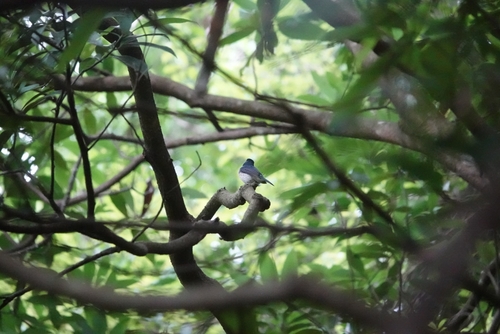
Hainan Blue Flycatcher (Cyornis hainanus) Hainan Blue Flycatcher
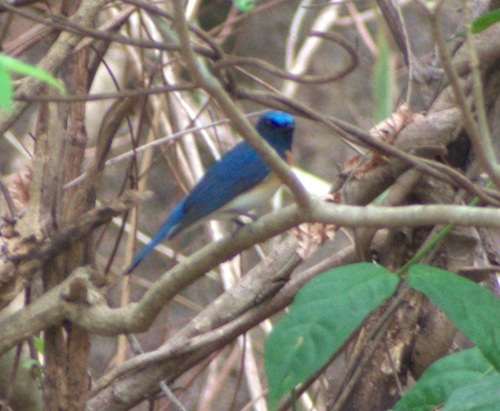
Blue-throated Flycatcher (Cyornis rubeculoides) Blue-throated Flycatcher

Media

Loading…

In short

The most reliable field mark to separate Hainan Blue Flycatcher from Blue-throated Flycatcher is the throat color in adult males: Blue-throated shows a distinctly blue throat, while Hainan Blue has a paler, less contrasting throat. Both are small blue flycatchers in the same genus and can be very similar, especially outside of adult male plumage. Immature and female birds are much harder to separate in the field, as the notes do not provide detailed age-specific or wing pattern differences. Habitat preferences may help: Blue-throated Flycatcher is more often found in denser forests, while Hainan Blue is native to southern China, Hainan, and Indochina. Size and structure are not reliably different based on available information.

Identification tips

  1. Adult male throat color is the single best field mark: Blue-throated Flycatcher shows a rich blue throat, while Hainan Blue Flycatcher’s throat is paler and less contrasting. This is most reliable in breeding plumage.
  2. Female and immature birds are very difficult to separate visually: The notes do not provide distinguishing marks for these ages or sexes, so identification may not be possible without song, range, or habitat context.
  3. No distinctive juvenile or immature wing patterns are described: If you see a bird in flight or perched with an unclear upperwing, do not expect to find a diagnostic mark for either species at these ages.
  4. Habitat can provide a clue: Blue-throated Flycatcher is more likely in especially dense, thick forest, while Hainan Blue is found in southern China, Hainan, and Indochina but with no specific habitat note. Use this only as a supporting clue, not a primary field mark.
  5. Structure and size are not helpful: Both species are similar in size and shape, so do not rely on bill length, tail shape, or overall jizz for separation.
  6. If you see a blue flycatcher with a blue throat in dense forest, Blue-throated is strongly favored: This combination of marks and context is the most reliable.
  7. If the throat is paler or less blue, and the bird is in southern China or Hainan, Hainan Blue is more likely: Especially if habitat is not especially dense.
  8. Do not attempt to separate these species by voice based on current notes: No vocal differences are provided.
  9. If you are unsure, note the throat color, habitat, and location for later review: These are the only reliable clues from the available information.
  10. Beware of confusion with other Cyornis flycatchers: Both species resemble Cyornis tickelliae, but Blue-throated is separated from that species by its blue throat. This is not directly relevant to the Hainan Blue vs Blue-throated comparison, but may help avoid a three-way mix-up.
  11. If you cannot see the throat well (e.g., in poor light or obscured view), identification may not be possible: Wait for a better view or use other context clues.
  12. Do not rely on subtle plumage shades elsewhere on the body: The notes do not support any other consistent differences.
  13. If you are in Indochina and see a blue flycatcher without a blue throat, consider Hainan Blue: This is a range-based clue, not a plumage mark.
  14. If you see a blue-throated bird outside dense forest, check range and throat carefully: Some overlap is possible, so do not use habitat alone.
  15. In summary, always prioritize throat color in adult males, and use habitat and range as secondary clues for all other ages and sexes.

Size

Both species are small passerines in the Cyornis genus, and the available notes do not provide measurements or suggest any meaningful size difference. Expect them to be similar in length and mass, so size is not a useful field mark for separating these two.

Plumage

For adult males, the key plumage difference is the throat: Blue-throated Flycatcher has a rich blue throat that stands out from the rest of the underparts, while Hainan Blue Flycatcher’s throat is paler and less contrasting. The notes do not describe distinctive juvenile or immature wing patterns, so there are no known age-specific upperwing marks to use in flight or perched views for non-adult males. Females and immatures of both species are likely to be brownish or duller and are not described in detail, so separating them visually may be extremely difficult without the adult male’s blue throat.

Behaviour

No behavioral differences are described in the available notes. Both are typical flycatchers in the family Muscicapidae and likely behave similarly when foraging or perching.

Habitat

Blue-throated Flycatcher is noted to prefer thicker, denser forests than other flycatchers, which may help in context. Hainan Blue Flycatcher is native to southern China, Hainan, and Indochina, but no specific habitat preference is given beyond its range. If you find a blue flycatcher in especially dense forest, Blue-throated is more likely, but both can overlap in some areas.

Submit a better description

Use the same sections as the comparison. Your text is published immediately.

The most reliable field mark to separate Hainan Blue Flycatcher from Blue-throated Flycatcher is the throat color in adult males: Blue-throated shows a distinctly blue throat, while Hainan Blue has a paler, less contrasting throat. Both are small blue flycatchers in the same genus and can be very similar, especially outside of adult male plumage. Immature and female birds are much harder to separate in the field, as the notes do not provide detailed age-specific or wing pattern differences. Habitat preferences may help: Blue-throated Flycatcher is more often found in denser forests, while Hainan Blue is native to southern China, Hainan, and Indochina. Size and structure are not reliably different based on available information.

  1. Adult male throat color is the single best field mark: Blue-throated Flycatcher shows a rich blue throat, while Hainan Blue Flycatcher’s throat is paler and less contrasting. This is most reliable in breeding plumage.
  2. Female and immature birds are very difficult to separate visually: The notes do not provide distinguishing marks for these ages or sexes, so identification may not be possible without song, range, or habitat context.
  3. No distinctive juvenile or immature wing patterns are described: If you see a bird in flight or perched with an unclear upperwing, do not expect to find a diagnostic mark for either species at these ages.
  4. Habitat can provide a clue: Blue-throated Flycatcher is more likely in especially dense, thick forest, while Hainan Blue is found in southern China, Hainan, and Indochina but with no specific habitat note. Use this only as a supporting clue, not a primary field mark.
  5. Structure and size are not helpful: Both species are similar in size and shape, so do not rely on bill length, tail shape, or overall jizz for separation.
  6. If you see a blue flycatcher with a blue throat in dense forest, Blue-throated is strongly favored: This combination of marks and context is the most reliable.
  7. If the throat is paler or less blue, and the bird is in southern China or Hainan, Hainan Blue is more likely: Especially if habitat is not especially dense.
  8. Do not attempt to separate these species by voice based on current notes: No vocal differences are provided.
  9. If you are unsure, note the throat color, habitat, and location for later review: These are the only reliable clues from the available information.
  10. Beware of confusion with other Cyornis flycatchers: Both species resemble Cyornis tickelliae, but Blue-throated is separated from that species by its blue throat. This is not directly relevant to the Hainan Blue vs Blue-throated comparison, but may help avoid a three-way mix-up.
  11. If you cannot see the throat well (e.g., in poor light or obscured view), identification may not be possible: Wait for a better view or use other context clues.
  12. Do not rely on subtle plumage shades elsewhere on the body: The notes do not support any other consistent differences.
  13. If you are in Indochina and see a blue flycatcher without a blue throat, consider Hainan Blue: This is a range-based clue, not a plumage mark.
  14. If you see a blue-throated bird outside dense forest, check range and throat carefully: Some overlap is possible, so do not use habitat alone.
  15. In summary, always prioritize throat color in adult males, and use habitat and range as secondary clues for all other ages and sexes.

Both species are small passerines in the Cyornis genus, and the available notes do not provide measurements or suggest any meaningful size difference. Expect them to be similar in length and mass, so size is not a useful field mark for separating these two.

For adult males, the key plumage difference is the throat: Blue-throated Flycatcher has a rich blue throat that stands out from the rest of the underparts, while Hainan Blue Flycatcher’s throat is paler and less contrasting. The notes do not describe distinctive juvenile or immature wing patterns, so there are no known age-specific upperwing marks to use in flight or perched views for non-adult males. Females and immatures of both species are likely to be brownish or duller and are not described in detail, so separating them visually may be extremely difficult without the adult male’s blue throat.

No behavioral differences are described in the available notes. Both are typical flycatchers in the family Muscicapidae and likely behave similarly when foraging or perching.

Blue-throated Flycatcher is noted to prefer thicker, denser forests than other flycatchers, which may help in context. Hainan Blue Flycatcher is native to southern China, Hainan, and Indochina, but no specific habitat preference is given beyond its range. If you find a blue flycatcher in especially dense forest, Blue-throated is more likely, but both can overlap in some areas.

Discard your changes?

You have unsaved edits. If you leave now, those changes will be lost.

Hainan Blue Flycatcher · Blue-throated Flycatcher · My Tricky Birds