

Motmot

Grey-streaked Flycatcher vs Asian Brown Flycatcher

Muscicapa griseisticta versus Muscicapa dauurica

Play a quiz with Grey-streaked Flycatcher and Asian Brown Flycatcher
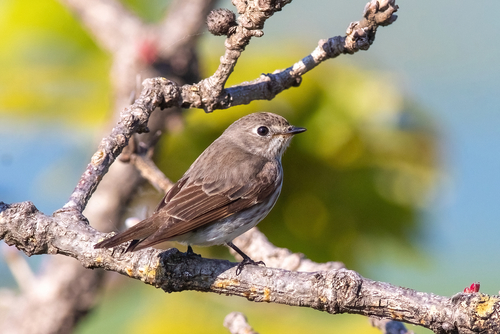
Grey-streaked Flycatcher (Muscicapa griseisticta) Grey-streaked Flycatcher
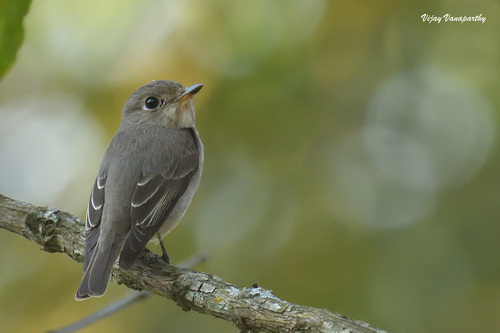
Asian Brown Flycatcher (Muscicapa dauurica) Asian Brown Flycatcher

Media

Loading…

In short

The most reliable field mark to separate Grey-streaked Flycatcher from Asian Brown Flycatcher is the presence of bold, dark grey streaking on the breast and flanks of Grey-streaked, which is absent or extremely faint in Asian Brown. Juvenile birds of both species have scaly upperparts, but only Grey-streaked shows strong streaking below at all ages. Structurally, Grey-streaked is slightly more slender and long-winged, but this is subtle. Both species are similar in size and overall shape, so focus on underpart pattern and, for juveniles, the extent of scaling above. Bill color and face pattern offer secondary clues but are less reliable at distance. Both species can be found in similar habitats during migration, so context is not a strong separator.

Identification tips

  1. Underpart streaking is the key mark: Grey-streaked Flycatcher of all ages shows bold, dark grey streaks running down the breast and flanks. Asian Brown Flycatcher is plain white below with only a faint brownish wash on the flanks and, in fresh juveniles, some mottling or scaling on the breast, but never strong streaking.
  2. Juvenile upperparts: Both species' juveniles can show scaly or spotted upperparts, but only Grey-streaked combines this with strong underpart streaking. Asian Brown juveniles have scaly brown upperparts, head, and breast, but the scaling below is never as linear or bold as Grey-streaked's streaks.
  3. Face pattern: Grey-streaked shows a pale patch between the bill and eye and a clear white eye-ring, giving a slightly more contrasting face. Asian Brown's face is plainer, with less distinct 'spectacles' and a generally more subdued look.
  4. Bill structure and color: Asian Brown Flycatcher has a relatively large, broad-based, dark bill, often with a pale lower mandible in some subspecies. Grey-streaked's bill is black and appears slightly finer, but this is subtle and hard to judge unless side-by-side.
  5. Wing bar: Grey-streaked has a narrow white wingbar, which can be visible at rest. Asian Brown lacks a strong wingbar, though pale edges to the coverts may be seen in fresh plumage.
  6. Upperpart tone: Grey-streaked is generally colder grey-brown above, while Asian Brown is browner, especially in the Indian subcontinent populations (subspecies poonensis). This is subtle and can be affected by light and wear.
  7. Primary projection and structure: Grey-streaked is described as more slender and long-winged, which may show as a longer primary projection past the tertials, but this is a minor difference and not always visible.
  8. Posture: Grey-streaked may appear slightly more upright and alert, but both species can adopt similar perching postures.
  9. Habitat and context: Both species overlap widely in migration and winter, so do not rely on habitat or season alone for identification.
  10. Sexes alike: Both species show little or no sexual dimorphism in plumage, so all marks apply to both males and females.
  11. Flight views: In flight, underpart streaking (or lack thereof) may still be visible if the bird banks or lands in view. No distinctive upperwing pattern separates the two in flight.
  12. Vagrancy: Both species can occur as vagrants outside their main range, so do not rule out either on location alone.
  13. Voice: No distinctive vocal differences are noted in the available sources; do not rely on call or song for separation.
  14. Pitfalls: Beware of worn or wet birds, which may obscure streaking or make both species look plainer. Juvenile Asian Brown can appear mottled below, but never with the sharp, linear streaks of Grey-streaked.
  15. Summary tip: If you see a Muscicapa flycatcher with bold, vertical streaks on the breast and flanks, it is a Grey-streaked Flycatcher. If the underparts are plain or only faintly mottled, it is an Asian Brown Flycatcher.

Size

Both species are very close in size, with Grey-streaked Flycatcher measuring 13–15 cm in length and weighing about 15.9 g [wikidata]. Asian Brown Flycatcher is also about 13 cm long, with no significant difference in mass noted in the available data. In the field, size is not a reliable separator, as both appear small, slim, and long-tailed for Muscicapa flycatchers.

Plumage

Juvenile and first-winter birds of both species can show scaly upperparts, but only Grey-streaked Flycatcher (all ages) has bold, dark grey streaks running vertically down the breast and flanks, creating a distinctly streaked appearance below. Asian Brown Flycatcher is much plainer underneath, with whitish underparts and only a faint brown tinge to the flanks in adults, and some mottling or scaling on the breast in fresh juveniles, but never the strong streaking of Grey-streaked. Both species are grey-brown above, but Grey-streaked tends to look colder and greyer, while Asian Brown is browner, especially in the Indian subcontinent subspecies. Grey-streaked shows a narrow white wingbar and a pale patch between the bill and eye, with a clear white eye-ring. Asian Brown has a less contrasting face, with a broad-based, dark bill and less distinct white 'spectacles.' Juvenile Grey-streaked also shows white spots and dark scaling above, but the underpart streaking remains the best mark at all ages.

Behaviour

Both species use a similar feeding strategy: perching in the open and sallying out to catch insects before returning to the same or a nearby perch. Grey-streaked Flycatcher is described as particularly slender and long-winged, which may give it a slightly more upright, alert posture on exposed perches, but this is subtle and not always reliable. Both can be seen in migration or winter in open woodland, forest edge, or scattered trees, often alone or in loose association with other migrants.

Habitat

Habitat is not a strong separator, as both species breed in the eastern Palearctic and migrate through East and Southeast Asia, using similar open woodland, forest edge, and scattered tree habitats. Both can be found in forests, forest edges, and open country with scattered trees during migration and winter. Local abundance may differ, but overlap is extensive and not a safe field mark.

Submit a better description

Use the same sections as the comparison. Your text is published immediately.

The most reliable field mark to separate Grey-streaked Flycatcher from Asian Brown Flycatcher is the presence of bold, dark grey streaking on the breast and flanks of Grey-streaked, which is absent or extremely faint in Asian Brown. Juvenile birds of both species have scaly upperparts, but only Grey-streaked shows strong streaking below at all ages. Structurally, Grey-streaked is slightly more slender and long-winged, but this is subtle. Both species are similar in size and overall shape, so focus on underpart pattern and, for juveniles, the extent of scaling above. Bill color and face pattern offer secondary clues but are less reliable at distance. Both species can be found in similar habitats during migration, so context is not a strong separator.

  1. Underpart streaking is the key mark: Grey-streaked Flycatcher of all ages shows bold, dark grey streaks running down the breast and flanks. Asian Brown Flycatcher is plain white below with only a faint brownish wash on the flanks and, in fresh juveniles, some mottling or scaling on the breast, but never strong streaking.
  2. Juvenile upperparts: Both species' juveniles can show scaly or spotted upperparts, but only Grey-streaked combines this with strong underpart streaking. Asian Brown juveniles have scaly brown upperparts, head, and breast, but the scaling below is never as linear or bold as Grey-streaked's streaks.
  3. Face pattern: Grey-streaked shows a pale patch between the bill and eye and a clear white eye-ring, giving a slightly more contrasting face. Asian Brown's face is plainer, with less distinct 'spectacles' and a generally more subdued look.
  4. Bill structure and color: Asian Brown Flycatcher has a relatively large, broad-based, dark bill, often with a pale lower mandible in some subspecies. Grey-streaked's bill is black and appears slightly finer, but this is subtle and hard to judge unless side-by-side.
  5. Wing bar: Grey-streaked has a narrow white wingbar, which can be visible at rest. Asian Brown lacks a strong wingbar, though pale edges to the coverts may be seen in fresh plumage.
  6. Upperpart tone: Grey-streaked is generally colder grey-brown above, while Asian Brown is browner, especially in the Indian subcontinent populations (subspecies poonensis). This is subtle and can be affected by light and wear.
  7. Primary projection and structure: Grey-streaked is described as more slender and long-winged, which may show as a longer primary projection past the tertials, but this is a minor difference and not always visible.
  8. Posture: Grey-streaked may appear slightly more upright and alert, but both species can adopt similar perching postures.
  9. Habitat and context: Both species overlap widely in migration and winter, so do not rely on habitat or season alone for identification.
  10. Sexes alike: Both species show little or no sexual dimorphism in plumage, so all marks apply to both males and females.
  11. Flight views: In flight, underpart streaking (or lack thereof) may still be visible if the bird banks or lands in view. No distinctive upperwing pattern separates the two in flight.
  12. Vagrancy: Both species can occur as vagrants outside their main range, so do not rule out either on location alone.
  13. Voice: No distinctive vocal differences are noted in the available sources; do not rely on call or song for separation.
  14. Pitfalls: Beware of worn or wet birds, which may obscure streaking or make both species look plainer. Juvenile Asian Brown can appear mottled below, but never with the sharp, linear streaks of Grey-streaked.
  15. Summary tip: If you see a Muscicapa flycatcher with bold, vertical streaks on the breast and flanks, it is a Grey-streaked Flycatcher. If the underparts are plain or only faintly mottled, it is an Asian Brown Flycatcher.

Both species are very close in size, with Grey-streaked Flycatcher measuring 13–15 cm in length and weighing about 15.9 g [wikidata]. Asian Brown Flycatcher is also about 13 cm long, with no significant difference in mass noted in the available data. In the field, size is not a reliable separator, as both appear small, slim, and long-tailed for Muscicapa flycatchers.

Juvenile and first-winter birds of both species can show scaly upperparts, but only Grey-streaked Flycatcher (all ages) has bold, dark grey streaks running vertically down the breast and flanks, creating a distinctly streaked appearance below. Asian Brown Flycatcher is much plainer underneath, with whitish underparts and only a faint brown tinge to the flanks in adults, and some mottling or scaling on the breast in fresh juveniles, but never the strong streaking of Grey-streaked. Both species are grey-brown above, but Grey-streaked tends to look colder and greyer, while Asian Brown is browner, especially in the Indian subcontinent subspecies. Grey-streaked shows a narrow white wingbar and a pale patch between the bill and eye, with a clear white eye-ring. Asian Brown has a less contrasting face, with a broad-based, dark bill and less distinct white 'spectacles.' Juvenile Grey-streaked also shows white spots and dark scaling above, but the underpart streaking remains the best mark at all ages.

Both species use a similar feeding strategy: perching in the open and sallying out to catch insects before returning to the same or a nearby perch. Grey-streaked Flycatcher is described as particularly slender and long-winged, which may give it a slightly more upright, alert posture on exposed perches, but this is subtle and not always reliable. Both can be seen in migration or winter in open woodland, forest edge, or scattered trees, often alone or in loose association with other migrants.

Habitat is not a strong separator, as both species breed in the eastern Palearctic and migrate through East and Southeast Asia, using similar open woodland, forest edge, and scattered tree habitats. Both can be found in forests, forest edges, and open country with scattered trees during migration and winter. Local abundance may differ, but overlap is extensive and not a safe field mark.

Discard your changes?

You have unsaved edits. If you leave now, those changes will be lost.

Grey-streaked Flycatcher · Asian Brown Flycatcher · My Tricky Birds