

Motmot

Grey-chinned Minivet vs Brown-rumped Minivet

Pericrocotus solaris versus Pericrocotus cantonensis

Play a quiz with Grey-chinned Minivet and Brown-rumped Minivet
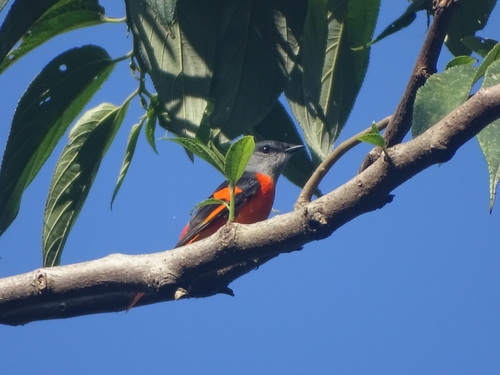
Grey-chinned Minivet (Pericrocotus solaris) Grey-chinned Minivet
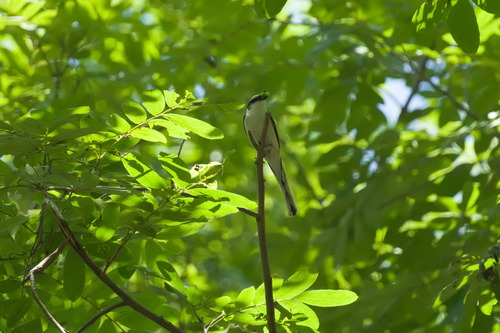
Brown-rumped Minivet (Pericrocotus cantonensis) Brown-rumped Minivet

Media

Loading…

In short

The most reliable field mark to separate Grey-chinned Minivet from Brown-rumped Minivet is the color and distribution of the underparts and rump: Grey-chinned Minivet males show bright orange underparts and rump, while females and immatures are bright yellow below, with a contrasting pale grey chin in all plumages. Brown-rumped Minivet, in contrast, lacks this combination and is best known for its brownish rump (though detailed plumage for this species is not described in the available notes). Both species are sexually dimorphic, but only Grey-chinned Minivet is described in detail for both sexes and immatures. If you see a minivet with a distinctly pale grey chin and orange or yellow underparts, especially in montane forest from the Himalayas to Taiwan or Southeast Asia, it is likely Grey-chinned. Brown-rumped Minivet is more restricted to China and Indochina, and is not described as having a grey chin or such bright underparts.

Identification tips

  1. Pale grey chin: Only Grey-chinned Minivet shows a distinctly pale grey chin in all plumages; Brown-rumped Minivet does not.
  2. Underparts color: Adult male Grey-chinned Minivet has orange underparts and rump; females and immatures are bright yellow below. Brown-rumped Minivet is not described as having such bright or extensive orange/yellow underparts.
  3. Sexual dimorphism: In Grey-chinned, males are orange below, females yellow; Brown-rumped is also dimorphic, but the key color contrasts are not described in the available notes.
  4. Immature plumage: Immature Grey-chinned Minivets have yellow-olive bars on the back, which can help separate them from Brown-rumped if seen well.
  5. Rump color: Brown-rumped Minivet is named for its brownish rump, which may be visible in good views or in flight; Grey-chinned has an orange or yellow rump matching the underparts.
  6. Head and mantle: Grey-chinned Minivet males have a dark grey head and mantle, which contrasts with the orange or yellow underparts; Brown-rumped's head pattern is not detailed, but lack of a grey chin is key.
  7. Wing pattern: Grey-chinned Minivet has blackish wings with orange or yellow tips to the greater coverts; no specific wing pattern is described for Brown-rumped Minivet.
  8. Bill, legs, and eyes: Both species have black bills, legs, and eyes; not useful for separation.
  9. Size and structure: Both are similar in size and shape; do not rely on this for field separation.
  10. Habitat and range: If seen in montane forest (1,000–2,000 m) from the Himalayas to Taiwan or Southeast Asia, Grey-chinned is more likely. In lowland China or Indochina, especially outside breeding season, consider Brown-rumped.
  11. Seasonal context: Brown-rumped Minivet breeds in China and winters in Indochina; Grey-chinned is resident or altitudinal migrant in montane forests.
  12. Flock composition: Both species may join mixed minivet flocks; look for the combination of grey chin and orange/yellow underparts to pick out Grey-chinned.
  13. No distinctive flight or upperwing pattern: Neither species is described as having a unique juvenile or first-winter upperwing pattern, so focus on head and underparts color.
  14. Pitfalls: Females and immatures of both species may be confused, but only Grey-chinned shows the pale grey chin and yellow-olive back bars in immatures.
  15. When in doubt: If you see a minivet with a pale grey chin and bright orange or yellow underparts, especially in montane forest, it is almost certainly Grey-chinned Minivet.

Size

Grey-chinned Minivet is 17–19 cm in length and weighs about 14 g on average [wikidata]. No direct measurements are available for Brown-rumped Minivet, but both are in the same genus and are likely similar in size and structure. In the field, size is not a reliable separator between these two minivets.

Plumage

For age and sex: Grey-chinned Minivet males have a dark grey head and mantle, a pale grey chin, orange-yellow throat, blackish wings, and orange underparts, lower back, and greater covert tips. Females replace the orange with bright yellow. Immatures resemble females but have yellow-olive bars on the back. The key feature across all ages and sexes is the pale grey chin, which is unique to this species in the comparison. Brown-rumped Minivet's plumage is not described in detail in the notes, but the name suggests a brownish rump, and it lacks mention of a grey chin or the bright orange/yellow underparts of Grey-chinned. No distinctive juvenile or first-winter upperwing pattern is described for either species in the sources provided.

Behaviour

No behavioral differences are described in the available notes. Both are likely to behave similarly as active, canopy-foraging minivets, often in small flocks.

Habitat

Grey-chinned Minivet is found in forests at 1,000–2,000 m elevation from the Himalayas through China, Taiwan, and Southeast Asia. Brown-rumped Minivet breeds in China and winters in Indochina, with no mention of montane forest specialization. Thus, Grey-chinned is more likely in higher elevation forests, while Brown-rumped is more likely at lower elevations in China and Indochina, especially outside the breeding season.

Submit a better description

Use the same sections as the comparison. Your text is published immediately.

The most reliable field mark to separate Grey-chinned Minivet from Brown-rumped Minivet is the color and distribution of the underparts and rump: Grey-chinned Minivet males show bright orange underparts and rump, while females and immatures are bright yellow below, with a contrasting pale grey chin in all plumages. Brown-rumped Minivet, in contrast, lacks this combination and is best known for its brownish rump (though detailed plumage for this species is not described in the available notes). Both species are sexually dimorphic, but only Grey-chinned Minivet is described in detail for both sexes and immatures. If you see a minivet with a distinctly pale grey chin and orange or yellow underparts, especially in montane forest from the Himalayas to Taiwan or Southeast Asia, it is likely Grey-chinned. Brown-rumped Minivet is more restricted to China and Indochina, and is not described as having a grey chin or such bright underparts.

  1. Pale grey chin: Only Grey-chinned Minivet shows a distinctly pale grey chin in all plumages; Brown-rumped Minivet does not.
  2. Underparts color: Adult male Grey-chinned Minivet has orange underparts and rump; females and immatures are bright yellow below. Brown-rumped Minivet is not described as having such bright or extensive orange/yellow underparts.
  3. Sexual dimorphism: In Grey-chinned, males are orange below, females yellow; Brown-rumped is also dimorphic, but the key color contrasts are not described in the available notes.
  4. Immature plumage: Immature Grey-chinned Minivets have yellow-olive bars on the back, which can help separate them from Brown-rumped if seen well.
  5. Rump color: Brown-rumped Minivet is named for its brownish rump, which may be visible in good views or in flight; Grey-chinned has an orange or yellow rump matching the underparts.
  6. Head and mantle: Grey-chinned Minivet males have a dark grey head and mantle, which contrasts with the orange or yellow underparts; Brown-rumped's head pattern is not detailed, but lack of a grey chin is key.
  7. Wing pattern: Grey-chinned Minivet has blackish wings with orange or yellow tips to the greater coverts; no specific wing pattern is described for Brown-rumped Minivet.
  8. Bill, legs, and eyes: Both species have black bills, legs, and eyes; not useful for separation.
  9. Size and structure: Both are similar in size and shape; do not rely on this for field separation.
  10. Habitat and range: If seen in montane forest (1,000–2,000 m) from the Himalayas to Taiwan or Southeast Asia, Grey-chinned is more likely. In lowland China or Indochina, especially outside breeding season, consider Brown-rumped.
  11. Seasonal context: Brown-rumped Minivet breeds in China and winters in Indochina; Grey-chinned is resident or altitudinal migrant in montane forests.
  12. Flock composition: Both species may join mixed minivet flocks; look for the combination of grey chin and orange/yellow underparts to pick out Grey-chinned.
  13. No distinctive flight or upperwing pattern: Neither species is described as having a unique juvenile or first-winter upperwing pattern, so focus on head and underparts color.
  14. Pitfalls: Females and immatures of both species may be confused, but only Grey-chinned shows the pale grey chin and yellow-olive back bars in immatures.
  15. When in doubt: If you see a minivet with a pale grey chin and bright orange or yellow underparts, especially in montane forest, it is almost certainly Grey-chinned Minivet.

Grey-chinned Minivet is 17–19 cm in length and weighs about 14 g on average [wikidata]. No direct measurements are available for Brown-rumped Minivet, but both are in the same genus and are likely similar in size and structure. In the field, size is not a reliable separator between these two minivets.

For age and sex: Grey-chinned Minivet males have a dark grey head and mantle, a pale grey chin, orange-yellow throat, blackish wings, and orange underparts, lower back, and greater covert tips. Females replace the orange with bright yellow. Immatures resemble females but have yellow-olive bars on the back. The key feature across all ages and sexes is the pale grey chin, which is unique to this species in the comparison. Brown-rumped Minivet's plumage is not described in detail in the notes, but the name suggests a brownish rump, and it lacks mention of a grey chin or the bright orange/yellow underparts of Grey-chinned. No distinctive juvenile or first-winter upperwing pattern is described for either species in the sources provided.

No behavioral differences are described in the available notes. Both are likely to behave similarly as active, canopy-foraging minivets, often in small flocks.

Grey-chinned Minivet is found in forests at 1,000–2,000 m elevation from the Himalayas through China, Taiwan, and Southeast Asia. Brown-rumped Minivet breeds in China and winters in Indochina, with no mention of montane forest specialization. Thus, Grey-chinned is more likely in higher elevation forests, while Brown-rumped is more likely at lower elevations in China and Indochina, especially outside the breeding season.

Discard your changes?

You have unsaved edits. If you leave now, those changes will be lost.

Grey-chinned Minivet · Brown-rumped Minivet · My Tricky Birds