

Minivet Gorjigrís vs Minivet de Swinhoe
Pericrocotus solaris frente a Pericrocotus cantonensis
Juega un quiz con Minivet Gorjigrís y Minivet de Swinhoe
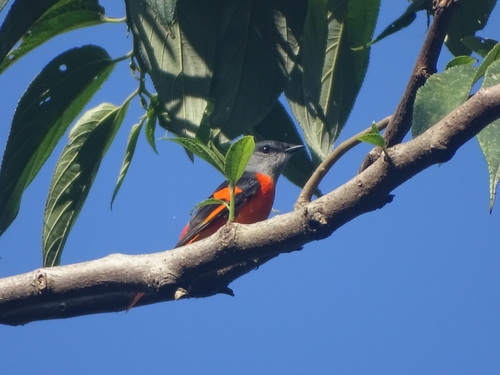 Minivet Gorjigrís
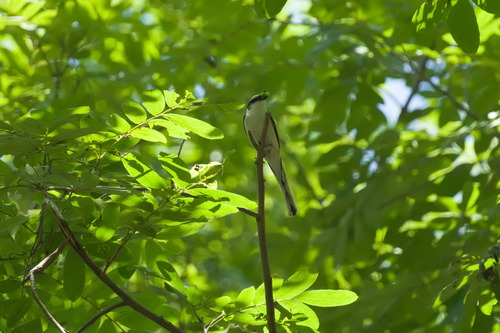 Minivet de Swinhoe
En breve
La marca de campo más confiable para separar el Minivet Gorjigrís del Minivet de Swinhoe es el color y la distribución de las partes inferiores y la rabadilla: los machos de Minivet Gorjigrís muestran partes inferiores y rabadilla de un brillante color naranja, mientras que las hembras y los inmaduros son de un brillante color amarillo por debajo, con un distintivo mentón gris pálido en todos los plumajes. El Minivet de Swinhoe, en contraste, carece de esta combinación y es mejor conocido por su rabadilla marrón (aunque el plumaje detallado para esta especie no se describe en las notas disponibles). Ambas especies son sexualmente dimórficas, pero solo el Minivet Gorjigrís se describe en detalle para ambos sexos y los inmaduros. Si ves un minivet con un mentón gris pálido y partes inferiores naranjas o amarillas, especialmente en bosques montanos desde el Himalaya hasta Taiwán o el sudeste asiático, es probable que sea un Minivet Gorjigrís. El Minivet de Swinhoe está más restringido a China e Indochina, y no se describe como teniendo un mentón gris o partes inferiores tan brillantes.
Consejos de identificación
- Mentón gris pálido: Solo el Minivet Gorjigrís muestra un mentón gris pálido distintivo en todos los plumajes; el Minivet de Swinhoe no lo hace.
- Color de las partes inferiores: El macho adulto de Minivet Gorjigrís tiene partes inferiores y rabadilla naranjas; las hembras y los inmaduros son de un brillante color amarillo por debajo. El Minivet de Swinhoe no se describe como teniendo partes inferiores naranjas/amarillas tan brillantes o extensas.
- Dimorfismo sexual: En el Minivet Gorjigrís, los machos son naranjas por debajo, las hembras son amarillas; el Minivet de Swinhoe también es dimórfico, pero los contrastes de color clave no se describen en las notas disponibles.
- Plumaje inmaduro: Los inmaduros de Minivet Gorjigrís tienen barras amarillo-oliva en la espalda, lo que puede ayudar a separarlos del Minivet de Swinhoe si se ven bien.
- Color de la rabadilla: El Minivet de Swinhoe recibe su nombre por su rabadilla marrón, que puede ser visible en buenas vistas o en vuelo; el Minivet Gorjigrís tiene una rabadilla naranja o amarilla que coincide con las partes inferiores.
- Cabeza y manto: Los machos de Minivet Gorjigrís tienen una cabeza y un manto gris oscuro, que contrasta con las partes inferiores naranjas o amarillas; el patrón de la cabeza del Minivet de Swinhoe no está detallado, pero la falta de un mentón gris es clave.
- Patrón de alas: El Minivet Gorjigrís tiene alas negruzcas con puntas naranjas o amarillas en las cobertoras mayores; no se describe un patrón específico de alas para el Minivet de Swinhoe.
- Pico, patas y ojos: Ambas especies tienen picos, patas y ojos negros; no es útil para la separación.
- Tamaño y estructura: Ambas son similares en tamaño y forma; no confíes en esto para la separación en campo.
- Hábitat y distribución: Si se ve en bosques montanos (1,000–2,000 m) desde el Himalaya hasta Taiwán o el sudeste asiático, es más probable que sea un Minivet Gorjigrís. En China o Indochina en tierras bajas, especialmente fuera de la temporada de cría, considera el Minivet de Swinhoe.
- Contexto estacional: El Minivet de Swinhoe cría en China y pasa el invierno en Indochina; el Minivet Gorjigrís es residente o migrante altitudinal en bosques montanos.
- Composición de bandada: Ambas especies pueden unirse a bandadas mixtas de minivets; busca la combinación de mentón gris y partes inferiores naranjas/amarillas para identificar al Minivet Gorjigrís.
- Sin patrón distintivo de vuelo o parte superior del ala: Ninguna de las especies se describe como teniendo un patrón único de ala superior juvenil o de primer invierno, así que concéntrate en el color de la cabeza y las partes inferiores.
- Trampas: Las hembras y los inmaduros de ambas especies pueden confundirse, pero solo el Minivet Gorjigrís muestra el mentón gris pálido y las barras de la espalda amarillo-oliva en los inmaduros.
- Cuando tengas dudas: Si ves un minivet con un mentón gris pálido y partes inferiores naranjas o amarillas brillantes, especialmente en un bosque montano, es casi seguro que es un Minivet Gorjigrís.
Tamaño
El Minivet Gorjigrís mide entre 17 y 19 cm de longitud y pesa alrededor de 14 g en promedio [wikidata]. No hay medidas directas disponibles para el Minivet de Swinhoe, pero ambos están en el mismo género y probablemente sean similares en tamaño y estructura. En el campo, el tamaño no es un separador confiable entre estos dos minivets.
Plumaje
Para edad y sexo: los machos de Minivet Gorjigrís tienen una cabeza y un manto gris oscuro, un mentón gris pálido, una garganta naranja-amarilla, alas negruzcas y partes inferiores naranjas, parte baja de la espalda y puntas de las cobertoras mayores. Las hembras reemplazan el naranja con un brillante color amarillo. Los inmaduros se asemejan a las hembras pero tienen barras amarillo-oliva en la espalda. La característica clave en todas las edades y sexos es el mentón gris pálido, que es único para esta especie en la comparación. El plumaje del Minivet de Swinhoe no se describe en detalle en las notas, pero el nombre sugiere una rabadilla marrón, y no se menciona un mentón gris o las brillantes partes inferiores naranjas/amarillas del Minivet Gorjigrís. No se describe un patrón distintivo de ala superior juvenil o de primer invierno para ninguna de las especies en las fuentes proporcionadas.
Comportamiento
No se describen diferencias de comportamiento en las notas disponibles. Ambas son propensas a comportarse de manera similar como minivets activos que forrajean en el dosel, a menudo en pequeñas bandadas.
Hábitat
El Minivet Gorjigrís se encuentra en bosques a una altitud de 1,000–2,000 m desde el Himalaya a través de China, Taiwán y el sudeste asiático. El Minivet de Swinhoe cría en China y pasa el invierno en Indochina, sin mención de especialización en bosques montanos. Por lo tanto, el Minivet Gorjigrís es más probable que se encuentre en bosques de mayor altitud, mientras que el Minivet de Swinhoe es más probable que se encuentre a altitudes más bajas en China e Indochina, especialmente fuera de la temporada de cría.