

Motmot

Greater Necklaced Laughingthrush vs Black-throated Sunbird

Pterorhinus pectoralis versus Aethopyga saturata

Play a quiz with Greater Necklaced Laughingthrush and Black-throated Sunbird
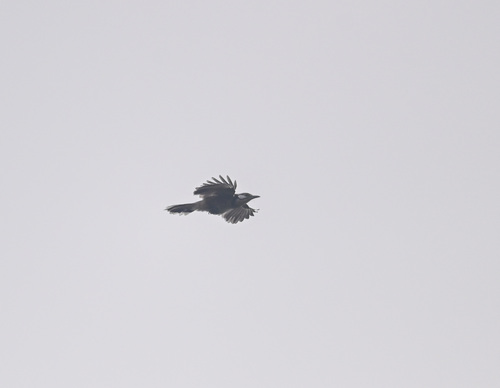
Greater Necklaced Laughingthrush (Pterorhinus pectoralis) Greater Necklaced Laughingthrush
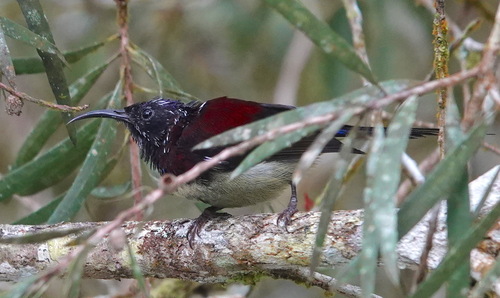
Black-throated Sunbird (Aethopyga saturata) Black-throated Sunbird

Media

Loading…

In short

The most reliable way to separate Greater Necklaced Laughingthrush from Black-throated Sunbird is by size and structure: the laughingthrush is a large, robust bird, while the sunbird is tiny and delicate. Even at a distance or in poor light, the laughingthrush’s bulky body and strong bill stand out against the sunbird’s slender, nectar-feeding silhouette. Both species can occur in similar forest habitats, so context alone is not enough. If you glimpse the bird in flight or perched, focus on overall shape and proportions first, then look for differences in bill shape and plumage contrast.

Identification tips

  1. Size is the fastest check: If the bird is tiny, barely larger than a large insect, it is a sunbird. If it is bulky, jay-sized, or seems much larger than a thrush, it is a laughingthrush.
  2. Bill shape: Laughingthrushes have a strong, straight, conical bill suited for generalist feeding. Sunbirds have a long, slender, decurved bill for nectar feeding. Even in silhouette, the sunbird’s bill is noticeably downcurved and thin.
  3. Face and breast pattern: Look for the bold black-and-white 'necklace' and facial markings on the laughingthrush. The sunbird never shows this pattern, regardless of age or sex.
  4. Coloration: Male Black-throated Sunbirds are iridescent with a black throat and metallic colors; females are duller but still lack the laughingthrush’s strong patterning. Laughingthrushes are earth-toned with complex markings, never iridescent.
  5. Tail shape: Laughingthrushes have a long, broad tail often held cocked or fanned. Sunbirds have a short, narrow tail, sometimes with elongated central feathers in males, but never as broad or long as the laughingthrush.
  6. Flight style: Sunbirds are fast, agile, and often hover at flowers. Laughingthrushes fly with slower, more direct wingbeats and rarely hover.
  7. Foraging behavior: Sunbirds are usually seen at flowers, often high up, feeding on nectar. Laughingthrushes are more often on the ground or in low shrubs, searching for insects or fruit.
  8. Sociality: Laughingthrushes are often in noisy groups; sunbirds are mostly solitary or in pairs.
  9. Perched posture: Laughingthrushes perch upright, often with a hunched, heavy look. Sunbirds perch more horizontally and look delicate.
  10. Habitat micro-niche: If the bird is in dense undergrowth or forest edge, suspect laughingthrush; if in the canopy or at flowers, suspect sunbird.
  11. Voice (if heard): Not described in the notes, but generally, laughingthrushes are loud and varied in calls, while sunbirds have thin, high-pitched songs.
  12. Immature birds: No specific juvenile or first-winter wing patterns are noted for either species, so rely on size and structure for young birds as well.
  13. Pitfalls: Distant views in poor light can make the sunbird’s colors hard to see, but the size and bill shape should still be clear. Female and immature sunbirds are drab but never show the laughingthrush’s bold face and breast pattern.
  14. Introduced range: If in Hawaii, only the laughingthrush is present as an introduced species.
  15. Overlap: Both species can occur in the same forests, so do not use location alone; always check structure and plumage.

Size

Greater Necklaced Laughingthrush is dramatically larger than Black-throated Sunbird. The sunbird weighs only about 5.3 grams [wikidata], making it a tiny, almost hummingbird-sized bird, while the laughingthrush is a medium-to-large passerine (exact mass not given, but far heavier and bulkier by family standards). In the field, this means the laughingthrush appears crow- or jay-sized, with a long tail and heavy body, while the sunbird is sparrow-sized or smaller, with a slim, lightweight build. This size gap is so great that even distant or brief views should make confusion rare.

Plumage

No age-specific or flight-only upperwing patterns are described for either species, so focus on overall coloration and markings. Greater Necklaced Laughingthrush shows a complex, patterned plumage with a bold black-and-white 'necklace' across the breast and face, and generally earth-toned upperparts. Black-throated Sunbird, in contrast, is much more colorful and iridescent, especially in males, with a distinctive black throat, metallic hues, and a much less patterned appearance. Females and immatures of the sunbird are plainer but still lack the laughingthrush’s strong facial and breast markings. In all ages and sexes, the laughingthrush’s face and breast pattern is diagnostic when seen well.

Behaviour

Greater Necklaced Laughingthrushes are typically seen moving in noisy, social groups, often foraging on or near the ground or in low vegetation, and can be quite conspicuous when active. Black-throated Sunbirds are usually solitary or in pairs, actively flitting among flowers high in the canopy or at mid-levels, feeding on nectar with rapid, hovering or perching movements. The sunbird’s feeding style is much more agile and aerial, while the laughingthrush is more terrestrial and deliberate.

Habitat

Both species share similar habitats: subtropical or tropical moist lowland and montane forests across South and Southeast Asia [wikipedia]. Habitat alone does not reliably separate them, as both can be found in overlapping regions and forest types. However, within the habitat, the laughingthrush is more likely to be seen in dense undergrowth or at forest edges, while the sunbird is more often in the canopy or around flowering trees.

Submit a better description

Use the same sections as the comparison. Your text is published immediately.

The most reliable way to separate Greater Necklaced Laughingthrush from Black-throated Sunbird is by size and structure: the laughingthrush is a large, robust bird, while the sunbird is tiny and delicate. Even at a distance or in poor light, the laughingthrush’s bulky body and strong bill stand out against the sunbird’s slender, nectar-feeding silhouette. Both species can occur in similar forest habitats, so context alone is not enough. If you glimpse the bird in flight or perched, focus on overall shape and proportions first, then look for differences in bill shape and plumage contrast.

  1. Size is the fastest check: If the bird is tiny, barely larger than a large insect, it is a sunbird. If it is bulky, jay-sized, or seems much larger than a thrush, it is a laughingthrush.
  2. Bill shape: Laughingthrushes have a strong, straight, conical bill suited for generalist feeding. Sunbirds have a long, slender, decurved bill for nectar feeding. Even in silhouette, the sunbird’s bill is noticeably downcurved and thin.
  3. Face and breast pattern: Look for the bold black-and-white 'necklace' and facial markings on the laughingthrush. The sunbird never shows this pattern, regardless of age or sex.
  4. Coloration: Male Black-throated Sunbirds are iridescent with a black throat and metallic colors; females are duller but still lack the laughingthrush’s strong patterning. Laughingthrushes are earth-toned with complex markings, never iridescent.
  5. Tail shape: Laughingthrushes have a long, broad tail often held cocked or fanned. Sunbirds have a short, narrow tail, sometimes with elongated central feathers in males, but never as broad or long as the laughingthrush.
  6. Flight style: Sunbirds are fast, agile, and often hover at flowers. Laughingthrushes fly with slower, more direct wingbeats and rarely hover.
  7. Foraging behavior: Sunbirds are usually seen at flowers, often high up, feeding on nectar. Laughingthrushes are more often on the ground or in low shrubs, searching for insects or fruit.
  8. Sociality: Laughingthrushes are often in noisy groups; sunbirds are mostly solitary or in pairs.
  9. Perched posture: Laughingthrushes perch upright, often with a hunched, heavy look. Sunbirds perch more horizontally and look delicate.
  10. Habitat micro-niche: If the bird is in dense undergrowth or forest edge, suspect laughingthrush; if in the canopy or at flowers, suspect sunbird.
  11. Voice (if heard): Not described in the notes, but generally, laughingthrushes are loud and varied in calls, while sunbirds have thin, high-pitched songs.
  12. Immature birds: No specific juvenile or first-winter wing patterns are noted for either species, so rely on size and structure for young birds as well.
  13. Pitfalls: Distant views in poor light can make the sunbird’s colors hard to see, but the size and bill shape should still be clear. Female and immature sunbirds are drab but never show the laughingthrush’s bold face and breast pattern.
  14. Introduced range: If in Hawaii, only the laughingthrush is present as an introduced species.
  15. Overlap: Both species can occur in the same forests, so do not use location alone; always check structure and plumage.

Greater Necklaced Laughingthrush is dramatically larger than Black-throated Sunbird. The sunbird weighs only about 5.3 grams [wikidata], making it a tiny, almost hummingbird-sized bird, while the laughingthrush is a medium-to-large passerine (exact mass not given, but far heavier and bulkier by family standards). In the field, this means the laughingthrush appears crow- or jay-sized, with a long tail and heavy body, while the sunbird is sparrow-sized or smaller, with a slim, lightweight build. This size gap is so great that even distant or brief views should make confusion rare.

No age-specific or flight-only upperwing patterns are described for either species, so focus on overall coloration and markings. Greater Necklaced Laughingthrush shows a complex, patterned plumage with a bold black-and-white 'necklace' across the breast and face, and generally earth-toned upperparts. Black-throated Sunbird, in contrast, is much more colorful and iridescent, especially in males, with a distinctive black throat, metallic hues, and a much less patterned appearance. Females and immatures of the sunbird are plainer but still lack the laughingthrush’s strong facial and breast markings. In all ages and sexes, the laughingthrush’s face and breast pattern is diagnostic when seen well.

Greater Necklaced Laughingthrushes are typically seen moving in noisy, social groups, often foraging on or near the ground or in low vegetation, and can be quite conspicuous when active. Black-throated Sunbirds are usually solitary or in pairs, actively flitting among flowers high in the canopy or at mid-levels, feeding on nectar with rapid, hovering or perching movements. The sunbird’s feeding style is much more agile and aerial, while the laughingthrush is more terrestrial and deliberate.

Both species share similar habitats: subtropical or tropical moist lowland and montane forests across South and Southeast Asia [wikipedia]. Habitat alone does not reliably separate them, as both can be found in overlapping regions and forest types. However, within the habitat, the laughingthrush is more likely to be seen in dense undergrowth or at forest edges, while the sunbird is more often in the canopy or around flowering trees.

Discard your changes?

You have unsaved edits. If you leave now, those changes will be lost.

Greater Necklaced Laughingthrush · Black-throated Sunbird · My Tricky Birds