

Greater Necklaced Laughingthrush vs Black-throated Sunbird
Pterorhinus pectoralis contro Aethopyga saturata
Fai un quiz con Greater Necklaced Laughingthrush e Black-throated Sunbird
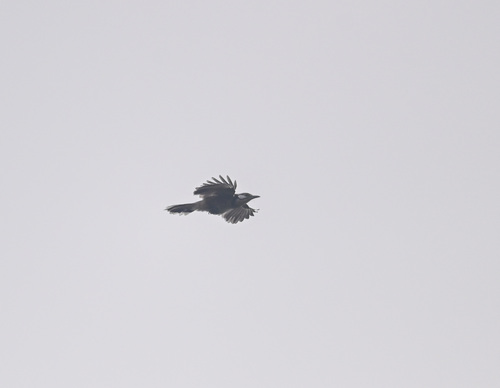 Greater Necklaced Laughingthrush
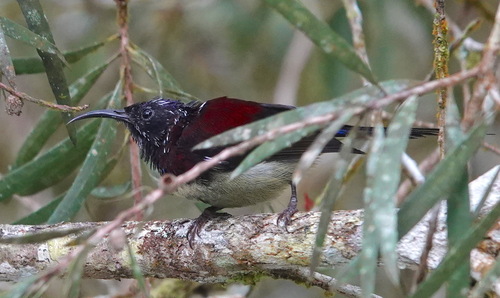 Black-throated Sunbird
In breve
Il modo più affidabile per separare il Greater Necklaced Laughingthrush dal Black-throated Sunbird è per dimensioni e struttura: il laughingthrush è un uccello grande e robusto, mentre il sunbird è piccolo e delicato. Anche a distanza o in condizioni di scarsa illuminazione, il corpo massiccio e il becco forte del laughingthrush si distinguono contro la silhouette snella e nutriente del sunbird. Entrambe le specie possono verificarsi in habitat forestali simili, quindi il contesto da solo non è sufficiente. Se intravedi l'uccello in volo o posato, concentrati prima sulla forma e le proporzioni generali, poi cerca differenze nella forma del becco e nel contrasto del piumaggio.
Consigli di identificazione
- Size is the fastest check: Se l'uccello è piccolo, appena più grande di un grande insetto, è un sunbird. Se è massiccio, delle dimensioni di un jay, o sembra molto più grande di un thrush, è un laughingthrush.
- Bill shape: I laughingthrush hanno un becco forte, dritto e conico adatto per un'alimentazione generalista. I sunbird hanno un becco lungo, snello e ricurvo per l'alimentazione di nettare. Anche in silhouette, il becco del sunbird è visibilmente ricurvo verso il basso e sottile.
- Face and breast pattern: Cerca il bold black-and-white 'necklace' e le marcature facciali sul laughingthrush. Il sunbird non mostra mai questo schema, indipendentemente dall'età o dal sesso.
- Coloration: I maschi di Black-throated Sunbirds sono iridescenti con una gola nera e colori metallici; le femmine sono più opache ma mancano comunque del forte patterning del laughingthrush. I laughingthrush sono di tonalità terrose con marcature complesse, mai iridescenti.
- Tail shape: I laughingthrush hanno una lunga coda larga spesso tenuta inclinata o aperta. I sunbird hanno una coda corta e stretta, a volte con piume centrali allungate nei maschi, ma mai così larga o lunga come quella del laughingthrush.
- Flight style: I sunbird sono veloci, agili e spesso si posano sui fiori. I laughingthrush volano con battiti d'ala più lenti e diretti e raramente si posano.
- Foraging behavior: I sunbird sono solitamente visti sui fiori, spesso in alto, nutrendosi di nettare. I laughingthrush sono più spesso a terra o in cespugli bassi, alla ricerca di insetti o frutta.
- Sociality: I laughingthrush sono spesso in gruppi rumorosi; i sunbird sono per lo più solitari o in coppie.
- Perched posture: I laughingthrush si posano eretti, spesso con un aspetto curvo e pesante. I sunbird si posano più orizzontalmente e sembrano delicati.
- Habitat micro-niche: Se l'uccello è in una fitta vegetazione o al margine della foresta, sospetta un laughingthrush; se è nella chioma o sui fiori, sospetta un sunbird.
- Voice (if heard): Non descritto nelle note, ma generalmente, i laughingthrush sono forti e vari nei richiami, mentre i sunbird hanno canti sottili e acuti.
- Immature birds: Non sono notati schemi specifici di ali per giovani o primi inverni per nessuna delle due specie, quindi fai affidamento su dimensioni e struttura anche per gli uccelli giovani.
- Pitfalls: Viste distanti in scarsa luce possono rendere difficile vedere i colori del sunbird, ma la dimensione e la forma del becco dovrebbero comunque essere chiare. Le femmine e i giovani sunbird sono opachi ma non mostrano mai il forte pattern facciale e del petto del laughingthrush.
- Introduced range: Se in Hawaii, solo il laughingthrush è presente come specie introdotta.
- Overlap: Entrambe le specie possono verificarsi nelle stesse foreste, quindi non usare solo la posizione; controlla sempre la struttura e il piumaggio.
Taglia
Il Greater Necklaced Laughingthrush è drammaticamente più grande del Black-throated Sunbird. Il sunbird pesa solo circa 5,3 grammi [wikidata], rendendolo un uccello minuscolo, quasi delle dimensioni di un colibrì, mentre il laughingthrush è un passeriforme di dimensioni medie o grandi (massa esatta non fornita, ma molto più pesante e massiccio secondo gli standard familiari). Sul campo, questo significa che il laughingthrush appare delle dimensioni di un corvo o di un jay, con una lunga coda e un corpo pesante, mentre il sunbird è delle dimensioni di un passero o più piccolo, con una costruzione snella e leggera. Questo divario di dimensioni è così grande che anche viste distanti o brevi dovrebbero rendere rara la confusione.
Piumaggio
Nessun schema specifico per età o solo per il volo è descritto per entrambe le specie, quindi concentrati sulla colorazione e le marcature generali. Il Greater Necklaced Laughingthrush mostra un piumaggio complesso e patternato con un bold black-and-white 'necklace' sul petto e sul viso, e generalmente parti superiori di tonalità terrose. Il Black-throated Sunbird, al contrario, è molto più colorato e iridescente, specialmente nei maschi, con una gola nera distintiva, tonalità metalliche e un aspetto molto meno patternato. Le femmine e i giovani del sunbird sono più semplici ma mancano comunque delle forti marcature facciali e del petto del laughingthrush. In tutte le età e sessi, il pattern facciale e del petto del laughingthrush è diagnostico quando visto bene.
Comportamento
I Greater Necklaced Laughingthrush sono tipicamente visti muoversi in gruppi sociali rumorosi, spesso foraggiando a terra o vicino al suolo o in vegetazione bassa, e possono essere piuttosto appariscenti quando attivi. I Black-throated Sunbirds sono solitamente solitari o in coppie, fluttuando attivamente tra i fiori in alto nella chioma o a livelli intermedi, nutrendosi di nettare con movimenti rapidi, in volo o posati. Lo stile di alimentazione del sunbird è molto più agile e aereo, mentre il laughingthrush è più terrestre e deliberato.
Habitat
Entrambe le specie condividono habitat simili: foreste umide subtropicali o tropicali e montane in tutta l'Asia meridionale e sudorientale [wikipedia]. L'habitat da solo non separa affidabilmente, poiché entrambe possono essere trovate in regioni e tipi di foresta sovrapposti. Tuttavia, all'interno dell'habitat, il laughingthrush è più probabile che venga visto in fitta vegetazione o ai margini della foresta, mentre il sunbird è più spesso nella chioma o intorno agli alberi in fiore.
Greater Necklaced Laughingthrush · Black-throated Sunbird · I miei uccelli difficili