

greater necklaced laughingthrush vs black-throated sunbird
Pterorhinus pectoralis versus Aethopyga saturata
Jogue um quiz com greater necklaced laughingthrush e black-throated sunbird
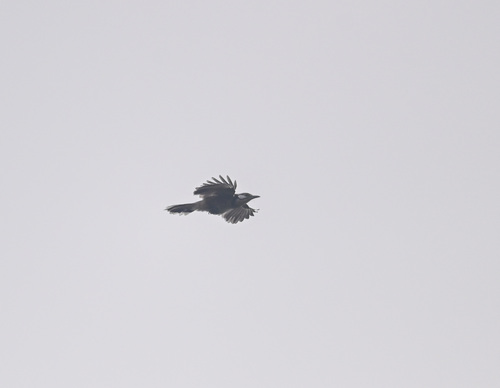 greater necklaced laughingthrush
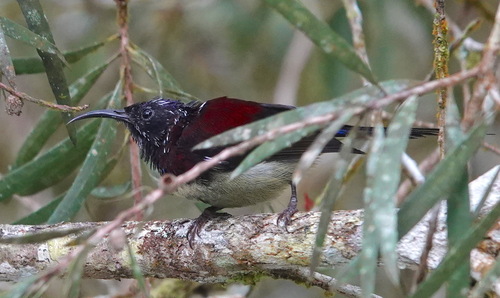 black-throated sunbird
Em resumo
A maneira mais confiável de separar o greater necklaced laughingthrush do black-throated sunbird é pelo tamanho e estrutura: o laughingthrush é um pássaro grande e robusto, enquanto o sunbird é pequeno e delicado. Mesmo à distância ou em luz fraca, o corpo volumoso e o bico forte do laughingthrush se destacam contra a silhueta esbelta e nectarívora do sunbird. Ambas as espécies podem ocorrer em habitats florestais semelhantes, então o contexto sozinho não é suficiente. Se você vislumbrar o pássaro em voo ou empoleirado, concentre-se primeiro na forma e proporções gerais, depois procure diferenças na forma do bico e no contraste da plumagem.
Dicas de identificação
- O tamanho é a verificação mais rápida: Se o pássaro é pequeno, mal maior que um grande inseto, é um sunbird. Se é volumoso, do tamanho de um jay, ou parece muito maior que um thrush, é um laughingthrush.
- Forma do bico: Os laughingthrushes têm um bico forte, reto e cônico, adequado para alimentação generalista. Os sunbirds têm um bico longo, esbelto e curvado para alimentação de néctar. Mesmo em silhueta, o bico do sunbird é notavelmente curvado para baixo e fino.
- Padrão do rosto e do peito: Procure o ousado 'colar' preto e branco e as marcas faciais no laughingthrush. O sunbird nunca mostra esse padrão, independentemente da idade ou sexo.
- Coloração: Os machos do black-throated sunbird são iridescentes com uma garganta preta e cores metálicas; as fêmeas são mais apagadas, mas ainda assim carecem do forte padrão do laughingthrush. Os laughingthrushes são em tons terrosos com marcas complexas, nunca iridescentes.
- Forma da cauda: Os laughingthrushes têm uma cauda longa e larga, frequentemente mantida ereta ou aberta. Os sunbirds têm uma cauda curta e estreita, às vezes com penas centrais alongadas nos machos, mas nunca tão largas ou longas quanto a do laughingthrush.
- Estilo de voo: Os sunbirds são rápidos, ágeis e frequentemente pairam em flores. Os laughingthrushes voam com batidas de asas mais lentas e diretas e raramente pairam.
- Comportamento de forrageio: Os sunbirds são geralmente vistos em flores, frequentemente em alturas, alimentando-se de néctar. Os laughingthrushes são mais frequentemente encontrados no chão ou em arbustos baixos, procurando insetos ou frutas.
- Sociabilidade: Os laughingthrushes costumam estar em grupos barulhentos; os sunbirds são principalmente solitários ou em pares.
- Postura empoleirada: Os laughingthrushes empoleiram-se eretos, frequentemente com uma aparência encurvada e pesada. Os sunbirds empoleiram-se mais horizontalmente e parecem delicados.
- Micro-nicho de habitat: Se o pássaro está em vegetação densa ou na borda da floresta, suspeite do laughingthrush; se estiver na copa ou em flores, suspeite do sunbird.
- Voz (se ouvida): Não descrita nas notas, mas geralmente, os laughingthrushes são barulhentos e variados em chamadas, enquanto os sunbirds têm canções finas e agudas.
- Pássaros imaturos: Nenhum padrão específico de asas juvenis ou de primeiro inverno é notado para nenhuma das espécies, então confie no tamanho e na estrutura para jovens pássaros também.
- Armadilhas: Visões distantes em luz fraca podem dificultar a visualização das cores do sunbird, mas o tamanho e a forma do bico ainda devem ser claros. Fêmeas e imaturos de sunbirds são apagados, mas nunca mostram o ousado padrão de rosto e peito do laughingthrush.
- Área introduzida: Se em Hawaii, apenas o laughingthrush está presente como uma espécie introduzida.
- Sobreposição: Ambas as espécies podem ocorrer nas mesmas florestas, então não use a localização sozinha; sempre verifique a estrutura e a plumagem.
Tamanho
O greater necklaced laughingthrush é dramaticamente maior que o black-throated sunbird. O sunbird pesa apenas cerca de 5,3 gramas [wikidata], tornando-se um pássaro minúsculo, quase do tamanho de um beija-flor, enquanto o laughingthrush é um passeriforme de médio a grande porte (massa exata não fornecida, mas muito mais pesado e volumoso pelos padrões da família). No campo, isso significa que o laughingthrush parece do tamanho de um corvo ou jay, com uma cauda longa e corpo pesado, enquanto o sunbird é do tamanho de um pardal ou menor, com uma construção esbelta e leve. Essa diferença de tamanho é tão grande que mesmo visões distantes ou breves devem tornar a confusão rara.
Plumagem
Nenhum padrão específico de idade ou de voo apenas para a parte superior da asa é descrito para nenhuma das espécies, então concentre-se na coloração e marcas gerais. O greater necklaced laughingthrush apresenta uma plumagem complexa e padronizada com um ousado 'colar' preto e branco no peito e rosto, e partes superiores geralmente em tons terrosos. O black-throated sunbird, em contraste, é muito mais colorido e iridescente, especialmente nos machos, com uma garganta preta distinta, tons metálicos e uma aparência muito menos padronizada. Fêmeas e imaturos do sunbird são mais simples, mas ainda carecem das fortes marcas faciais e de peito do laughingthrush. Em todas as idades e sexos, o padrão de rosto e peito do laughingthrush é diagnóstico quando visto bem.
Comportamento
Os greater necklaced laughingthrushes são tipicamente vistos se movendo em grupos sociais barulhentos, frequentemente forrageando no chão ou perto dele, ou em vegetação baixa, e podem ser bastante conspícuos quando ativos. Os black-throated sunbirds são geralmente solitários ou em pares, flutuando ativamente entre flores altas na copa ou em níveis intermediários, alimentando-se de néctar com movimentos rápidos, pairando ou empoleirando-se. O estilo de alimentação do sunbird é muito mais ágil e aéreo, enquanto o laughingthrush é mais terrestre e deliberado.
Habitat
Ambas as espécies compartilham habitats semelhantes: florestas tropicais ou subtropicais úmidas de planície e montanha em toda a Ásia do Sul e Sudeste [wikipedia]. O habitat sozinho não separa de forma confiável, pois ambas podem ser encontradas em regiões e tipos de floresta sobrepostos. No entanto, dentro do habitat, o laughingthrush é mais propenso a ser visto em vegetação densa ou nas bordas da floresta, enquanto o sunbird é mais frequentemente encontrado na copa ou ao redor de árvores floridas.
greater necklaced laughingthrush · black-throated sunbird · Minhas aves difíceis