

Motmot

Great Shearwater vs Yelkouan Shearwater

Ardenna gravis versus Puffinus yelkouan

Play a quiz with Great Shearwater and Yelkouan Shearwater
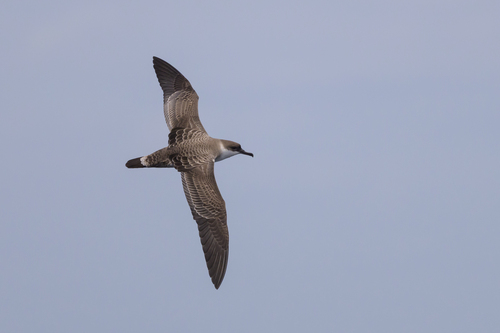
Great Shearwater (Ardenna gravis) Great Shearwater
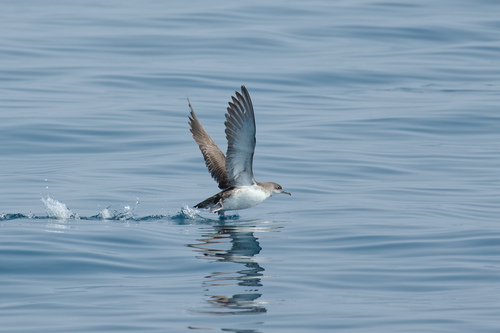
Yelkouan Shearwater (Puffinus yelkouan) Yelkouan Shearwater

Media

Loading…

In short

The most reliable way to separate Great Shearwater from Yelkouan Shearwater is by size and structure: Great Shearwater is much larger and bulkier, with a longer wingspan and heavier build. In flight, Great Shearwater shows a distinctive dark belly patch and a white horseshoe-shaped mark at the base of the tail, while Yelkouan lacks these features and appears more uniformly dark above and pale below. Both species have the classic 'shearing' flight style, but Great Shearwater's flight is more powerful and direct, with stiffer, straighter wings. If you see a large, broad-winged shearwater with a dark cap and obvious white tail base, it's Great Shearwater; a smaller, slimmer bird with a more even dark-and-white pattern is Yelkouan.

Identification tips

  1. Size is the most immediate clue: Great Shearwater is much larger and bulkier than Yelkouan. If the bird looks nearly gull-sized, it's Great; if it's closer to a small tern or Manx Shearwater, it's Yelkouan. This works for all ages and seasons.
  2. Wingspan and structure: Great Shearwater has long, broad wings and a heavy, barrel-chested body. Yelkouan is slim, with narrower wings and a more delicate build. In mixed flocks, this difference stands out.
  3. Tail pattern: Look for the white 'horseshoe' at the base of the tail on Great Shearwater. Yelkouan lacks this feature and has a plain tail base. This is visible in both perched and flying birds, especially from behind.
  4. Belly patch: Great Shearwater shows a brown belly patch contrasting with its otherwise white underparts. Yelkouan's underparts are clean white or slightly dusky, but never show a distinct patch. This is best seen in good light from below.
  5. Cap and face: Great Shearwater has a black cap extending below the eye, giving a hooded look. Yelkouan's head is more uniformly dark, blending into the upperparts, without a sharp cap.
  6. Shoulder markings: Great Shearwater often shows dark shoulder marks on the upperwing, visible in flight. Yelkouan's upperwing is more evenly dark, lacking strong shoulder contrast.
  7. Bill color: Great Shearwater has a black bill; Yelkouan's bill is also dark, so this is not a strong separator, but Great's bill may appear heavier.
  8. Flight style: Both shear, but Great Shearwater's flight is more forceful and direct, with fewer wingbeats and longer glides. Yelkouan is more fluttery and agile, often changing direction quickly.
  9. Group size: Great Shearwater is often seen in large, noisy flocks, especially around fishing boats. Yelkouan is usually in small groups or singly.
  10. Geographic context: In the Mediterranean, a shearwater is almost certainly Yelkouan. In the open Atlantic, especially off western Europe or the Americas, Great Shearwater is more likely.
  11. Underwing pattern: Both have pale underwings, but Great Shearwater's is cleaner white, while Yelkouan's may appear duskier or smudged. This is subtle and not always reliable.
  12. Voice: If you hear a loud 'eeyah' call from a group on the water, it's likely Great Shearwater. Yelkouan is quieter at sea.
  13. Comparison with Manx Shearwater: Yelkouan is very similar to Manx and can be confused with it; Great Shearwater is much larger and more robust than either.
  14. Juvenile/immature birds: No distinctive age-specific upperwing patterns are described for either species, so rely on size and tail/belly marks for all ages.
  15. Plumage pitfalls: In poor light or at distance, Yelkouan may appear darker below, but will never show the bold belly patch or tail horseshoe of Great Shearwater. Always look for these strong contrasts before relying on subtler marks.

Size

Great Shearwater is significantly larger, measuring 43–51 cm in length with a wingspan of 105–122 cm. Yelkouan Shearwater is much smaller at 30–35 cm long and a wingspan of 70–84 cm. This size difference is obvious in direct comparison or when seen near other seabirds. Great Shearwater appears bulkier and longer-winged, while Yelkouan is more compact and slender. If you are unsure, compare with nearby gulls or other shearwaters for context.

Plumage

Age-specific upperwing patterns are not described for either species, so focus on adult plumage. Great Shearwater adults show dark upperparts with a distinctive black cap, white underparts except for a brown belly patch, and a white 'horseshoe' at the base of the tail. The dark shoulder markings and black bill are also notable. In contrast, Yelkouan Shearwater is more evenly dark above and white below, lacking the belly patch and tail horseshoe. Yelkouan can look like a flying cross due to the sharp contrast between dark upperwings and pale underparts, but does not show the bold tail or belly marks of Great Shearwater. Both species have a dark upperwing and pale underwing, but Great Shearwater's underwing is cleaner white, while Yelkouan's may appear slightly duskier. Juvenile or immature-specific upperwing patterns are not detailed for either species in the sources.

Behaviour

Both species display the classic 'shearing' flight, gliding low over the water with stiff wings and few wingbeats. Great Shearwater's flight is more powerful and direct, with wings held stiff and straight, and it often appears to glide for longer periods. Yelkouan Shearwater also shears, but may look more buoyant and agile due to its smaller size. Great Shearwater is more likely to follow ships in large, noisy flocks, while Yelkouan is less gregarious and usually seen in smaller groups.

Habitat

Great Shearwater is an Atlantic species, breeding on remote South Atlantic islands and migrating widely in the Atlantic, often seen off the eastern coasts of the Americas and western Europe. Yelkouan Shearwater is a Mediterranean specialist, rarely straying far from the region. If seen in the Mediterranean, Yelkouan is expected; Great Shearwater is extremely rare there. Off western Europe, especially in late summer, Great Shearwater is more likely. Habitat overlap is minimal except for rare vagrants.

Voice

Great Shearwater has a piercing 'eeyah' cry, usually heard when resting in groups on the water. Yelkouan Shearwater's calls are not described in the sources, but are generally less conspicuous at sea. Voice is unlikely to be diagnostic at sea unless birds are calling at rest.

Submit a better description

Use the same sections as the comparison. Your text is published immediately.

The most reliable way to separate Great Shearwater from Yelkouan Shearwater is by size and structure: Great Shearwater is much larger and bulkier, with a longer wingspan and heavier build. In flight, Great Shearwater shows a distinctive dark belly patch and a white horseshoe-shaped mark at the base of the tail, while Yelkouan lacks these features and appears more uniformly dark above and pale below. Both species have the classic 'shearing' flight style, but Great Shearwater's flight is more powerful and direct, with stiffer, straighter wings. If you see a large, broad-winged shearwater with a dark cap and obvious white tail base, it's Great Shearwater; a smaller, slimmer bird with a more even dark-and-white pattern is Yelkouan.

  1. Size is the most immediate clue: Great Shearwater is much larger and bulkier than Yelkouan. If the bird looks nearly gull-sized, it's Great; if it's closer to a small tern or Manx Shearwater, it's Yelkouan. This works for all ages and seasons.
  2. Wingspan and structure: Great Shearwater has long, broad wings and a heavy, barrel-chested body. Yelkouan is slim, with narrower wings and a more delicate build. In mixed flocks, this difference stands out.
  3. Tail pattern: Look for the white 'horseshoe' at the base of the tail on Great Shearwater. Yelkouan lacks this feature and has a plain tail base. This is visible in both perched and flying birds, especially from behind.
  4. Belly patch: Great Shearwater shows a brown belly patch contrasting with its otherwise white underparts. Yelkouan's underparts are clean white or slightly dusky, but never show a distinct patch. This is best seen in good light from below.
  5. Cap and face: Great Shearwater has a black cap extending below the eye, giving a hooded look. Yelkouan's head is more uniformly dark, blending into the upperparts, without a sharp cap.
  6. Shoulder markings: Great Shearwater often shows dark shoulder marks on the upperwing, visible in flight. Yelkouan's upperwing is more evenly dark, lacking strong shoulder contrast.
  7. Bill color: Great Shearwater has a black bill; Yelkouan's bill is also dark, so this is not a strong separator, but Great's bill may appear heavier.
  8. Flight style: Both shear, but Great Shearwater's flight is more forceful and direct, with fewer wingbeats and longer glides. Yelkouan is more fluttery and agile, often changing direction quickly.
  9. Group size: Great Shearwater is often seen in large, noisy flocks, especially around fishing boats. Yelkouan is usually in small groups or singly.
  10. Geographic context: In the Mediterranean, a shearwater is almost certainly Yelkouan. In the open Atlantic, especially off western Europe or the Americas, Great Shearwater is more likely.
  11. Underwing pattern: Both have pale underwings, but Great Shearwater's is cleaner white, while Yelkouan's may appear duskier or smudged. This is subtle and not always reliable.
  12. Voice: If you hear a loud 'eeyah' call from a group on the water, it's likely Great Shearwater. Yelkouan is quieter at sea.
  13. Comparison with Manx Shearwater: Yelkouan is very similar to Manx and can be confused with it; Great Shearwater is much larger and more robust than either.
  14. Juvenile/immature birds: No distinctive age-specific upperwing patterns are described for either species, so rely on size and tail/belly marks for all ages.
  15. Plumage pitfalls: In poor light or at distance, Yelkouan may appear darker below, but will never show the bold belly patch or tail horseshoe of Great Shearwater. Always look for these strong contrasts before relying on subtler marks.

Great Shearwater is significantly larger, measuring 43–51 cm in length with a wingspan of 105–122 cm. Yelkouan Shearwater is much smaller at 30–35 cm long and a wingspan of 70–84 cm. This size difference is obvious in direct comparison or when seen near other seabirds. Great Shearwater appears bulkier and longer-winged, while Yelkouan is more compact and slender. If you are unsure, compare with nearby gulls or other shearwaters for context.

Age-specific upperwing patterns are not described for either species, so focus on adult plumage. Great Shearwater adults show dark upperparts with a distinctive black cap, white underparts except for a brown belly patch, and a white 'horseshoe' at the base of the tail. The dark shoulder markings and black bill are also notable. In contrast, Yelkouan Shearwater is more evenly dark above and white below, lacking the belly patch and tail horseshoe. Yelkouan can look like a flying cross due to the sharp contrast between dark upperwings and pale underparts, but does not show the bold tail or belly marks of Great Shearwater. Both species have a dark upperwing and pale underwing, but Great Shearwater's underwing is cleaner white, while Yelkouan's may appear slightly duskier. Juvenile or immature-specific upperwing patterns are not detailed for either species in the sources.

Both species display the classic 'shearing' flight, gliding low over the water with stiff wings and few wingbeats. Great Shearwater's flight is more powerful and direct, with wings held stiff and straight, and it often appears to glide for longer periods. Yelkouan Shearwater also shears, but may look more buoyant and agile due to its smaller size. Great Shearwater is more likely to follow ships in large, noisy flocks, while Yelkouan is less gregarious and usually seen in smaller groups.

Great Shearwater is an Atlantic species, breeding on remote South Atlantic islands and migrating widely in the Atlantic, often seen off the eastern coasts of the Americas and western Europe. Yelkouan Shearwater is a Mediterranean specialist, rarely straying far from the region. If seen in the Mediterranean, Yelkouan is expected; Great Shearwater is extremely rare there. Off western Europe, especially in late summer, Great Shearwater is more likely. Habitat overlap is minimal except for rare vagrants.

Great Shearwater has a piercing 'eeyah' cry, usually heard when resting in groups on the water. Yelkouan Shearwater's calls are not described in the sources, but are generally less conspicuous at sea. Voice is unlikely to be diagnostic at sea unless birds are calling at rest.

Discard your changes?

You have unsaved edits. If you leave now, those changes will be lost.

Great Shearwater · Yelkouan Shearwater · My Tricky Birds