

pardela-de-barrete vs fura-bucho-do-mediterrâneo
Ardenna gravis versus Puffinus yelkouan
Jogue um quiz com pardela-de-barrete e fura-bucho-do-mediterrâneo
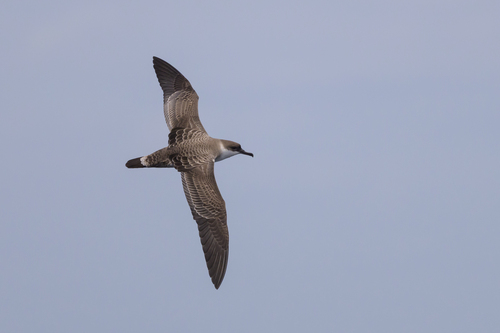 pardela-de-barrete
 fura-bucho-do-mediterrâneo
Em resumo
A maneira mais confiável de separar a pardela-de-barrete da fura-bucho-do-mediterrâneo é pelo tamanho e estrutura: a pardela-de-barrete é muito maior e mais robusta, com uma envergadura maior e uma construção mais pesada. Em voo, a pardela-de-barrete exibe uma mancha de barriga escura distinta e uma marca branca em forma de ferradura na base da cauda, enquanto a fura-bucho-do-mediterrâneo não possui essas características e parece mais uniformemente escura por cima e pálida por baixo. Ambas as espécies têm o clássico estilo de voo 'cortante', mas o voo da pardela-de-barrete é mais poderoso e direto, com asas mais rígidas e retas. Se você ver uma pardela grande, de asas largas, com uma touca escura e uma base de cauda branca óbvia, é a pardela-de-barrete; um pássaro menor e mais esbelto com um padrão mais uniforme de preto e branco é a fura-bucho-do-mediterrâneo.
Dicas de identificação
- O tamanho é a pista mais imediata: A pardela-de-barrete é muito maior e mais robusta do que a fura-bucho-do-mediterrâneo. Se o pássaro parecer quase do tamanho de uma gaivota, é a pardela-de-barrete; se estiver mais próximo de uma pequena andorinha ou pardela-sombria, é a fura-bucho-do-mediterrâneo. Isso funciona para todas as idades e estações.
- Envergadura e estrutura: A pardela-de-barrete tem asas longas e largas e um corpo pesado e robusto. A fura-bucho-do-mediterrâneo é esbelta, com asas mais estreitas e uma construção mais delicada. Em bandos mistos, essa diferença se destaca.
- Padrão da cauda: Procure pela 'ferradura' branca na base da cauda da pardela-de-barrete. A fura-bucho-do-mediterrâneo não possui essa característica e tem uma base de cauda simples. Isso é visível tanto em pássaros empoleirados quanto em voo, especialmente de trás.
- Mancha na barriga: A pardela-de-barrete exibe uma mancha de barriga marrom que contrasta com suas partes inferiores brancas. As partes inferiores da fura-bucho-do-mediterrâneo são brancas limpas ou ligeiramente acinzentadas, mas nunca mostram uma mancha distinta. Isso é melhor visto em boa luz de baixo.
- Touca e face: A pardela-de-barrete tem uma touca preta que se estende abaixo do olho, dando uma aparência de capuz. A cabeça da fura-bucho-do-mediterrâneo é mais uniformemente escura, misturando-se com as partes superiores, sem uma touca acentuada.
- Marcas no ombro: A pardela-de-barrete frequentemente mostra marcas escuras no ombro na asa superior, visíveis em voo. A asa superior da fura-bucho-do-mediterrâneo é mais uniformemente escura, sem um forte contraste no ombro.
- Cor do bico: A pardela-de-barrete tem um bico preto; o bico da fura-bucho-do-mediterrâneo também é escuro, então isso não é um separador forte, mas o bico da pardela-de-barrete pode parecer mais pesado.
- Estilo de voo: Ambas cortam, mas o voo da pardela-de-barrete é mais forçado e direto, com menos batidas de asa e deslizamentos mais longos. A fura-bucho-do-mediterrâneo é mais agitada e ágil, muitas vezes mudando de direção rapidamente.
- Tamanho do grupo: A pardela-de-barrete é frequentemente vista em grandes bandos barulhentos, especialmente ao redor de barcos de pesca. A fura-bucho-do-mediterrâneo geralmente está em pequenos grupos ou sozinha.
- Contexto geográfico: No Mediterrâneo, uma pardela é quase certamente a fura-bucho-do-mediterrâneo. No Atlântico aberto, especialmente ao largo da Europa ocidental ou das Américas, a pardela-de-barrete é mais provável.
- Padrão da asa inferior: Ambas têm asas inferiores pálidas, mas a da pardela-de-barrete é branca mais limpa, enquanto a da fura-bucho-do-mediterrâneo pode parecer mais acinzentada ou borrada. Isso é sutil e nem sempre confiável.
- Voz: Se você ouvir um chamado alto 'eeyah' de um grupo na água, é provável que seja a pardela-de-barrete. A fura-bucho-do-mediterrâneo é mais silenciosa no mar.
- Comparação com a pardela-sombria: A fura-bucho-do-mediterrâneo é muito semelhante à pardela-sombria e pode ser confundida com ela; a pardela-de-barrete é muito maior e mais robusta do que ambas.
- Pássaros juvenis/imaturos: Nenhum padrão de asa superior específico para idades distintas é descrito para nenhuma das espécies, então confie no tamanho e nas marcas da cauda/barriga para todas as idades.
- Armadilhas de plumagem: Em luz fraca ou à distância, a fura-bucho-do-mediterrâneo pode parecer mais escura por baixo, mas nunca mostrará a ousada mancha na barriga ou a ferradura na cauda da pardela-de-barrete. Sempre procure por esses fortes contrastes antes de confiar em marcas mais sutis.
Tamanho
A pardela-de-barrete é significativamente maior, medindo 43–51 cm de comprimento com uma envergadura de 105–122 cm. A fura-bucho-do-mediterrâneo é muito menor, com 30–35 cm de comprimento e uma envergadura de 70–84 cm. Essa diferença de tamanho é óbvia em comparação direta ou quando vista perto de outras aves marinhas. A pardela-de-barrete parece mais robusta e com asas mais longas, enquanto a fura-bucho-do-mediterrâneo é mais compacta e esbelta. Se você estiver em dúvida, compare com gaivotas próximas ou outras pardelas para contexto.
Plumagem
Padrões de asa superior específicos para idades não são descritos para nenhuma das espécies, então concentre-se na plumagem adulta. Os adultos da pardela-de-barrete mostram partes superiores escuras com uma touca preta distinta, partes inferiores brancas, exceto por uma mancha de barriga marrom, e uma 'ferradura' branca na base da cauda. As marcas escuras no ombro e o bico preto também são notáveis. Em contraste, a fura-bucho-do-mediterrâneo é mais uniformemente escura por cima e branca por baixo, sem a mancha na barriga e a ferradura na cauda. A fura-bucho-do-mediterrâneo pode parecer uma cruz voadora devido ao forte contraste entre as asas superiores escuras e as partes inferiores pálidas, mas não mostra as marcas ousadas na cauda ou na barriga da pardela-de-barrete. Ambas as espécies têm uma asa superior escura e uma asa inferior pálida, mas a asa inferior da pardela-de-barrete é branca mais limpa, enquanto a da fura-bucho-do-mediterrâneo pode parecer ligeiramente mais acinzentada. Padrões de asa superior específicos para juvenis ou imaturos não são detalhados para nenhuma das espécies nas fontes.
Comportamento
Ambas as espécies exibem o clássico voo 'cortante', deslizando baixo sobre a água com asas rígidas e poucas batidas de asa. O voo da pardela-de-barrete é mais poderoso e direto, com asas mantidas rígidas e retas, e muitas vezes parece deslizar por períodos mais longos. A fura-bucho-do-mediterrâneo também corta, mas pode parecer mais flutuante e ágil devido ao seu tamanho menor. A pardela-de-barrete é mais propensa a seguir barcos em grandes bandos barulhentos, enquanto a fura-bucho-do-mediterrâneo é menos gregária e geralmente vista em grupos menores.
Habitat
A pardela-de-barrete é uma espécie atlântica, nidificando em ilhas remotas do Atlântico Sul e migrando amplamente pelo Atlântico, frequentemente vista ao largo das costas orientais das Américas e da Europa ocidental. A fura-bucho-do-mediterrâneo é uma especialista do Mediterrâneo, raramente se afastando da região. Se vista no Mediterrâneo, a fura-bucho-do-mediterrâneo é esperada; a pardela-de-barrete é extremamente rara lá. Ao largo da Europa ocidental, especialmente no final do verão, a pardela-de-barrete é mais provável. A sobreposição de habitat é mínima, exceto para vagantes raros.
Voz
A pardela-de-barrete tem um grito penetrante 'eeyah', geralmente ouvido quando descansa em grupos na água. Os chamados da fura-bucho-do-mediterrâneo não são descritos nas fontes, mas geralmente são menos conspícuos no mar. A voz é improvável de ser diagnóstica no mar, a menos que os pássaros estejam chamando enquanto descansam.
pardela-de-barrete · fura-bucho-do-mediterrâneo · Minhas aves difíceis