

Great Kiskadee vs Boat-billed Flycatcher
Pitangus sulphuratus versus Megarynchus pitangua
Play a quiz with Great Kiskadee and Boat-billed Flycatcher
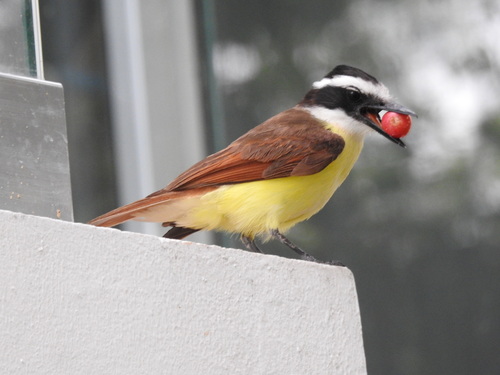 Great Kiskadee
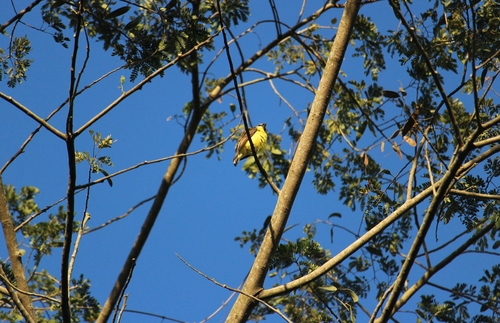 Boat-billed Flycatcher
In short
The most reliable field mark between Great Kiskadee and Boat-billed Flycatcher is the bill: Boat-billed Flycatcher has a much larger, longer, and broader bill, giving its head a distinctive heavy look, while Great Kiskadee's bill is shorter and stubbier. In flight or perched, check the upperparts and wing/tail edges—Great Kiskadee shows strong rufous fringes, while Boat-billed Flycatcher is more olive above with only thin, pale cinnamon or rufous edges. Juvenile Boat-billed Flycatchers have wider cinnamon edges on the wings and lack the crown patch, but Great Kiskadee immatures are less well described. Both have a bold white supercilium and yellow underparts, but the overall jizz and bill shape are your best quick clues. Voice is not diagnostic for separation, but both are very vocal and conspicuous.
Identification tips
- Bill size and shape: Boat-billed Flycatcher has a much larger, broader, and longer bill, giving its head a heavy, big-headed look. Great Kiskadee's bill is shorter, stubbier, and less massive. This is the single most reliable field mark at all ages and in all conditions.
- Upperparts color: Great Kiskadee is brown above, while Boat-billed Flycatcher is more olive or olive-brown. In strong light, Kiskadee's brown can look warmer; Boat-billed's olive is usually duller.
- Wing and tail edges: Great Kiskadee shows strong, obvious rufous fringes on the wings and tail, especially in fresh plumage. Boat-billed Flycatcher has only thin, pale cinnamon or rufous edges, and some subspecies lack rufous on the tail entirely.
- Juvenile/immature wing pattern: Juvenile Boat-billed Flycatchers have broader cinnamon edges on the flight feathers and lack the crown patch. Great Kiskadee juveniles are less well described but are not noted for such broad cinnamon edges. If you see a young bird with a huge bill and broad cinnamon wing edges, it's a Boat-billed.
- Crown patch: Both species have a concealed yellow (sometimes orange-rufous) crown patch, but it's rarely visible. Juvenile Boat-billed Flycatchers lack this patch entirely.
- Supercilium and face: Both have a bold white supercilium, but Boat-billed's is broader and wraps farther around the nape. Both have a blackish crown and white cheeks, but Kiskadee's head pattern is a bit more sharply defined.
- Underparts: Both have bright yellow underparts and white throats. This is not a reliable separator.
- Size and structure: Great Kiskadee is slightly larger and heavier, but this is subtle. Boat-billed's big-headed look is more distinctive than overall size.
- Behavior: Great Kiskadee is more likely to be seen eating a wide range of foods, including fruit and even bread at feeders. Boat-billed is less omnivorous but also perches conspicuously.
- Habitat: Both occur in open woodlands and near water or humans, but Great Kiskadee is more abundant in urban areas. Don't rely on habitat alone.
- Vocalizations: Both are loud and vocal, but their calls are not reliably separable for most observers. Use as a supporting clue only.
- Sallying behavior: Both hunt from exposed perches, but Great Kiskadee may be seen fishing or taking larger prey.
- Subspecific variation (Boat-billed): Some Boat-billed subspecies have more greenish or grayish olive upperparts and lack rufous on the tail; others have more prominent rufous edges. Always check the bill size first.
- Flight views: In flight, look for the bill and the amount of rufous in the wings/tail. Great Kiskadee's rufous is usually stronger and more extensive.
- Pitfalls: Immature Boat-billed Flycatchers with broad cinnamon wing edges can look superficially like Kiskadee, but the bill remains diagnostic. If the bill looks massive and the bird is big-headed, it's Boat-billed, regardless of plumage.
Size
Great Kiskadee is slightly larger and heavier, averaging about 25–28 cm in length and 74 g in mass, making it one of the largest tyrant flycatchers. Boat-billed Flycatcher is a bit smaller at 21.5–24 cm and 53–70 g. In the field, this difference is subtle and often masked by posture, but the Kiskadee may appear bulkier overall. The Boat-billed's large head and massive bill can make it seem big-headed for its body size.
Plumage
For adults, Great Kiskadee has brown upperparts with strong rufous fringes on the wings and tail, a black head with a bold white supercilium, and a hidden yellow crown stripe. Boat-billed Flycatcher adults are more olive or olive-brown above, with dusky brownish wings and tail that have only thin, pale cinnamon or rufous edges. Their head pattern is similar—blackish crown, white supercilium, and white cheeks—but Boat-billed's supercilium is broader and wraps farther around the nape. Juvenile Boat-billed Flycatchers lack the crown patch, have a yellowish tinge to the supercilium, darker brownish upperparts, and broader cinnamon edges on the wings, which can cause confusion with Kiskadee, but the bill remains diagnostic. Subspecific variation in Boat-billed can affect upperpart color and the amount of rufous on the tail, but the bill size and shape remain constant.
Behaviour
Both species are conspicuous, noisy, and often found in open areas or near human habitation. Great Kiskadee is more omnivorous and opportunistic, sometimes fishing or taking small vertebrates, and is especially common in urban areas. Boat-billed Flycatcher is also bold and often perches in the open, but its behavior is less described as varied. Both hunt from exposed perches and sally for insects, but Kiskadee is more likely to be seen feeding on a wider range of items, including fruit and even bread at feeders.
Habitat
Both species occupy open woodland, edges, and areas with tall trees, often near water or human habitation. Their ranges overlap widely in Central and South America. Habitat alone is not a reliable separator, but Great Kiskadee is often more abundant and adaptable to urban settings, while Boat-billed Flycatcher is found in similar but sometimes slightly less urbanized or more forested edge habitats.
Voice
Both species are very vocal and have loud, distinctive calls, but their voices are not reliably separable in the field for most observers. Great Kiskadee is famous for its exuberant, onomatopoeic 'BEE-tee-WEE' or 'bem-te-vi' call, while Boat-billed Flycatcher's call is less well described in these notes. Use voice as a supporting clue, not a primary separator.