

Great Kiskadee vs Boat-billed Flycatcher
Pitangus sulphuratus contro Megarynchus pitangua
Fai un quiz con Great Kiskadee e Boat-billed Flycatcher
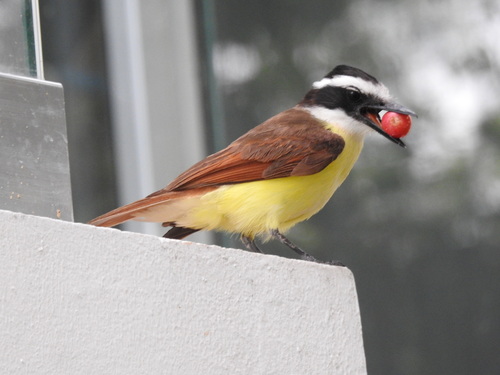 Great Kiskadee
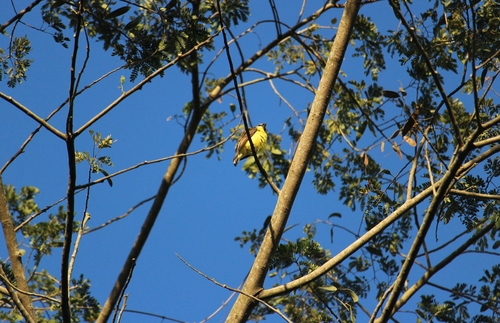 Boat-billed Flycatcher
In breve
Il segno distintivo più affidabile tra Great Kiskadee e Boat-billed Flycatcher è il becco: il Boat-billed Flycatcher ha un becco molto più grande, lungo e largo, dando alla sua testa un aspetto pesante distintivo, mentre il becco del Great Kiskadee è più corto e tozzo. In volo o posato, controlla le parti superiori e i bordi delle ali/coda—il Great Kiskadee mostra forti bordi rugginosi, mentre il Boat-billed Flycatcher è più oliva sopra con solo sottili bordi color cannella pallido o rugginoso. I giovani Boat-billed Flycatcher hanno bordi color cannella più ampi sulle ali e mancano della macchia sulla corona, ma i giovani Great Kiskadee sono meno ben descritti. Entrambi hanno un bold supercilium bianco e parti inferiori gialle, ma il complessivo aspetto e la forma del becco sono i tuoi migliori indizi rapidi. La voce non è diagnostica per la separazione, ma entrambi sono molto vocali e appariscenti.
Consigli di identificazione
- Dimensione e forma del becco: Il Boat-billed Flycatcher ha un becco molto più grande, più largo e più lungo, dando alla sua testa un aspetto pesante e grande. Il becco del Great Kiskadee è più corto, tozzo e meno massiccio. Questo è il segno distintivo più affidabile in tutte le età e in tutte le condizioni.
- Colore delle parti superiori: Il Great Kiskadee è marrone sopra, mentre il Boat-billed Flycatcher è più oliva o marrone oliva. In forte luce, il marrone del Kiskadee può sembrare più caldo; l'oliva del Boat-billed è di solito più opaca.
- Bordi delle ali e della coda: Il Great Kiskadee mostra forti e ovvi bordi rugginosi sulle ali e sulla coda, specialmente nel piumaggio fresco. Il Boat-billed Flycatcher ha solo sottili bordi color cannella pallido o rugginoso, e alcune sottospecie mancano completamente di rugginoso sulla coda.
- Schema delle ali dei giovani/immauri: I giovani Boat-billed Flycatcher hanno bordi color cannella più ampi sulle piume da volo e mancano della macchia sulla corona. I giovani Great Kiskadee sono meno ben descritti ma non sono notati per avere bordi color cannella così ampi. Se vedi un giovane uccello con un enorme becco e ampi bordi color cannella sulle ali, è un Boat-billed.
- Macchia sulla corona: Entrambe le specie hanno una macchia gialla (a volte arancio-rugginosa) sulla corona, ma è raramente visibile. I giovani Boat-billed Flycatcher mancano completamente di questa macchia.
- Supercilium e faccia: Entrambi hanno un bold supercilium bianco, ma quello del Boat-billed è più ampio e si avvolge più lontano attorno alla nuca. Entrambi hanno una corona nerastra e guance bianche, ma il pattern della testa del Kiskadee è un po' più definito.
- Parti inferiori: Entrambi hanno parti inferiori gialle brillanti e gole bianche. Questo non è un separatore affidabile.
- Dimensione e struttura: Il Great Kiskadee è leggermente più grande e pesante, ma questo è sottile. L'aspetto grande della testa del Boat-billed è più distintivo della dimensione complessiva.
- Comportamento: Il Great Kiskadee è più probabile che venga visto mangiare una vasta gamma di cibi, inclusi frutta e persino pane nei mangiatoie. Il Boat-billed è meno onnivoro ma si posa anche in modo appariscente.
- Habitat: Entrambi si trovano in boschi aperti e vicino all'acqua o agli esseri umani, ma il Great Kiskadee è più abbondante nelle aree urbane. Non fare affidamento solo sull'habitat.
- Vocalizzazioni: Entrambi sono rumorosi e vocali, ma i loro richiami non sono affidabilmente separabili per la maggior parte degli osservatori. Usa come indizio di supporto solo.
- Comportamento di sallying: Entrambi cacciano da posatoi esposti, ma il Great Kiskadee può essere visto pescare o prendere prede più grandi.
- Variazione subspecifica (Boat-billed): Alcune sottospecie di Boat-billed hanno parti superiori più verdastre o grigiastre e mancano di rugginoso sulla coda; altre hanno bordi rugginosi più prominenti. Controlla sempre prima la dimensione del becco.
- Viste in volo: In volo, cerca il becco e la quantità di rugginoso nelle ali/coda. Il rugginoso del Great Kiskadee è di solito più forte e più esteso.
- Trappole: I giovani Boat-billed Flycatcher con ampi bordi color cannella sulle ali possono sembrare superficialmente come il Kiskadee, ma il becco rimane diagnostico. Se il becco sembra massiccio e l'uccello ha una testa grande, è un Boat-billed, indipendentemente dal piumaggio.
Taglia
Il Great Kiskadee è leggermente più grande e pesante, con una lunghezza media di circa 25–28 cm e una massa di 74 g, rendendolo uno dei più grandi tyrant flycatchers. Il Boat-billed Flycatcher è un po' più piccolo, con una lunghezza di 21.5–24 cm e 53–70 g. Sul campo, questa differenza è sottile e spesso mascherata dalla postura, ma il Kiskadee può apparire più robusto nel complesso. La grande testa e il becco massiccio del Boat-billed possono farlo sembrare grande per la sua dimensione corporea.
Piumaggio
Per gli adulti, il Great Kiskadee ha parti superiori marroni con forti bordi rugginosi sulle ali e sulla coda, una testa nera con un bold supercilium bianco e una striscia gialla nascosta sulla corona. Gli adulti del Boat-billed Flycatcher sono più oliva o marrone oliva sopra, con ali e coda marroni scuri che hanno solo sottili bordi color cannella pallido o rugginoso. Il loro pattern della testa è simile—corona nerastra, supercilium bianco e guance bianche—ma il supercilium del Boat-billed è più ampio e si avvolge più lontano attorno alla nuca. I giovani Boat-billed Flycatcher mancano della macchia sulla corona, hanno una sfumatura giallastra nel supercilium, parti superiori marroni più scure e bordi color cannella più ampi sulle ali, il che può causare confusione con il Kiskadee, ma il becco rimane diagnostico. La variazione subspecifica nel Boat-billed può influenzare il colore delle parti superiori e la quantità di rugginoso sulla coda, ma la dimensione e la forma del becco rimangono costanti.
Comportamento
Entrambe le specie sono appariscenti, rumorose e spesso si trovano in aree aperte o vicino all'abitazione umana. Il Great Kiskadee è più onnivoro e opportunistico, a volte pesca o prende piccoli vertebrati, ed è particolarmente comune nelle aree urbane. Il Boat-billed Flycatcher è anche audace e spesso si posa in modo aperto, ma il suo comportamento è meno descritto come vario. Entrambi cacciano da posatoi esposti e si lanciano per gli insetti, ma il Kiskadee è più probabile che venga visto nutrirsi di una gamma più ampia di elementi, inclusi frutta e persino pane nei mangiatoie.
Habitat
Entrambe le specie occupano boschi aperti, bordi e aree con alberi alti, spesso vicino all'acqua o all'abitazione umana. I loro areali si sovrappongono ampiamente in America Centrale e Meridionale. L'habitat da solo non è un separatore affidabile, ma il Great Kiskadee è spesso più abbondante e adattabile agli ambienti urbani, mentre il Boat-billed Flycatcher si trova in habitat simili ma a volte leggermente meno urbanizzati o più boschivi.
Voce
Entrambe le specie sono molto vocali e hanno richiami forti e distintivi, ma le loro voci non sono affidabilmente separabili sul campo per la maggior parte degli osservatori. Il Great Kiskadee è famoso per il suo esuberante e onomatopeico richiamo 'BEE-tee-WEE' o 'bem-te-vi', mentre il richiamo del Boat-billed Flycatcher è meno ben descritto in queste note. Usa la voce come indizio di supporto, non come separatore primario.
Great Kiskadee · Boat-billed Flycatcher · I miei uccelli difficili