

Motmot

Fieldfare vs White-rumped Shama

Turdus pilaris versus Copsychus malabaricus

Play a quiz with Fieldfare and White-rumped Shama
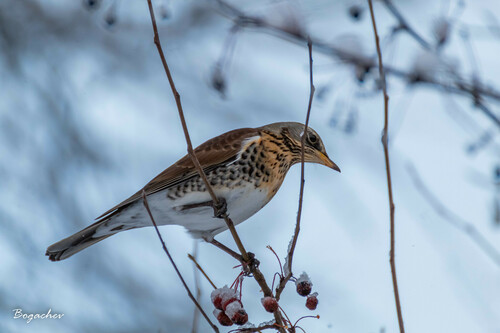
Fieldfare (Turdus pilaris) Fieldfare
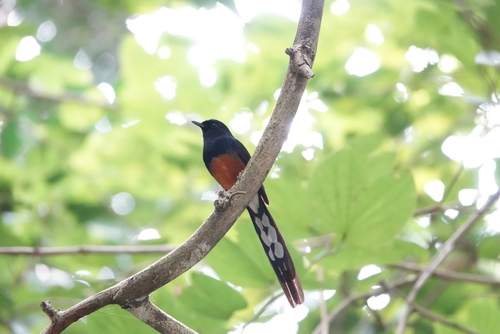
White-rumped Shama (Copsychus malabaricus) White-rumped Shama

Media

Loading…

In short

The most reliable field mark is the Fieldfare’s bold white underwing coverts and axillaries, which flash conspicuously in flight—this is never shown by White-rumped Shama of any age. Fieldfare is a large, robust thrush with a slate-grey head and rump, heavily spotted breast, and a strong, slightly decurved yellowish bill, while White-rumped Shama is a much smaller, long-tailed songbird with a striking white rump and outer tail, glossy black upperparts (male), and chestnut belly. Juvenile Fieldfares are duller but still show the thrush structure and underwing pattern; juvenile shamas are blotchy brown and lack any white in the wing. If you see a bird with a long, fanned tail and white rump, especially in dense undergrowth, it is a shama; a bird with a grey head, spotted breast, and white underwings in open country is a Fieldfare.

Identification tips

  1. White underwing coverts/axillaries (Fieldfare only): In any age or season, Fieldfare flashes bright white under the wing in flight—shama never shows white here.
  2. White rump and outer tail (Shama only): Adult and juvenile shama have a prominent white rump and outer tail feathers, visible both perched and in flight; Fieldfare’s rump is grey, and tail is dark with only subtle pale fringes.
  3. Body size and shape: Fieldfare is a large, chunky thrush with a robust body and upright stance; shama is much smaller, slender, and long-tailed, with a more horizontal posture.
  4. Tail length and shape: Shama’s tail is extremely long, often fanned or cocked, and extends well beyond the wingtips; Fieldfare’s tail is shorter, rounded, and never fanned.
  5. Head and upperparts: Fieldfare has a slate-grey head, nape, and rump with a dark brown back; shama males are glossy black above, females grey-brown, both with a white rump.
  6. Breast pattern: Fieldfare’s breast is creamy-buff with bold dark spots or streaks (less marked in females and juveniles); shama has a plain chestnut belly (male) or pale brownish underparts (female/juvenile), sometimes with blotches in juveniles, but never thrush-like spots.
  7. Bill: Fieldfare’s bill is strong, slightly decurved, yellowish with a dark tip (especially in winter); shama’s bill is slender, straight, and black.
  8. Legs and feet: Fieldfare has brown legs and feet; shama’s are pink.
  9. Flight style: Fieldfare flies directly and steadily, often in flocks; shama’s flight is undulating, and it rarely flies far in the open.
  10. Perching behavior: Fieldfare perches upright in the open or in trees; shama perches low, often hidden, with tail cocked or fanned.
  11. Habitat: Fieldfare is found in open fields, woodland edges, and sometimes urban parks in winter; shama is almost always in dense undergrowth or bamboo thickets.
  12. Vocalizations: Fieldfare gives a harsh "tsak tsak" call, especially in flight; shama sings a rich, melodious song and calls are softer and more musical.
  13. Juvenile confusion: Juvenile Fieldfare is duller but still thrush-shaped and shows white underwing; juvenile shama is blotchy brown, lacks white underwing, and has a long tail.
  14. Seasonal context: Fieldfare is a migrant in much of its range and often seen in flocks in winter; shama is resident and territorial year-round.
  15. Sex differences: Female Fieldfare is browner and less boldly marked than male, but still larger and more robust than any shama; female shama is smaller, greyer, and always shows the white rump and long tail.

Size

Fieldfare is much heavier and bulkier, averaging around 105 g [wikidata], while White-rumped Shama is much lighter at 28–34 g [wikipedia]. Fieldfare is also slightly longer (average 25 cm, wingspan 39–42 cm), but the shama’s long tail can make it appear deceptively long (23–28 cm including tail). In the field, Fieldfare looks like a classic thrush—stout, upright, and robust—while shama is slender, with a proportionally much longer, graduated tail and a more delicate build.

Plumage

Juvenile Fieldfare is duller than the adult, with pale streaks replacing the adult’s bold dark streaks, but still shows the white underwing coverts and axillaries in flight—a key mark at all ages. Juvenile White-rumped Shama is greyish-brown with a blotchy or spotted chest, lacking the adult’s glossy black and chestnut, and crucially never shows white in the wing or underwing. Adult male Fieldfare has a slate-grey head, nape, and rump, dark brown back, blackish tail, and a boldly speckled creamy-buff breast; the female is similar but browner and less boldly marked. Adult male shama is glossy black above with a white rump and outer tail, chestnut underparts, and black bill; female is greyer-brown above and paler below, but both sexes have the white rump and outer tail. In flight, Fieldfare’s white underwing stands out, while shama’s white is limited to rump and outer tail, never underwing.

Behaviour

Fieldfare is often seen in flocks, especially in open fields, flying with steady, direct flight and frequently perching upright in trees or on the ground. It is bold and noisy, often giving harsh calls in flight. White-rumped Shama is solitary or in pairs, extremely shy, and prefers dense undergrowth, often skulking low and flicking or fanning its long tail. Shama’s flight is undulating and it often perches with the tail cocked. Fieldfare is much more likely to be seen in open country or perched high, while shama is almost always in thick vegetation.

Habitat

Fieldfare breeds in woodland and scrub across northern Europe and the Palearctic, but winters in open fields, hedgerows, and woodland edges, often far from dense forest. White-rumped Shama is native to dense undergrowth and secondary forests in South and Southeast Asia, and where introduced, favors thick valley forests or lowland broadleaf forest undergrowth. If you find the bird in open country or high in a tree, it is likely a Fieldfare; if deep in tangled thickets or bamboo, it is likely a shama.

Voice

Fieldfare’s call is a harsh, repeated "tsak tsak tsuk," especially in flight, and its song is a weak, mixed series of thrush-like phrases, whistles, and squeaks, sometimes delivered in flight or from a perch. White-rumped Shama is famed for its rich, melodious, and varied song, but its calls are less harsh and more musical than Fieldfare’s. If you hear a harsh, chattering call from a flock, suspect Fieldfare; a beautiful, fluty song from dense cover points to shama.

Submit a better description

Use the same sections as the comparison. Your text is published immediately.

The most reliable field mark is the Fieldfare’s bold white underwing coverts and axillaries, which flash conspicuously in flight—this is never shown by White-rumped Shama of any age. Fieldfare is a large, robust thrush with a slate-grey head and rump, heavily spotted breast, and a strong, slightly decurved yellowish bill, while White-rumped Shama is a much smaller, long-tailed songbird with a striking white rump and outer tail, glossy black upperparts (male), and chestnut belly. Juvenile Fieldfares are duller but still show the thrush structure and underwing pattern; juvenile shamas are blotchy brown and lack any white in the wing. If you see a bird with a long, fanned tail and white rump, especially in dense undergrowth, it is a shama; a bird with a grey head, spotted breast, and white underwings in open country is a Fieldfare.

  1. White underwing coverts/axillaries (Fieldfare only): In any age or season, Fieldfare flashes bright white under the wing in flight—shama never shows white here.
  2. White rump and outer tail (Shama only): Adult and juvenile shama have a prominent white rump and outer tail feathers, visible both perched and in flight; Fieldfare’s rump is grey, and tail is dark with only subtle pale fringes.
  3. Body size and shape: Fieldfare is a large, chunky thrush with a robust body and upright stance; shama is much smaller, slender, and long-tailed, with a more horizontal posture.
  4. Tail length and shape: Shama’s tail is extremely long, often fanned or cocked, and extends well beyond the wingtips; Fieldfare’s tail is shorter, rounded, and never fanned.
  5. Head and upperparts: Fieldfare has a slate-grey head, nape, and rump with a dark brown back; shama males are glossy black above, females grey-brown, both with a white rump.
  6. Breast pattern: Fieldfare’s breast is creamy-buff with bold dark spots or streaks (less marked in females and juveniles); shama has a plain chestnut belly (male) or pale brownish underparts (female/juvenile), sometimes with blotches in juveniles, but never thrush-like spots.
  7. Bill: Fieldfare’s bill is strong, slightly decurved, yellowish with a dark tip (especially in winter); shama’s bill is slender, straight, and black.
  8. Legs and feet: Fieldfare has brown legs and feet; shama’s are pink.
  9. Flight style: Fieldfare flies directly and steadily, often in flocks; shama’s flight is undulating, and it rarely flies far in the open.
  10. Perching behavior: Fieldfare perches upright in the open or in trees; shama perches low, often hidden, with tail cocked or fanned.
  11. Habitat: Fieldfare is found in open fields, woodland edges, and sometimes urban parks in winter; shama is almost always in dense undergrowth or bamboo thickets.
  12. Vocalizations: Fieldfare gives a harsh "tsak tsak" call, especially in flight; shama sings a rich, melodious song and calls are softer and more musical.
  13. Juvenile confusion: Juvenile Fieldfare is duller but still thrush-shaped and shows white underwing; juvenile shama is blotchy brown, lacks white underwing, and has a long tail.
  14. Seasonal context: Fieldfare is a migrant in much of its range and often seen in flocks in winter; shama is resident and territorial year-round.
  15. Sex differences: Female Fieldfare is browner and less boldly marked than male, but still larger and more robust than any shama; female shama is smaller, greyer, and always shows the white rump and long tail.

Fieldfare is much heavier and bulkier, averaging around 105 g [wikidata], while White-rumped Shama is much lighter at 28–34 g [wikipedia]. Fieldfare is also slightly longer (average 25 cm, wingspan 39–42 cm), but the shama’s long tail can make it appear deceptively long (23–28 cm including tail). In the field, Fieldfare looks like a classic thrush—stout, upright, and robust—while shama is slender, with a proportionally much longer, graduated tail and a more delicate build.

Juvenile Fieldfare is duller than the adult, with pale streaks replacing the adult’s bold dark streaks, but still shows the white underwing coverts and axillaries in flight—a key mark at all ages. Juvenile White-rumped Shama is greyish-brown with a blotchy or spotted chest, lacking the adult’s glossy black and chestnut, and crucially never shows white in the wing or underwing. Adult male Fieldfare has a slate-grey head, nape, and rump, dark brown back, blackish tail, and a boldly speckled creamy-buff breast; the female is similar but browner and less boldly marked. Adult male shama is glossy black above with a white rump and outer tail, chestnut underparts, and black bill; female is greyer-brown above and paler below, but both sexes have the white rump and outer tail. In flight, Fieldfare’s white underwing stands out, while shama’s white is limited to rump and outer tail, never underwing.

Fieldfare is often seen in flocks, especially in open fields, flying with steady, direct flight and frequently perching upright in trees or on the ground. It is bold and noisy, often giving harsh calls in flight. White-rumped Shama is solitary or in pairs, extremely shy, and prefers dense undergrowth, often skulking low and flicking or fanning its long tail. Shama’s flight is undulating and it often perches with the tail cocked. Fieldfare is much more likely to be seen in open country or perched high, while shama is almost always in thick vegetation.

Fieldfare breeds in woodland and scrub across northern Europe and the Palearctic, but winters in open fields, hedgerows, and woodland edges, often far from dense forest. White-rumped Shama is native to dense undergrowth and secondary forests in South and Southeast Asia, and where introduced, favors thick valley forests or lowland broadleaf forest undergrowth. If you find the bird in open country or high in a tree, it is likely a Fieldfare; if deep in tangled thickets or bamboo, it is likely a shama.

Fieldfare’s call is a harsh, repeated "tsak tsak tsuk," especially in flight, and its song is a weak, mixed series of thrush-like phrases, whistles, and squeaks, sometimes delivered in flight or from a perch. White-rumped Shama is famed for its rich, melodious, and varied song, but its calls are less harsh and more musical than Fieldfare’s. If you hear a harsh, chattering call from a flock, suspect Fieldfare; a beautiful, fluty song from dense cover points to shama.

Discard your changes?

You have unsaved edits. If you leave now, those changes will be lost.

Fieldfare · White-rumped Shama · My Tricky Birds