

Cesena vs White-rumped Shama
Turdus pilaris contro Copsychus malabaricus
Fai un quiz con Cesena e White-rumped Shama
 Cesena
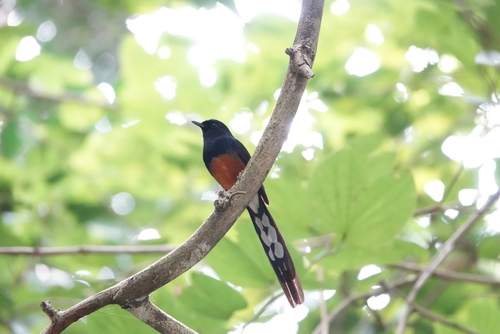 White-rumped Shama
In breve
Il segno distintivo più affidabile è il corrispondente bianco audace delle copritrici e delle assi sotto le ali della Cesena, che lampeggiano in modo evidente in volo—questo non è mai mostrato dal White-rumped Shama di alcuna età. La Cesena è un grande e robusto tordo con una testa e un dorso grigio ardesia, un petto pesantemente macchiato e un forte becco giallastro, leggermente ricurvo, mentre il White-rumped Shama è un uccello canoro molto più piccolo e dalla lunga coda con un colpo d'occhio bianco e una coda esterna, parti superiori nere lucide (maschio) e un ventre castano. Le Cesene juvenile sono più opache ma mostrano ancora la struttura del tordo e il motivo delle ali; i shama juvenile sono marroni macchiati e mancano di bianco nell'ala. Se vedi un uccello con una lunga coda a ventaglio e un colpo d'occhio bianco, specialmente in una fitta vegetazione, è uno shama; un uccello con una testa grigia, un petto macchiato e ali bianche in un paese aperto è una Cesena.
Consigli di identificazione
- Copritrici/assi bianche sotto le ali (solo Cesena): In qualsiasi età o stagione, la Cesena lampeggia di bianco brillante sotto l'ala in volo—lo shama non mostra mai bianco qui.
- Colpo d'occhio bianco e coda esterna (solo Shama): Gli shama adulti e juvenile hanno un colpo d'occhio bianco prominente e piume della coda esterna, visibili sia in posizione perpendicolare che in volo; il colpo d'occhio della Cesena è grigio e la coda è scura con solo sottili frange chiare.
- Dimensione e forma del corpo: La Cesena è un grande tordo robusto con un corpo robusto e una postura eretta; lo shama è molto più piccolo, snodato e dalla lunga coda, con una postura più orizzontale.
- Lunghezza e forma della coda: La coda dello shama è estremamente lunga, spesso a ventaglio o inclinata, e si estende ben oltre le punte delle ali; la coda della Cesena è più corta, arrotondata e mai a ventaglio.
- Testa e parti superiori: La Cesena ha una testa, una nuca e un dorso grigio ardesia con un dorso marrone scuro; i maschi di shama sono neri lucidi sopra, le femmine grigio-marroni, entrambe con un colpo d'occhio bianco.
- Motivo del petto: Il petto della Cesena è color crema con macchie o strisce scure audaci (meno marcate nelle femmine e nei juvenile); lo shama ha un ventre castano uniforme (maschio) o parti inferiori marroni chiare (femmina/juvenile), a volte con macchie nei juvenile, ma mai macchie simili a quelle del tordo.
- Becco: Il becco della Cesena è forte, leggermente ricurvo, giallastro con una punta scura (specialmente in inverno); il becco dello shama è snodato, dritto e nero.
- Zampe e piedi: La Cesena ha zampe e piedi marroni; quelli dello shama sono rosa.
- Stile di volo: La Cesena vola direttamente e stabilmente, spesso in stormi; il volo dello shama è ondulato e raramente vola lontano in aperto.
- Comportamento di posarsi: La Cesena si posa eretta in aperto o sugli alberi; lo shama si posa basso, spesso nascosto, con la coda inclinata o a ventaglio.
- Habitat: La Cesena si trova in campi aperti, margini boschivi e a volte parchi urbani in inverno; lo shama è quasi sempre in fitta vegetazione o in cespugli di bambù.
- Vocalizzazioni: La Cesena emette un richiamo aspro "tsak tsak", specialmente in volo; lo shama canta una canzone ricca e melodiosa e i richiami sono più morbidi e musicali.
- Confusione giovanile: La Cesena juvenile è più opaca ma ha ancora la forma del tordo e mostra il bianco sotto l'ala; lo shama juvenile è marrone macchiato, manca di bianco sotto l'ala e ha una lunga coda.
- Contesto stagionale: La Cesena è un migratore in gran parte del suo areale e spesso si vede in stormi in inverno; lo shama è residente e territoriale tutto l'anno.
- Differenze sessuali: La femmina di Cesena è più marrone e meno marcata del maschio, ma è comunque più grande e robusta di qualsiasi shama; la femmina di shama è più piccola, più grigia e mostra sempre il colpo d'occhio bianco e la lunga coda.
Taglia
La Cesena è molto più pesante e robusta, con un peso medio di circa 105 g [wikidata], mentre il White-rumped Shama è molto più leggero, con un peso di 28–34 g [wikipedia]. La Cesena è anche leggermente più lunga (media 25 cm, apertura alare 39–42 cm), ma la lunga coda dello shama può farlo apparire ingannevolmente lungo (23–28 cm inclusa la coda). Sul campo, la Cesena appare come un tordo classico—robusto, eretto e robusto—mentre lo shama è snodato, con una coda molto più lunga e graduata e una struttura più delicata.
Piumaggio
La Cesena juvenile è più opaca dell'adulto, con strisce chiare che sostituiscono le audaci strisce scure dell'adulto, ma mostra ancora le copritrici e le assi bianche sotto le ali in volo—un segno chiave in tutte le età. Il White-rumped Shama juvenile è marrone grigiastro con un petto macchiato o macchiato, privo del nero lucido e del castano dell'adulto, e crucialmente non mostra mai bianco nell'ala o sotto l'ala. Il maschio adulto di Cesena ha una testa, una nuca e un dorso grigio ardesia, un dorso marrone scuro, una coda nera e un petto cremoso-macchiato audace; la femmina è simile ma più marrone e meno marcata. Il maschio adulto di shama è nero lucido sopra con un colpo d'occhio bianco e una coda esterna, parti inferiori castane e becco nero; la femmina è marrone-grigia sopra e più chiara sotto, ma entrambi i sessi hanno il colpo d'occhio bianco e la coda esterna. In volo, il bianco sotto l'ala della Cesena si distingue, mentre il bianco dello shama è limitato al colpo d'occhio e alla coda esterna, mai sotto l'ala.
Comportamento
La Cesena è spesso vista in stormi, specialmente in campi aperti, volando con un volo diretto e costante e posandosi frequentemente eretta sugli alberi o a terra. È audace e rumorosa, spesso emettendo richiami aspri in volo. Il White-rumped Shama è solitario o in coppie, estremamente timido e preferisce la fitta vegetazione, spesso nascondendosi in basso e muovendo o aprendo la sua lunga coda. Il volo dello shama è ondulato e spesso si posa con la coda inclinata. La Cesena è molto più probabile da vedere in campagna aperta o posata in alto, mentre lo shama è quasi sempre in vegetazione densa.
Habitat
La Cesena nidifica in boschi e cespugli in tutta l'Europa settentrionale e nel Paleartico, ma trascorre l'inverno in campi aperti, siepi e margini boschivi, spesso lontano dalle foreste dense. Il White-rumped Shama è nativo di fitta vegetazione e foreste secondarie nel Sud e nel Sud-est asiatico, e dove è stato introdotto, preferisce le fitte foreste di valle o la vegetazione di foreste decidue a bassa quota. Se trovi l'uccello in campagna aperta o in alto su un albero, è probabile che sia una Cesena; se è in profondità in cespugli intricati o bambù, è probabile che sia uno shama.
Voce
Il richiamo della Cesena è un aspro "tsak tsak tsuk" ripetuto, specialmente in volo, e la sua canzone è una debole serie mista di frasi simili a quelle del tordo, fischi e squittii, a volte emessi in volo o da un posatoio. Il White-rumped Shama è famoso per la sua canzone ricca, melodiosa e varia, ma i suoi richiami sono meno aspri e più musicali rispetto a quelli della Cesena. Se senti un richiamo aspro e chiacchierino da un gruppo, sospetta la Cesena; una bella canzone flautata da una copertura densa indica lo shama.