

Fairy Flycatcher vs Southern Black-Tit
Stenostira scita versus Melaniparus niger
Play a quiz with Fairy Flycatcher and Southern Black-Tit
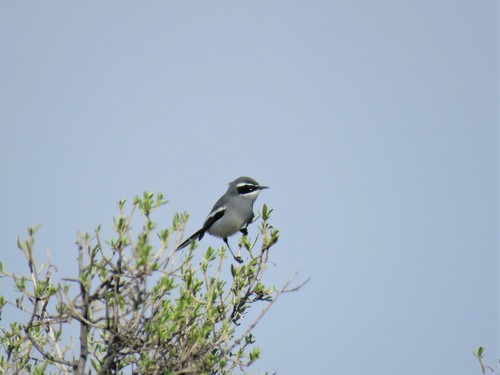 Fairy Flycatcher
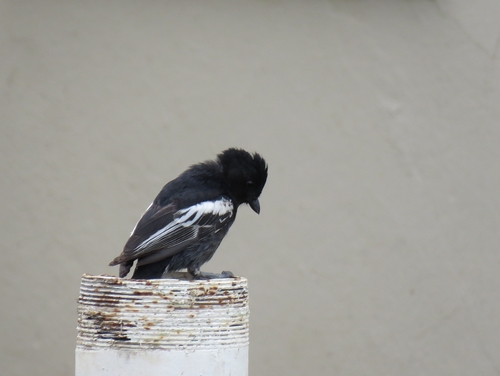 Southern Black-Tit
In short
The most reliable field mark to separate Fairy Flycatcher from Southern Black-Tit is the combination of size and plumage: Fairy Flycatcher is much smaller, with a striking black mask, white supercilium, and a long white wing stripe, while Southern Black-Tit is over three times heavier, nearly all black (male) or greyish (female), and lacks any white in the tail or a strong facial pattern. Juvenile Fairy Flycatchers are browner but still show the pale face and wing stripe, while Southern Black-Tit juveniles are not described but likely resemble duller adults. In flight or perched, the Fairy Flycatcher's pale, patterned look and dainty build contrast sharply with the tit's solid, chunky, monotone appearance. If you see a small, masked bird with a white-striped wing and white-sided tail, it's a Fairy Flycatcher; a larger, mostly black or grey bird with a plain face and no white in the tail is Southern Black-Tit.
Identification tips
- Size: Fairy Flycatcher is tiny (5.9 g, 11–12 cm), Southern Black-Tit is much larger (21 g, 16 cm). If the bird looks small and delicate, lean toward Fairy Flycatcher; if chunky and robust, it's likely the tit.
- Facial Pattern: Fairy Flycatcher has a bold black mask and white supercilium, giving a striking facial contrast. Southern Black-Tit has a plain face with no mask or supercilium—this is a key mark at all ages.
- Wing Pattern: Fairy Flycatcher shows a long white wing stripe, visible both perched and in flight. Southern Black-Tit has uniformly dark wings with no white stripe or panel.
- Tail Pattern: Fairy Flycatcher's tail is black with white sides, often flashing white in flight or when fanned. Southern Black-Tit has a plain dark tail with no white, even at the edges.
- Underparts: Fairy Flycatcher is white below with a pale grey breast and a pinkish-grey wash to the belly. Southern Black-Tit is monotone below (blue-black in males, greyish in females), lacking any pale or washed areas.
- Sexual Dimorphism: Both sexes of Fairy Flycatcher look alike. In Southern Black-Tit, males are blue-black, females are greyer, but both are much darker than any Fairy Flycatcher.
- Juvenile Plumage: Juvenile Fairy Flycatcher is browner but keeps the pale face and wing stripe. Juvenile Southern Black-Tit is not described but expected to be dull, still lacking white in tail/wing.
- Bill and Legs: Fairy Flycatcher has a fine, black bill and legs, matching its delicate build. Southern Black-Tit has a stouter bill typical of tits, suited to its heavier body.
- Behavior: Fairy Flycatcher is light, active, and flicks its tail; Southern Black-Tit is more robust, often acrobatic, and forages like other tits.
- Perched Posture: Fairy Flycatcher often appears upright with a long tail, while Southern Black-Tit perches more horizontally and looks bulkier.
- Flight Style: Fairy Flycatcher makes short, fluttery flights; Southern Black-Tit has a stronger, more direct flight.
- Habitat: Southern Black-Tit is a woodland specialist; Fairy Flycatcher is less tied to dense woods but can overlap.
- Pitfalls: Do not rely on overall darkness alone—female Southern Black-Tit can look greyish, but still lacks the Fairy Flycatcher's facial pattern and wing stripe. Juvenile Fairy Flycatcher can be browner but always shows the pale face and wing pattern.
- Group Association: Southern Black-Tit may join mixed tit flocks; Fairy Flycatcher is more often solitary or with small insectivores.
- If in doubt: Look for the combination of small size, black mask, and white wing/tail pattern for Fairy Flycatcher; larger size, plain dark plumage, and lack of facial or tail pattern for Southern Black-Tit.
Size
Fairy Flycatcher is a tiny bird, weighing only about 5.9 g, and measures 11–12 cm in length. In contrast, Southern Black-Tit is much larger and heavier, at 21.0 g and about 16 cm long. This size difference is obvious in the field: Fairy Flycatcher appears delicate and slight, while Southern Black-Tit is robust and chunky, typical of parids. If both are seen side by side or with familiar reference species, the tit will always look substantially bigger and bulkier.
Plumage
- Juvenile/Immature: Juvenile Fairy Flycatchers are browner overall but retain the pale face, black mask, and white wing stripe. There are no specific notes for juvenile Southern Black-Tit, but it is likely a duller version of the adult, still lacking any white in the tail or wing.
- Adult: Fairy Flycatcher adults are pale grey above, with a crisp black mask through the eye, white supercilium, and a long white wing stripe. The tail is black with white sides, and underparts are white with a pinkish-grey wash. Southern Black-Tit males are almost entirely blue-black, while females are greyer but still monotone. The tit lacks any white in the tail or wing, and has no facial mask or supercilium. The Fairy Flycatcher's patterned, contrasting plumage stands out against the tit's uniform darkness.
- Sexual Dimorphism: Fairy Flycatcher sexes are alike. Southern Black-Tit shows some dimorphism: males are blue-black, females are greyer, but both are much darker and more uniform than Fairy Flycatcher.
Behaviour
Fairy Flycatcher typically moves in a delicate, agile manner, often flicking its long tail and making short, fluttery flights between perches. Its jizz is light and active, matching its small size. Southern Black-Tit behaves more like a typical tit—robust, acrobatic, and often seen hanging from branches or foraging methodically through foliage. The tit's movements are chunkier and more forceful, lacking the fairy flycatcher's dainty, flickering style.
Habitat
Both species can be found in southern Africa, but Southern Black-Tit is specifically associated with woodland habitats. Fairy Flycatcher may overlap in some areas but is not described as strictly woodland-dependent. If seen in dense woodland, especially with other tit species, Southern Black-Tit is more likely, but habitat alone is not fully diagnostic.