

Eurasian Siskin vs Yellowhammer
Spinus spinus versus Emberiza citrinella
Play a quiz with Eurasian Siskin and Yellowhammer
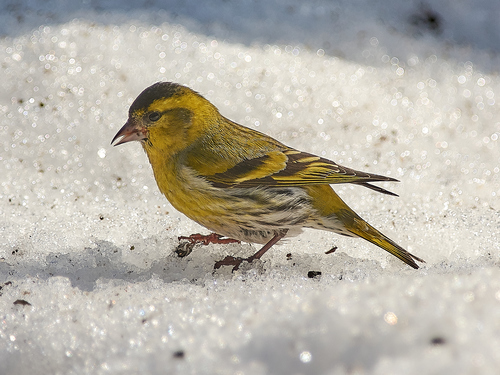 Eurasian Siskin
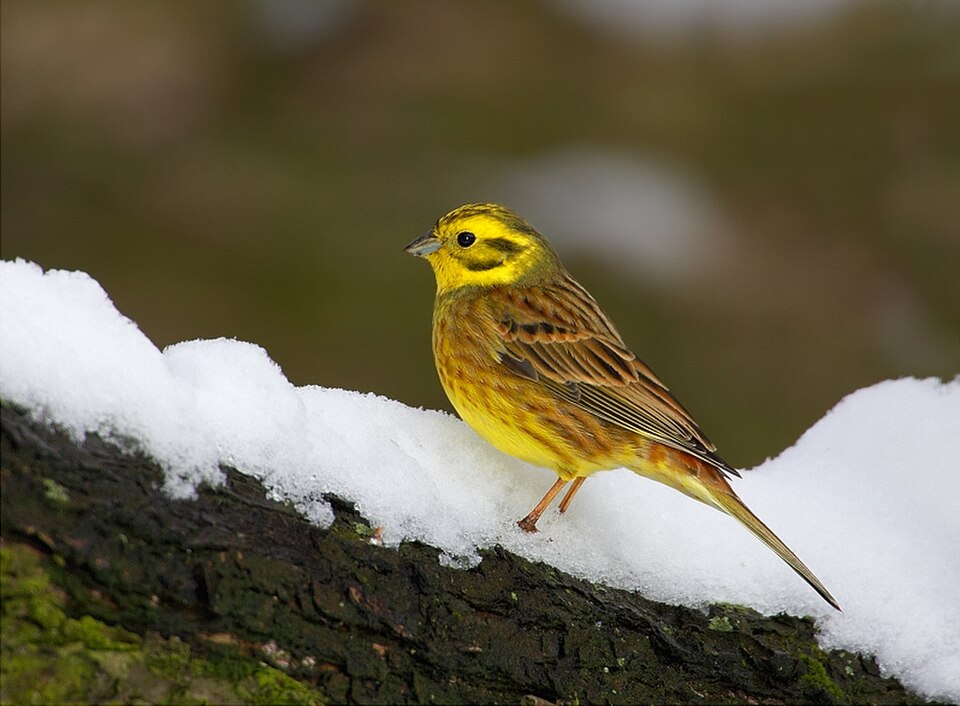 Yellowhammer
In short
The most reliable field mark to separate Eurasian Siskin from Yellowhammer is overall coloration: siskins (especially males) show bright yellow and green plumage with a black cap, while yellowhammers have a mostly yellow head and underparts, with a brown, heavily streaked back and rufous rump. Juvenile and female siskins are duller but still retain greenish and yellow tones, never the chestnut or rufous tones of yellowhammer. Siskins are much smaller and slimmer, with a short, fine bill, and show a bold yellow wing bar in all plumages. In flight, siskins appear quick and agile, while yellowhammers are larger, bulkier, and have white outer tail feathers. Confusion is most likely with dull female or juvenile siskins versus female or juvenile yellowhammers, but structure, wing pattern, and rump color remain reliable separators.
Identification tips
- Size and Shape: Siskin is much smaller and slimmer than yellowhammer, with a short, fine bill; yellowhammer is larger, bulkier, and has a thicker, conical bill. This is apparent even at a distance.
- Wing Pattern (All Ages): Siskin always shows a bold yellow wing bar with white tips, visible in flight and at rest. Yellowhammer lacks this, instead showing white outer tail feathers in flight.
- Tail Shape: Siskin has a short, notched tail with yellow sides; yellowhammer's tail is longer, more rounded, and shows white outer feathers when spread.
- Rump Color: Siskin's rump is yellow (especially in males and females), while yellowhammer's is rufous or chestnut (adults) or paler brown (juveniles).
- Head Pattern: Male siskin has a black cap and bib with a yellow face; female and juvenile siskins have a greenish head with no cap. Yellowhammer males have a bright yellow head, while females and juveniles are duller but always show some yellow on the face and underparts.
- Back and Flank Streaking: Yellowhammer has a heavily streaked brown back and flanks in all plumages; siskin is more uniform greenish above with less streaking, especially on the underparts.
- Bill Shape: Siskin's bill is short, slender, and slightly decurved; yellowhammer's is thicker and more conical, suited for seeds.
- Flight Style: Siskin's flight is rapid and bounding, often in tight flocks; yellowhammer's is slower and more undulating, usually singly or in pairs.
- Feeding Behavior: Siskins feed acrobatically, often hanging upside down; yellowhammers feed mostly on the ground or low in vegetation.
- Habitat Context: Siskins are woodland birds, especially in conifers; yellowhammers prefer open farmland, hedgerows, and edges.
- Vocalizations: Siskin's song is a mix of trills and twitters; yellowhammer's is a repetitive, rhythmic phrase ('little bit of bread and no cheese').
- Sex and Age Pitfalls: Female and juvenile siskins are duller but keep greenish/yellow tones and wing bar; female and juvenile yellowhammers are brown and streaky, with less yellow but never greenish. Juvenile yellowhammer never shows a yellow wing bar or greenish tones.
- Seasonal Variation: Yellowhammer is less bright outside breeding season, but still lacks siskin's wing bar and greenish hues. Siskin's yellow and green tones are always present, though subdued in females/juveniles.
- Perched Posture: Siskins often look active and upright, sometimes hanging; yellowhammers perch more horizontally and appear bulkier.
- Flock Structure: Siskins are often in mixed finch flocks, especially in winter; yellowhammers are more often seen in small groups or pairs.
Size
Eurasian Siskin is significantly smaller and lighter than Yellowhammer. Siskins weigh about 13.8 g and measure 11–12.5 cm in length, with a wingspan of 20–23 cm. Yellowhammers are larger buntings, 16–16.5 cm long with a 23–29.5 cm wingspan, and weigh 20–36.5 g. In the field, siskins look daintier and more delicate, while yellowhammers appear robust and chunky.
Plumage
- Juveniles and Females: Juvenile and female siskins are olive-green above with yellowish tones, especially on the supercilium and rump, and have a broad yellow wing bar with white tips. Their underparts are pale, often with some streaking but never as heavily marked as yellowhammer. Juvenile yellowhammers are much duller and less yellow than adults, with a streaked brown back, paler rufous rump, and less yellow overall; they lack the siskin's greenish tones and have a more uniform brown appearance.
- Adult Males: Male siskins are bright green and yellow with a black cap and bib, yellow face and breast, and a yellow rump. Male yellowhammers have a bright yellow head, yellow underparts, chestnut rump, and heavily streaked brown back. The siskin's yellow wing bar is always present and striking, while yellowhammer shows white outer tail feathers in flight and lacks a bold yellow wing bar.
- Seasonal Variation: Yellowhammers are less brightly marked outside the breeding season, with dark feather fringes obscuring yellow tones. Siskins retain their yellow and green tones year-round, though females and juveniles are always duller than males.
- Flight Marks: Siskins in flight show a short tail with yellow sides and a bold yellow wing bar; yellowhammers show white outer tail feathers and a longer, more rounded tail.
Behaviour
Eurasian Siskins are active, acrobatic feeders, often hanging upside down on twigs or cones, and move rapidly in flocks. Their flight is quick and bounding, typical of finches. Yellowhammers are more likely to be seen perched upright on hedges, bushes, or wires, singing from exposed perches. They feed mainly on the ground or low in vegetation and have a slower, more undulating flight. Siskins are sociable and often seen in mixed flocks, while yellowhammers are more territorial during breeding and often seen singly or in pairs.
Habitat
Siskins are typically found in coniferous and mixed woodlands, especially where alder and spruce are present, but can also visit gardens in winter. Yellowhammers prefer open countryside, farmland, hedgerows, and woodland edges, rarely venturing into dense forest. If seen in a dense conifer stand, siskin is far more likely; in open fields or hedgerows, expect yellowhammer.
Voice
Siskins have a pleasant, twittering song with a mix of trills and high-pitched notes, often delivered in flight or from treetops. Yellowhammers have a distinctive, repetitive song often described as 'a little bit of bread and no cheese,' with a clear, rhythmic quality. Calls also differ: siskin gives high, thin 'tswee' notes, while yellowhammer's calls are sharper and more metallic.