

Eurasian Nightjar vs Nubian Nightjar
Caprimulgus europaeus versus Caprimulgus nubicus
Play a quiz with Eurasian Nightjar and Nubian Nightjar
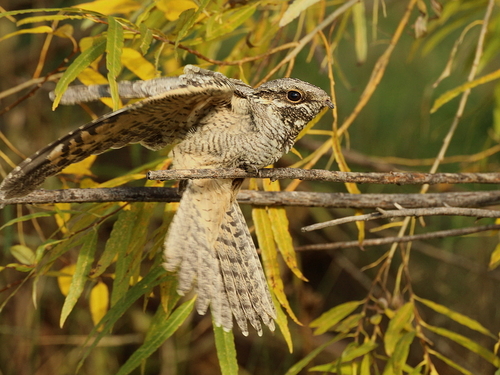 Eurasian Nightjar
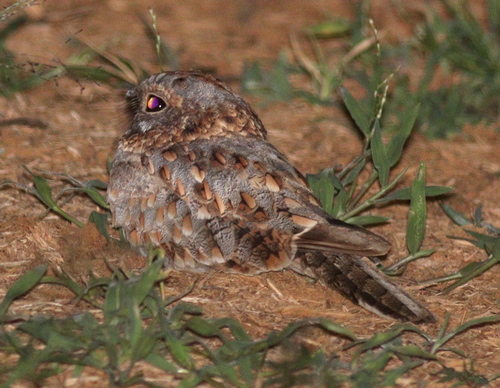 Nubian Nightjar
In short
The most reliable field mark between Eurasian Nightjar and Nubian Nightjar is size and structure: Eurasian is distinctly larger, with longer, more pointed wings and tail, while Nubian is smaller and has blunter wings and a shorter tail. In flight, adult male Eurasian Nightjars show bold white patches on the wings and tail (females lack these), while Nubian Nightjars have white wing spots but not as extensive or far from the wing tips. Nubian Nightjar also shows a distinctive rufous neck band, which is less prominent or absent in Eurasian. Both are cryptic and nocturnal, but habitat and overall proportions help separate them when plumage is inconclusive.
Identification tips
- Size and structure: Eurasian Nightjar is significantly larger and longer-winged than Nubian; this is often apparent even at a distance or in flight. If the bird appears small, compact, and short-tailed, favor Nubian.
- Wing shape in flight: Eurasian has long, pointed wings, giving a sleek, buoyant flight. Nubian's wings are blunter and shorter, making its flight appear more compact and less gliding.
- Tail length and shape: Eurasian has a noticeably longer tail, especially obvious when perched or in flight. Nubian's tail is shorter and less prominent.
- White wing and tail patches (adult males): Eurasian Nightjar males show bold white patches on three primaries and white tips to two outer tail feathers; females lack these. Nubian Nightjar has white wing spots, but they are not as extensive or as far from the tips, and tail white is not emphasized.
- Neck band: Nubian Nightjar has a distinct rufous-brown band across the nape, visible when perched and sometimes in flight. Eurasian has a pale buff collar, but it is less prominent and not rufous-toned.
- Overall plumage tone: Eurasian is generally greyer and more streaked above, with a pale buff hindneck; Nubian is paler with a reddish neck band and less streaking.
- Sex differences: Only male Eurasian Nightjars show bold white in wings and tail; females and juveniles lack these, making them more easily confused with Nubian. In such cases, rely on size, structure, and neck band.
- Juvenile confusion: Fledged young Eurasian Nightjars look like adult females (cryptic, lacking white patches). If a cryptic nightjar lacks white patches and is large/long-winged, Eurasian is likely; if small and compact with a rufous neck band, Nubian is more probable.
- Perched posture: Both species perch lengthwise on branches or the ground, but Eurasian's longer tail and wings may protrude more.
- Flight style: Eurasian's flight is buoyant and silent, with gliding and fluttering; Nubian likely appears less buoyant due to its smaller, blunter wings.
- Habitat context: Eurasian is found in open woodland, heath, and clearings; Nubian is restricted to salt marshes and arid lowlands. Habitat alone can often separate them.
- Vocalizations: If a long, mechanical churring trill is heard, it is Eurasian Nightjar. Nubian's song is not described, so absence of churring is not diagnostic.
- Geographic range: Eurasian is widespread across Europe and Asia; Nubian is limited to northeast Africa and the Middle East. Consider location, especially outside overlap zones.
- Pitfalls: Female and juvenile Eurasian Nightjars lack white wing/tail patches and can be confused with Nubian. In these cases, prioritize size, structure, and neck band.
- Lighting and visibility: Both are cryptic and often seen in poor light; use multiple features (size, structure, neck band, habitat) rather than relying on a single mark.
Size
Eurasian Nightjar is noticeably larger: 24.5–28 cm in length with a 52–59 cm wingspan, and males weighing 51–101 g, females 67–95 g. Nubian Nightjar is smaller at 20–22 cm long (no wingspan or mass given, but clearly less robust). This size difference is apparent in the field, especially in direct comparison or with experience. Eurasian also has a longer tail and more pointed wings, giving it a sleeker, more buoyant flight profile, while Nubian appears more compact with blunter wings and a shorter tail.
Plumage
- Juvenile/immature birds: No specific age-diagnostic upperwing pattern is described for either species, but fledged young Eurasian Nightjars resemble adult females (cryptic, lacking white wing/tail patches). Nubian Nightjar juveniles are not described, but likely similar to adults in overall pattern.
- Adult males: Eurasian Nightjar males show bold white patches on three primaries and white tips to two outer tail feathers, highly visible in flight; females lack these white areas. Nubian Nightjar has white wing spots, but not as extensive or far from the tips, and both sexes show a rufous-brown neck band, which is a key mark absent or less obvious in Eurasian.
- General plumage: Eurasian is grey-brown above with dark streaking and a pale buff hindneck collar; Nubian is overall paler, with a reddish neck band and less streaking. Both are cryptically patterned for camouflage, but the neck band of Nubian is a useful perched mark.
Behaviour
Both species are crepuscular and nocturnal, foraging at dusk and night. Eurasian Nightjar is noted for buoyant, silent flight on long, pointed wings, often gliding and fluttering. Nubian Nightjar, being smaller with blunter wings, likely appears less buoyant and more compact in flight. Both perch lengthwise on the ground or branches, relying on camouflage. Eurasian males may perform wing-clapping displays during song, which is not described for Nubian.
Habitat
Eurasian Nightjar breeds across much of Europe and the Palearctic, favoring open woodlands, heath, and clearings. Nubian Nightjar is restricted to salt marshes and arid lowlands in northeast Africa and the Middle East. While ranges may overlap in winter, their preferred habitats are quite distinct: Eurasian is rarely found in the saline or marshy habitats typical of Nubian. Thus, context and habitat can be a strong clue.
Voice
Eurasian Nightjar males sing a long, mechanical churring trill, often for minutes at a time, with occasional pitch or speed changes and ending in bubbling trills or wing-claps. Both sexes give short 'cuick' calls in flight and various sharp or hissing alarm calls. Nubian Nightjar's vocalizations are not described in detail in the sources, so voice is not a reliable separator unless the Eurasian's churring song is heard.