

Nachtzwaluw vs Nubische nachtzwaluw
Caprimulgus europaeus versus Caprimulgus nubicus
Speel een quiz met Nachtzwaluw en Nubische nachtzwaluw
 Nachtzwaluw
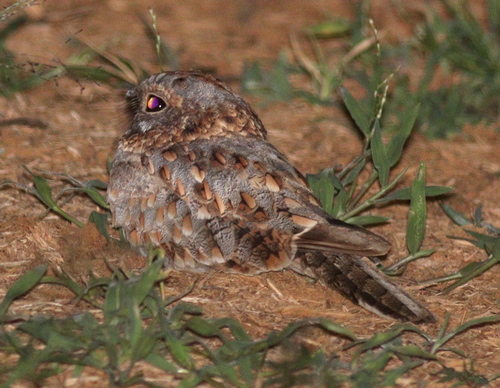 Nubische nachtzwaluw
Kort gezegd
Het meest betrouwbare veldkenmerk tussen Nachtzwaluw en Nubische nachtzwaluw is grootte en structuur: Nachtzwaluw is duidelijk groter, met langere, meer spitse vleugels en staart, terwijl Nubische nachtzwaluw kleiner is en stompe vleugels en een kortere staart heeft. In de vlucht tonen volwassen mannelijke Nachtzwaluwen gedurfde witte vlekken op de vleugels en staart (vrouwen missen deze), terwijl Nubische nachtzwaluwen witte vleugelvlekken hebben, maar niet zo uitgebreid of ver van de vleugeltips. Nubische nachtzwaluw toont ook een kenmerkende roestbruine nekband, die minder prominent of afwezig is bij Nachtzwaluw. Beide zijn cryptisch en nachtactief, maar habitat en algehele verhoudingen helpen om ze te scheiden wanneer het verenkleed niet conclusief is.
Herkenningstips
- Grootte en structuur: Nachtzwaluw is aanzienlijk groter en langer-vleugelig dan Nubische; dit is vaak duidelijk zelfs op afstand of in de vlucht. Als de vogel klein, compact en kortstaartig lijkt, geef dan de voorkeur aan Nubische.
- Vleugelvorm in de vlucht: Nachtzwaluw heeft lange, spitse vleugels, wat zorgt voor een slanke, luchtige vlucht. Nubische's vleugels zijn stomper en korter, waardoor zijn vlucht compacter en minder glijdend lijkt.
- Staartlengte en -vorm: Nachtzwaluw heeft een merkbaar langere staart, vooral duidelijk wanneer hij zit of in de vlucht is. Nubische's staart is korter en minder prominent.
- Witte vleugel- en staartvlekken (volwassen mannetjes): Nachtzwaluw mannetjes tonen gedurfde witte vlekken op drie primaire vleugels en witte tips op twee buitenste staartveren; vrouwtjes missen deze. Nubische nachtzwaluw heeft witte vleugelvlekken, maar deze zijn niet zo uitgebreid of ver van de tips, en de witte staart is niet benadrukt.
- Nekband: Nubische nachtzwaluw heeft een duidelijke roestbruine band over de nek, zichtbaar wanneer hij zit en soms in de vlucht. Nachtzwaluw heeft een bleke buffkleurige kraag, maar deze is minder prominent en niet roestbruin.
- Algemene verenkleedtoon: Nachtzwaluw is over het algemeen grijzer en meer gestreept boven, met een bleke buffkleurige achternek; Nubische is bleker met een roestbruine nekband en minder strepen.
- Geslachtsverschillen: Alleen mannelijke Nachtzwaluwen tonen gedurfde witte in vleugels en staart; vrouwtjes en jongeren missen deze, waardoor ze gemakkelijker te verwarren zijn met Nubische. In dergelijke gevallen, vertrouw op grootte, structuur en nekband.
- Jongeren verwarring: Uitgevlogen jonge Nachtzwaluwen lijken op volwassen vrouwtjes (cryptisch, zonder witte vlekken). Als een cryptische nachtzwaluw geen witte vlekken heeft en groot/lang-vleugelig is, is Nachtzwaluw waarschijnlijk; als hij klein en compact is met een roestbruine nekband, is Nubische waarschijnlijker.
- Zittende houding: Beide soorten zitten lengtegericht op takken of de grond, maar Nachtzwaluw's langere staart en vleugels kunnen meer uitsteken.
- Vluchtstijl: Nachtzwaluw's vlucht is luchtig en stil, met glijden en fladderen; Nubische lijkt minder luchtig door zijn kleinere, stompe vleugels.
- Habitatcontext: Nachtzwaluw wordt gevonden in open bos, heide en open plekken; Nubische is beperkt tot zoutmoerassen en droge laaglanden. Habitat alleen kan ze vaak scheiden.
- Vocalisaties: Als een lange, mechanische churring triller wordt gehoord, is het Nachtzwaluw. Nubische's zang is niet beschreven, dus afwezigheid van churring is niet diagnostisch.
- Geografisch bereik: Nachtzwaluw is wijdverspreid in Europa en Azië; Nubische is beperkt tot noordoost-Afrika en het Midden-Oosten. Overweeg locatie, vooral buiten overlappingszones.
- Valkuilen: Vrouwelijke en jonge Nachtzwaluwen missen witte vleugel/staartvlekken en kunnen worden verward met Nubische. In deze gevallen, prioriteer grootte, structuur en nekband.
- Verlichting en zichtbaarheid: Beide zijn cryptisch en vaak gezien in slecht licht; gebruik meerdere kenmerken (grootte, structuur, nekband, habitat) in plaats van te vertrouwen op een enkel kenmerk.
Grootte
Nachtzwaluw is merkbaar groter: 24,5–28 cm in lengte met een spanwijdte van 52–59 cm, en mannetjes wegen 51–101 g, vrouwtjes 67–95 g. Nubische nachtzwaluw is kleiner met 20–22 cm lang (geen spanwijdte of gewicht gegeven, maar duidelijk minder robuust). Dit formaatverschil is duidelijk in het veld, vooral in directe vergelijking of met ervaring. Nachtzwaluw heeft ook een langere staart en meer spitse vleugels, wat zorgt voor een slanker, luchtiger vluchtprofiel, terwijl Nubische compacter lijkt met stompe vleugels en een kortere staart.
Verenkleed
- Jongere/onvolwassen vogels: Er is geen specifiek leeftijdsdiagnostisch bovenvleugelpatroon beschreven voor beide soorten, maar uitgevlogen jonge Nachtzwaluwen lijken op volwassen vrouwtjes (cryptisch, zonder witte vleugel/staartvlekken). Nubische nachtzwaluw jongen zijn niet beschreven, maar waarschijnlijk vergelijkbaar met volwassenen in algemeen patroon.
- Volwassen mannetjes: Nachtzwaluw mannetjes tonen gedurfde witte vlekken op drie primaire vleugels en witte tips op twee buitenste staartveren, zeer zichtbaar in de vlucht; vrouwtjes missen deze witte gebieden. Nubische nachtzwaluw heeft witte vleugelvlekken, maar niet zo uitgebreid of ver van de tips, en beide geslachten tonen een roestbruine nekband, wat een belangrijk kenmerk is dat afwezig of minder duidelijk is bij Nachtzwaluw.
- Algemeen verenkleed: Nachtzwaluw is grijs-bruin boven met donkere strepen en een bleke buffkleurige achternek kraag; Nubische is over het algemeen bleker, met een roestbruine nekband en minder strepen. Beide zijn cryptisch gepattern voor camouflage, maar de nekband van Nubische is een nuttig zittend kenmerk.
Gedrag
Beide soorten zijn schemerig en nachtactief, en foerageren bij schemering en 's nachts. Nachtzwaluw staat bekend om zijn luchtige, stille vlucht op lange, spitse vleugels, vaak glijdend en fladderend. Nubische nachtzwaluw, zijnde kleiner met stompe vleugels, lijkt waarschijnlijk minder luchtig en compacter in de vlucht. Beide zitten lengtegericht op de grond of takken, vertrouwend op camouflage. Mannelijke Nachtzwaluwen kunnen vleugelklappend vertoningen uitvoeren tijdens het zingen, wat niet is beschreven voor Nubische.
Habitat
Nachtzwaluw broedt in een groot deel van Europa en het Palearctisch gebied, met voorkeur voor open bossen, heide en open plekken. Nubische nachtzwaluw is beperkt tot zoutmoerassen en droge laaglanden in noordoost-Afrika en het Midden-Oosten. Hoewel de gebieden in de winter kunnen overlappen, zijn hun voorkeurshabitats behoorlijk verschillend: Nachtzwaluw wordt zelden gevonden in de zoute of moerassige habitats die typisch zijn voor Nubische. Daarom kan context en habitat een sterke aanwijzing zijn.
Geluid
Nachtzwaluw mannetjes zingen een lange, mechanische churring triller, vaak minutenlang, met af en toe toon- of snelheidsveranderingen en eindigend in borrelende trillers of vleugelklappen. Beide geslachten geven korte 'cuick'-roepen in de vlucht en verschillende scherpe of sisserige alarmroepen. Nubische nachtzwaluw's vocalisaties zijn niet in detail beschreven in de bronnen, dus de stem is geen betrouwbare scheider tenzij het churring lied van de Nachtzwaluw wordt gehoord.