

Dunn's Lark vs Asian Short-toed Lark
Eremalauda dunni versus Alaudala cheleensis
Play a quiz with Dunn's Lark and Asian Short-toed Lark
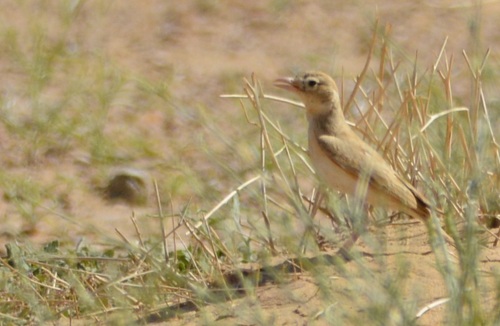 Dunn's Lark
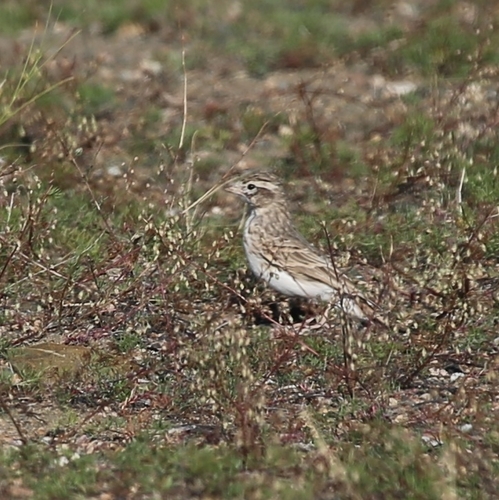 Asian Short-toed Lark
In short
The most reliable way to separate Dunn’s Lark from Asian Short-toed Lark in the field is by structure: Dunn’s Lark is notably stockier, with a large head, heavy pale bill, and broad wings, while Asian Short-toed Lark is more slender and fine-billed. In all plumages, Dunn’s Lark shows a pale sandy-brown upperpart with dark streaks and a distinctive facial pattern, including a strong pale supercilium and dark moustachial stripes. Asian Short-toed Lark is generally plainer, with less contrast in the face and a more delicate overall appearance. Both species can look similar at a distance, especially in worn or juvenile plumage, so focusing on bill size, head shape, and facial markings is key.
Identification tips
- Bill size and color: Dunn’s Lark has a large, heavy, pale pinkish or yellowish bill, very obvious even at a distance. Asian Short-toed Lark’s bill is finer and less conspicuous. This is a key separator in all plumages.
- Head and body shape: Dunn’s Lark is stocky with a large head and broad wings, giving a chunky, big-headed impression. Asian Short-toed Lark is more slender, with a smaller head and narrower wings.
- Facial pattern: Look for the strong pale supercilium (eyebrow) and pale eye-ring on Dunn’s Lark, set off by bold dark moustachial and malar stripes and a dark mark under the eye. Asian Short-toed Lark’s face is much plainer, with less contrast and no strong dark stripes.
- Upperpart streaking: Dunn’s Lark shows pale sandy-brown upperparts with distinct dark streaks. Asian Short-toed Lark is generally less streaked and more uniform above.
- Tail pattern: Dunn’s Lark has a short, broad tail that is black below, with rusty-brown central feathers and pale outer feathers above. While not always visible, this can help if seen well. Asian Short-toed Lark’s tail pattern is not described as distinctive.
- Underparts: Both species have pale underparts, but Dunn’s Lark often shows some dark streaks on the breast; Asian Short-toed Lark is typically cleaner below.
- Plumage wear: After moult, Dunn’s Lark becomes duller and less contrasting, but the facial pattern remains a good clue. Asian Short-toed Lark’s subtlety increases with wear, making structure and bill even more important.
- Behavior: Dunn’s Lark may be seen digging for food with its heavy bill and often feeds in flocks outside the breeding season. Asian Short-toed Lark is less robust in feeding behavior.
- Song and display: Dunn’s Lark males sing from the ground or hover high above it. If you see a lark hovering at height and singing a scratchy, whistled song in the Sahara, Dunn’s is likely.
- Habitat: Deep desert habitat strongly favors Dunn’s Lark; steppe, saline flats, or open Asian country favors Asian Short-toed Lark. Use location as a supporting clue, not a primary mark.
- Direct comparison: If you see both species together (unlikely in the wild), Dunn’s Lark will stand out as larger, chunkier, and more boldly marked in the face.
- Pitfalls: Worn or juvenile Dunn’s Larks can look less contrasting, but the bill and head shape remain distinctive. Asian Short-toed Lark never shows the strong facial pattern or heavy bill of Dunn’s.
- Sex and age: No strong sexual dimorphism is described for either species; all field marks apply to both sexes and all ages, though wear can reduce contrast.
- Flight views: No unique upperwing or flight pattern differences are described, so rely on structure and facial pattern even in flight.
- When in doubt: If you cannot see the bill or face clearly, and the bird is in non-desert Asian habitat, Asian Short-toed Lark is more likely; in Sahara desert, default to Dunn’s Lark, but always try for a clear view of the head and bill.
Size
Dunn’s Lark is slightly larger and bulkier, measuring 14–15 cm in length with a wingspan of 25–30 cm [wikipedia]. Asian Short-toed Lark is smaller and more delicate, though exact measurements are not provided in the notes. In direct comparison, Dunn’s Lark will appear more robust, with a proportionally larger head and bill, while Asian Short-toed Lark looks more compact and fine-billed.
Plumage
No age-specific upperwing or flight pattern differences are detailed in the sources, so focus is on overall plumage and facial pattern. Dunn’s Lark of all ages shows pale sandy-brown upperparts with darker streaking, a strong pale supercilium (eyebrow), pale eye-ring, and bold dark moustachial and malar stripes. The underparts are whitish with some dark breast streaks. The tail is short and broad, black below, with rusty-brown central feathers and pale outer feathers above. After moult, Dunn’s Lark becomes duller and less contrasting, but the facial pattern remains evident. Asian Short-toed Lark is generally plainer, lacking the strong facial contrast: its upperparts are less streaked, the supercilium is less marked, and the bill is finer and less obviously pale. The tail pattern is not described as diagnostic for Asian Short-toed Lark in the notes.
Behaviour
Dunn’s Lark often feeds in flocks outside the breeding season and is known for digging for food with its heavy bill. Males sing from the ground or hover high above it. Asian Short-toed Lark’s behavior is not detailed in the notes, but it is generally similar to other small larks, foraging on the ground and not showing the same degree of robust digging behavior as Dunn’s Lark. Both species are ground-dwelling and can be seen walking or running rather than hopping.
Habitat
Dunn’s Lark is a true desert specialist, found across the Sahara from Mauritania to central Sudan [wikipedia]. Asian Short-toed Lark ranges from south-central to eastern Asia, often in open, dry habitats but not strictly desert; it can occur in steppe, saline flats, and other open country. If you are in deep Sahara desert, Dunn’s Lark is far more likely; in Asian steppe or saline flats, Asian Short-toed Lark is expected. Overlap is minimal.
Voice
Dunn’s Lark has a scratchy warbling song with short whistling phrases, delivered from the ground or while hovering high above (30 meters or more). No vocal description is provided for Asian Short-toed Lark in the notes, so song is not a reliable separator based on current information.