

calhandra-de-dunn-africana vs calhandrinha-asiática
Eremalauda dunni versus Alaudala cheleensis
Jogue um quiz com calhandra-de-dunn-africana e calhandrinha-asiática
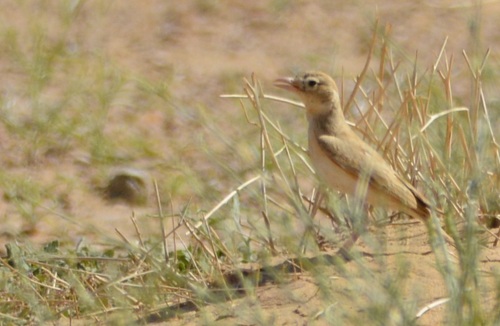 calhandra-de-dunn-africana
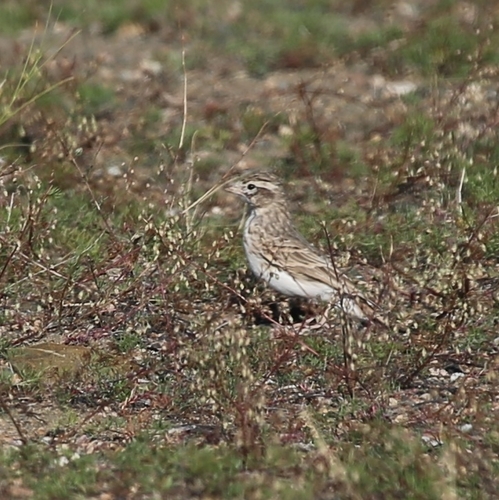 calhandrinha-asiática
Em resumo
A maneira mais confiável de separar a calhandra-de-dunn-africana da calhandrinha-asiática em campo é pela estrutura: a calhandra-de-dunn-africana é notavelmente mais robusta, com uma cabeça grande, bico pálido e pesado, e asas largas, enquanto a calhandrinha-asiática é mais esbelta e com bico mais fino. Em todas as plumagens, a calhandra-de-dunn-africana apresenta uma parte superior de cor marrom-areia pálido com listras escuras e um padrão facial distinto, incluindo um supercílios pálido forte e listras bigode escuras. A calhandrinha-asiática é geralmente mais simples, com menos contraste no rosto e uma aparência geral mais delicada. Ambas as espécies podem parecer semelhantes à distância, especialmente em plumagem desgastada ou juvenil, então focar no tamanho do bico, formato da cabeça e marcas faciais é fundamental.
Dicas de identificação
- Tamanho e cor do bico: A calhandra-de-dunn-africana tem um bico grande, pesado, de cor rosa pálido ou amarelada, muito óbvio mesmo à distância. O bico da calhandrinha-asiática é mais fino e menos conspícuo. Este é um separador chave em todas as plumagens.
- Formato da cabeça e do corpo: A calhandra-de-dunn-africana é robusta, com uma cabeça grande e asas largas, dando uma impressão de cabeça grande e corpulenta. A calhandrinha-asiática é mais esbelta, com uma cabeça menor e asas mais estreitas.
- Padrão facial: Procure o supercílios pálido forte (sobrancelha) e o anel ocular pálido na calhandra-de-dunn-africana, destacados por listras bigode e malar escuras e uma marca escura sob o olho. O rosto da calhandrinha-asiática é muito mais simples, com menos contraste e sem listras escuras fortes.
- Listras na parte superior: A calhandra-de-dunn-africana apresenta partes superiores de cor marrom-areia pálido com listras escuras distintas. A calhandrinha-asiática é geralmente menos riscada e mais uniforme na parte superior.
- Padrão da cauda: A calhandra-de-dunn-africana tem uma cauda curta e larga que é preta por baixo, com penas centrais marrom-ruivos e penas externas pálidas por cima. Embora nem sempre visível, isso pode ajudar se visto bem. O padrão da cauda da calhandrinha-asiática não é descrito como distintivo.
- Partes inferiores: Ambas as espécies têm partes inferiores pálidas, mas a calhandra-de-dunn-africana frequentemente apresenta algumas listras escuras no peito; a calhandrinha-asiática é tipicamente mais limpa por baixo.
- Desgaste da plumagem: Após a muda, a calhandra-de-dunn-africana torna-se mais opaca e menos contrastante, mas o padrão facial permanece uma boa pista. A sutileza da calhandrinha-asiática aumenta com o desgaste, tornando a estrutura e o bico ainda mais importantes.
- Comportamento: A calhandra-de-dunn-africana pode ser vista cavando por comida com seu bico pesado e frequentemente se alimenta em bandos fora da temporada de reprodução. A calhandrinha-asiática é menos robusta em seu comportamento alimentar.
- Canto e exibição: Os machos da calhandra-de-dunn-africana cantam do chão ou pairam bem acima dele. Se você ver uma calhandra pairando a altura e cantando uma canção arranhada e assobiada no Saara, é provável que seja a calhandra-de-dunn-africana.
- Habitat: O habitat profundo do deserto favorece fortemente a calhandra-de-dunn-africana; estepes, planícies salinas ou campos abertos da Ásia favorecem a calhandrinha-asiática. Use a localização como uma pista de apoio, não como uma marca primária.
- Comparação direta: Se você ver ambas as espécies juntas (improvável na natureza), a calhandra-de-dunn-africana se destacará como maior, mais robusta e com marcas faciais mais ousadas.
- Armadilhas: Calhandras-de-dunn-africana desgastadas ou juvenis podem parecer menos contrastantes, mas o bico e o formato da cabeça permanecem distintos. A calhandrinha-asiática nunca apresenta o forte padrão facial ou bico pesado da calhandra-de-dunn-africana.
- Sexo e idade: Nenhum dimorfismo sexual forte é descrito para ambas as espécies; todas as marcas de campo se aplicam a ambos os sexos e todas as idades, embora o desgaste possa reduzir o contraste.
- Visões de voo: Nenhuma diferença única de padrão de asa superior ou de voo é descrita, então confie na estrutura e no padrão facial mesmo em voo.
- Quando em dúvida: Se você não consegue ver o bico ou o rosto claramente, e o pássaro está em habitat asiático não desértico, a calhandrinha-asiática é mais provável; no deserto do Saara, opte pela calhandra-de-dunn-africana, mas sempre tente obter uma visão clara da cabeça e do bico.
Tamanho
A calhandra-de-dunn-africana é ligeiramente maior e mais robusta, medindo 14–15 cm de comprimento com uma envergadura de 25–30 cm [wikipedia]. A calhandrinha-asiática é menor e mais delicada, embora medidas exatas não sejam fornecidas nas notas. Em comparação direta, a calhandra-de-dunn-africana parecerá mais robusta, com uma cabeça e bico proporcionalmente maiores, enquanto a calhandrinha-asiática parecerá mais compacta e com bico fino.
Plumagem
Nenhuma diferença específica de padrão de asa superior ou de voo é detalhada nas fontes, então o foco está na plumagem geral e no padrão facial. A calhandra-de-dunn-africana de todas as idades apresenta partes superiores de cor marrom-areia pálido com listras escuras, um supercílios pálido forte (sobrancelha), anel ocular pálido e listras bigode e malar escuras e ousadas. As partes inferiores são esbranquiçadas com algumas listras escuras no peito. A cauda é curta e larga, preta por baixo, com penas centrais marrom-ruivos e penas externas pálidas por cima. Após a muda, a calhandra-de-dunn-africana torna-se mais opaca e menos contrastante, mas o padrão facial permanece evidente. A calhandrinha-asiática é geralmente mais simples, sem o forte contraste facial: suas partes superiores são menos riscas, o supercílios é menos marcado e o bico é mais fino e menos obviamente pálido. O padrão da cauda não é descrito como diagnóstico para a calhandrinha-asiática nas notas.
Comportamento
A calhandra-de-dunn-africana frequentemente se alimenta em bandos fora da temporada de reprodução e é conhecida por cavar por comida com seu bico pesado. Os machos cantam do chão ou pairam bem acima dele. O comportamento da calhandrinha-asiática não é detalhado nas notas, mas é geralmente semelhante a outras pequenas calhandras, forrageando no chão e não mostrando o mesmo grau de comportamento robusto de escavação que a calhandra-de-dunn-africana. Ambas as espécies são terrestres e podem ser vistas andando ou correndo em vez de saltitando.
Habitat
A calhandra-de-dunn-africana é uma verdadeira especialista do deserto, encontrada em todo o Saara, desde a Mauritânia até o Sudão central [wikipedia]. A calhandrinha-asiática varia do centro-sul ao leste da Ásia, frequentemente em habitats abertos e secos, mas não estritamente desérticos; pode ocorrer em estepes, planícies salinas e outros campos abertos. Se você estiver no profundo deserto do Saara, a calhandra-de-dunn-africana é muito mais provável; em estepes asiáticas ou planícies salinas, a calhandrinha-asiática é esperada. A sobreposição é mínima.
Voz
A calhandra-de-dunn-africana tem uma canção arranhada e trêmula com frases curtas assobiadas, entregues do chão ou enquanto paira bem acima (30 metros ou mais). Nenhuma descrição vocal é fornecida para a calhandrinha-asiática nas notas, então a canção não é um separador confiável com base nas informações atuais.
calhandra-de-dunn-africana · calhandrinha-asiática · Minhas aves difíceis