

Motmot

ウロコスナヒバリ 対 アジアコヒバリ

Eremalauda dunni 対 Alaudala cheleensis

ウロコスナヒバリとアジアコヒバリのクイズ
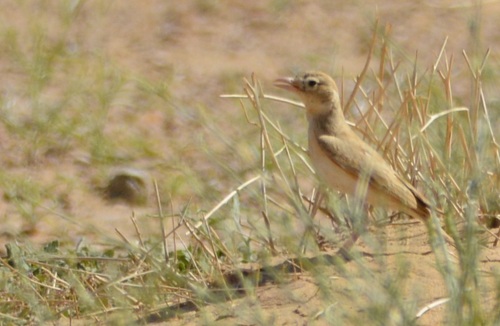
ウロコスナヒバリ (Eremalauda dunni) ウロコスナヒバリ
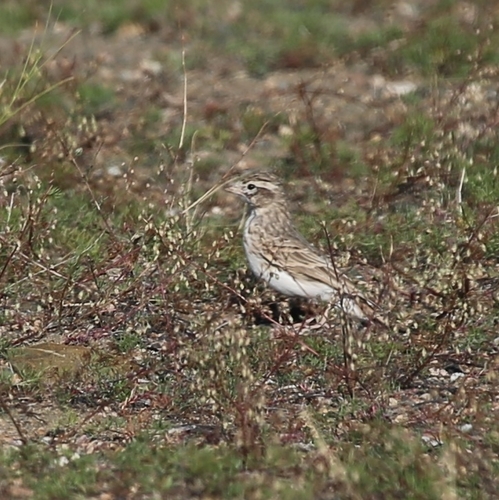
アジアコヒバリ (Alaudala cheleensis) アジアコヒバリ

メディア

読み込み中…

要点

フィールドでウロコスナヒバリとアジアコヒバリを区別する最も信頼できる方法は、構造によるものです:ウロコスナヒバリは特にがっしりしており、大きな頭、重い淡いくちばし、広い翼を持っていますが、アジアコヒバリはより細身で、くちばしが繊細です。すべての羽色において、ウロコスナヒバリは暗い筋模様と特徴的な顔のパターンを持つ淡い砂色の上面を示し、強い淡い眉斑と暗い口ひげ模様が含まれます。アジアコヒバリは一般的に地味で、顔のコントラストが少なく、全体的により繊細な外観を持っています。両種は距離があると似て見えることがありますが、特に摩耗したり幼鳥の羽色の場合は、くちばしのサイズ、頭の形、顔の模様に焦点を当てることが重要です。

識別のコツ

  1. Bill size and color: ウロコスナヒバリは大きく、重い、淡いピンク色または黄色がかったくちばしを持ち、距離があっても非常に目立ちます。アジアコヒバリのくちばしはより繊細で目立ちません。これはすべての羽色において重要な区別点です。
  2. Head and body shape: ウロコスナヒバリはがっしりしており、大きな頭と広い翼を持ち、ずんぐりした大きな頭の印象を与えます。アジアコヒバリはより細身で、小さな頭と狭い翼を持っています。
  3. Facial pattern: ウロコスナヒバリの強い淡い眉斑(アイブロウ)と淡いアイリングを探してください。これに大胆な暗い口ひげ模様と頬の模様、目の下の暗い斑点が際立ちます。アジアコヒバリの顔はずっと地味で、コントラストが少なく、強い暗い筋模様はありません。
  4. Upperpart streaking: ウロコスナヒバリは明るい砂色の上面に明確な暗い筋模様を示します。アジアコヒバリは一般的に筋模様が少なく、より均一です。
  5. Tail pattern: ウロコスナヒバリは短くて広い尾を持ち、下側は黒く、中央の羽は錆色で、上側は淡い羽です。常に見えるわけではありませんが、よく見えた場合には役立ちます。アジアコヒバリの尾の模様は特徴的とは記載されていません。
  6. Underparts: 両種は淡い下部を持っていますが、ウロコスナヒバリはしばしば胸に暗い筋模様を示します。アジアコヒバリは通常、下部がよりきれいです。
  7. Plumage wear: 脱羽後、ウロコスナヒバリは鈍くなり、コントラストが少なくなりますが、顔の模様は良い手がかりのままです。アジアコヒバリは摩耗するにつれて微妙さが増し、構造とくちばしがさらに重要になります。
  8. Behavior: ウロコスナヒバリは重いくちばしで食べ物を掘る姿が見られ、繁殖期以外は群れで餌を食べることが多いです。アジアコヒバリは餌を取る行動があまり強くありません。
  9. Song and display: ウロコスナヒバリのオスは地面から歌ったり、高くホバリングしたりします。サハラで高くホバリングし、ざらざらした笛のような歌を歌っているヒバリを見たら、ウロコスナヒバリの可能性が高いです。
  10. Habitat: 深い砂漠の生息地はウロコスナヒバリを強く支持し、ステップ、塩分のある平地、または開けたアジアの国はアジアコヒバリを支持します。場所を補助的な手がかりとして使用し、主要なマークとしては使用しないでください。
  11. Direct comparison: 両種を一緒に見ることができれば(野生ではあまり起こりませんが)、ウロコスナヒバリは大きく、ずんぐりしており、顔に大胆な模様があることが際立ちます。
  12. Pitfalls: 摩耗したり幼鳥のウロコスナヒバリはコントラストが少なく見えることがありますが、くちばしと頭の形は依然として特徴的です。アジアコヒバリはウロコスナヒバリの強い顔の模様や重いくちばしを決して示しません。
  13. Sex and age: 両種に強い性的二形性は記載されていません;すべてのフィールドマークは両性およびすべての年齢に適用されますが、摩耗はコントラストを減少させることがあります。
  14. Flight views: 特有の上翼や飛行パターンの違いは記載されていないため、飛行中でも構造と顔の模様に依存してください。
  15. When in doubt: くちばしや顔がはっきり見えず、鳥が非砂漠のアジアの生息地にいる場合、アジアコヒバリの可能性が高いです;サハラ砂漠では、ウロコスナヒバリにデフォルトしますが、常に頭とくちばしの明確な視界を試みてください。

大きさ

ウロコスナヒバリはわずかに大きく、がっしりしており、体長は14〜15 cm、翼幅は25〜30 cmです [wikipedia]。アジアコヒバリは小さく、より繊細ですが、正確な測定値はノートに記載されていません。直接比較すると、ウロコスナヒバリはより頑丈に見え、相対的に大きな頭とくちばしを持ち、アジアコヒバリはよりコンパクトで繊細なくちばしに見えます。

羽色

年齢特有の上翼や飛行パターンの違いは資料に詳細に記載されていないため、全体的な羽色と顔の模様に焦点を当てます。すべての年齢のウロコスナヒバリは、暗い筋模様を持つ淡い砂色の上面を示し、強い淡い眉斑(アイブロウ)、淡いアイリング、そして大胆な暗い口ひげ模様と頬の模様を持っています。下部は白っぽく、いくつかの暗い胸の筋模様があります。尾は短くて広く、下側は黒く、中央の羽は錆色で、上側は淡い羽です。脱羽後、ウロコスナヒバリは鈍くなり、コントラストが少なくなりますが、顔の模様は明らかです。アジアコヒバリは一般的に地味で、強い顔のコントラストが欠けており、上面は筋模様が少なく、眉斑はあまり目立たず、くちばしはより繊細で明らかに淡くありません。尾の模様はアジアコヒバリにとって診断的とは記載されていません。

行動

ウロコスナヒバリは繁殖期以外に群れで餌を食べることが多く、重いくちばしで食べ物を掘ることで知られています。オスは地面から歌ったり、高くホバリングしたりします。アジアコヒバリの行動はノートに詳細に記載されていませんが、一般的に他の小さなヒバリと似ており、地面で餌を探し、ウロコスナヒバリと同じ程度の頑丈な掘り行動は示しません。両種は地面に生息し、跳ねるのではなく歩いたり走ったりする姿が見られます。

生息環境

ウロコスナヒバリは真の砂漠の専門家であり、モーリタニアから中央スーダンまでのサハラ全域に分布しています [wikipedia]。アジアコヒバリは南中央アジアから東アジアにかけて分布し、一般的に開けた乾燥した生息地に生息しますが、厳密には砂漠ではなく、ステップ、塩分のある平地、その他の開けた国に出現することがあります。深いサハラ砂漠にいる場合、ウロコスナヒバリの可能性が高く、アジアのステップや塩分のある平地ではアジアコヒバリが期待されます。重複は最小限です。

声

ウロコスナヒバリは、地面からまたは高くホバリングしながら(30メートル以上)短い笛のようなフレーズを伴うざらざらしたさえずりの歌を持っています。アジアコヒバリの音声の説明はノートに記載されていないため、現在の情報に基づいて歌は信頼できる区別点ではありません。

より良い説明を送る

比較と同じ項目を使ってください。文章はすぐに公開されます。

The most reliable way to separate Dunn’s Lark from Asian Short-toed Lark in the field is by structure: Dunn’s Lark is notably stockier, with a large head, heavy pale bill, and broad wings, while Asian Short-toed Lark is more slender and fine-billed. In all plumages, Dunn’s Lark shows a pale sandy-brown upperpart with dark streaks and a distinctive facial pattern, including a strong pale supercilium and dark moustachial stripes. Asian Short-toed Lark is generally plainer, with less contrast in the face and a more delicate overall appearance. Both species can look similar at a distance, especially in worn or juvenile plumage, so focusing on bill size, head shape, and facial markings is key.

  1. Bill size and color: Dunn’s Lark has a large, heavy, pale pinkish or yellowish bill, very obvious even at a distance. Asian Short-toed Lark’s bill is finer and less conspicuous. This is a key separator in all plumages.
  2. Head and body shape: Dunn’s Lark is stocky with a large head and broad wings, giving a chunky, big-headed impression. Asian Short-toed Lark is more slender, with a smaller head and narrower wings.
  3. Facial pattern: Look for the strong pale supercilium (eyebrow) and pale eye-ring on Dunn’s Lark, set off by bold dark moustachial and malar stripes and a dark mark under the eye. Asian Short-toed Lark’s face is much plainer, with less contrast and no strong dark stripes.
  4. Upperpart streaking: Dunn’s Lark shows pale sandy-brown upperparts with distinct dark streaks. Asian Short-toed Lark is generally less streaked and more uniform above.
  5. Tail pattern: Dunn’s Lark has a short, broad tail that is black below, with rusty-brown central feathers and pale outer feathers above. While not always visible, this can help if seen well. Asian Short-toed Lark’s tail pattern is not described as distinctive.
  6. Underparts: Both species have pale underparts, but Dunn’s Lark often shows some dark streaks on the breast; Asian Short-toed Lark is typically cleaner below.
  7. Plumage wear: After moult, Dunn’s Lark becomes duller and less contrasting, but the facial pattern remains a good clue. Asian Short-toed Lark’s subtlety increases with wear, making structure and bill even more important.
  8. Behavior: Dunn’s Lark may be seen digging for food with its heavy bill and often feeds in flocks outside the breeding season. Asian Short-toed Lark is less robust in feeding behavior.
  9. Song and display: Dunn’s Lark males sing from the ground or hover high above it. If you see a lark hovering at height and singing a scratchy, whistled song in the Sahara, Dunn’s is likely.
  10. Habitat: Deep desert habitat strongly favors Dunn’s Lark; steppe, saline flats, or open Asian country favors Asian Short-toed Lark. Use location as a supporting clue, not a primary mark.
  11. Direct comparison: If you see both species together (unlikely in the wild), Dunn’s Lark will stand out as larger, chunkier, and more boldly marked in the face.
  12. Pitfalls: Worn or juvenile Dunn’s Larks can look less contrasting, but the bill and head shape remain distinctive. Asian Short-toed Lark never shows the strong facial pattern or heavy bill of Dunn’s.
  13. Sex and age: No strong sexual dimorphism is described for either species; all field marks apply to both sexes and all ages, though wear can reduce contrast.
  14. Flight views: No unique upperwing or flight pattern differences are described, so rely on structure and facial pattern even in flight.
  15. When in doubt: If you cannot see the bill or face clearly, and the bird is in non-desert Asian habitat, Asian Short-toed Lark is more likely; in Sahara desert, default to Dunn’s Lark, but always try for a clear view of the head and bill.

Dunn’s Lark is slightly larger and bulkier, measuring 14–15 cm in length with a wingspan of 25–30 cm [wikipedia]. Asian Short-toed Lark is smaller and more delicate, though exact measurements are not provided in the notes. In direct comparison, Dunn’s Lark will appear more robust, with a proportionally larger head and bill, while Asian Short-toed Lark looks more compact and fine-billed.

No age-specific upperwing or flight pattern differences are detailed in the sources, so focus is on overall plumage and facial pattern. Dunn’s Lark of all ages shows pale sandy-brown upperparts with darker streaking, a strong pale supercilium (eyebrow), pale eye-ring, and bold dark moustachial and malar stripes. The underparts are whitish with some dark breast streaks. The tail is short and broad, black below, with rusty-brown central feathers and pale outer feathers above. After moult, Dunn’s Lark becomes duller and less contrasting, but the facial pattern remains evident. Asian Short-toed Lark is generally plainer, lacking the strong facial contrast: its upperparts are less streaked, the supercilium is less marked, and the bill is finer and less obviously pale. The tail pattern is not described as diagnostic for Asian Short-toed Lark in the notes.

Dunn’s Lark often feeds in flocks outside the breeding season and is known for digging for food with its heavy bill. Males sing from the ground or hover high above it. Asian Short-toed Lark’s behavior is not detailed in the notes, but it is generally similar to other small larks, foraging on the ground and not showing the same degree of robust digging behavior as Dunn’s Lark. Both species are ground-dwelling and can be seen walking or running rather than hopping.

Dunn’s Lark is a true desert specialist, found across the Sahara from Mauritania to central Sudan [wikipedia]. Asian Short-toed Lark ranges from south-central to eastern Asia, often in open, dry habitats but not strictly desert; it can occur in steppe, saline flats, and other open country. If you are in deep Sahara desert, Dunn’s Lark is far more likely; in Asian steppe or saline flats, Asian Short-toed Lark is expected. Overlap is minimal.

Dunn’s Lark has a scratchy warbling song with short whistling phrases, delivered from the ground or while hovering high above (30 meters or more). No vocal description is provided for Asian Short-toed Lark in the notes, so song is not a reliable separator based on current information.

変更を破棄しますか?

保存していない編集があります。今離れると失われます。

ウロコスナヒバリ · アジアコヒバリ · 苦手な鳥