

Motmot

Crested Auklet vs Black Paradise-Flycatcher

Aethia cristatella versus Terpsiphone atrocaudata

Play a quiz with Crested Auklet and Black Paradise-Flycatcher
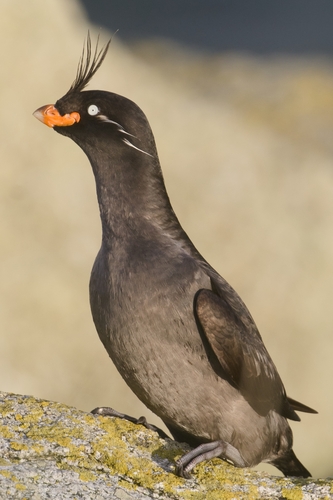
Crested Auklet (Aethia cristatella) Crested Auklet
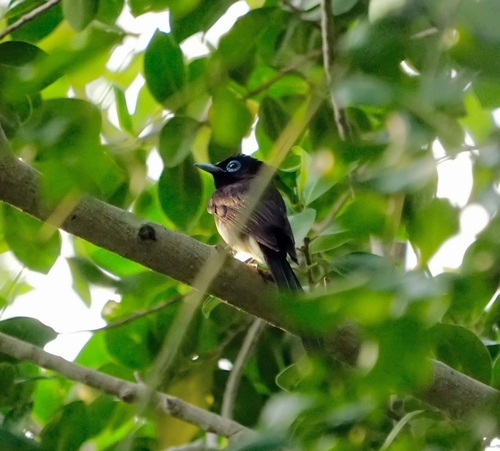
Black Paradise-Flycatcher (Terpsiphone atrocaudata) Black Paradise-Flycatcher

Media

Loading…

In short

The most reliable field mark to separate Crested Auklet from Black Paradise-Flycatcher is the presence of a prominent black forward-curving crest and bright orange bill on the auklet, which is never shown by the flycatcher. Juvenile and winter Crested Auklets lack the crest but still show a short, thick bill and overall sooty-grey coloration, while Black Paradise-Flycatchers—especially males—have extremely long tails, glossy black heads, and chestnut backs. In flight or perched, the auklet is a chunky, short-tailed seabird, while the flycatcher is a slim, long-tailed forest bird. If you see a bird with a long, streamer-like tail and chestnut upperparts, it is the flycatcher; if it is dark grey, short-tailed, and thick-billed, it is the auklet.

Identification tips

  1. Crested Auklet adults in breeding plumage: Look for a prominent black forward-curving crest above the eyes, white auricular plumes, and a bright reddish-orange bill with a yellow tip. These marks are never present on Black Paradise-Flycatcher.
  2. Juvenile and winter Crested Auklet: Lacks crest and auricular plumes, but still shows a short, thick, dull brownish-yellow bill and uniform sooty-grey plumage. The flycatcher never appears sooty-grey and always has a slimmer, more delicate bill.
  3. Bill shape and color: Auklet's bill is thick, short, and bright orange (breeding) or dull yellow (non-breeding/juvenile), while flycatcher has a slender, straight, short blue bill.
  4. Tail structure: Black Paradise-Flycatcher males have extremely long, black central tail feathers (shorter in immature males), giving a streamer effect in flight and when perched. Crested Auklet has a short, stubby tail with no streamers at any age.
  5. Overall body shape: Auklet is chunky, compact, and short-necked, with a pigeon-like or alcid jizz. Flycatcher is slim, long-tailed, and upright, typical of a passerine.
  6. Plumage contrast: Flycatcher shows a striking contrast of glossy black head/chest, chestnut back/wings, and white underparts (males), or duller brown and black (females). Auklet is uniform sooty-grey with little contrast except for facial ornaments.
  7. Eye and facial features: Flycatcher has a large black eye with a blue eye-ring; auklet has yellowish-white irises and white auricular plumes (breeding adults only).
  8. Habitat context: Auklet is strictly marine/coastal, seen on rocky islands or at sea; flycatcher is a forest bird, never found at sea.
  9. Behavior: Auklet is often in dense colonies, diving for food; flycatcher is solitary or in pairs, sallying for insects in trees.
  10. Flight style: Flycatcher has an undulating, agile flight with trailing tail streamers; auklet has rapid, direct flight typical of alcids, with no tail projection.
  11. Size impression: Auklet is much heavier and bulkier; flycatcher is light and delicate.
  12. Vocalizations: Auklet's calls are harsh, social, and linked to colony displays; flycatcher has more musical, whistled calls (not detailed here, but typical for the group).
  13. Seasonal changes: Auklet loses crest and bright bill color in winter, but remains sooty-grey and thick-billed; flycatcher does not show dramatic seasonal changes but males may have shorter tail streamers when immature.
  14. Sex differences: Both species show some sexual dimorphism—auklet females have slightly smaller crests and bills, flycatcher females are duller with shorter tails—but these are subtle compared to the differences between the two species.
  15. Common pitfalls: Immature auklets lacking crest may seem plain, but still have a thick bill and uniform color; flycatcher immatures always have a slimmer build and some chestnut/white contrast. Never expect a long tail or chestnut coloration on auklet, nor a crest or orange bill on flycatcher.

Size

Crested Auklet is much heavier and more robust, weighing 195–330 g and measuring 18–27 cm in length, with a wingspan of 34–50 cm [wikipedia]. In contrast, Black Paradise-Flycatcher is a slender passerine, weighing only about 18.7 g [wikidata], and is smaller overall. The auklet has a stocky, compact build with a short tail, while the flycatcher is slim with a very long tail, especially in adult males.

Plumage

Juvenile and winter Crested Auklets are uniformly sooty-grey with small, dull brownish-yellow bills and lack the crest and auricular plumes. Adults in breeding plumage are dark sooty-grey overall with a variable black forward-curving crest, white auricular plumes, and a bright reddish-orange bill with yellow tip. In winter, the bill becomes dull yellow, and the crest and plumes are reduced. Black Paradise-Flycatcher males (adult) have a glossy black hood and chest, white underparts, and dark chestnut mantle, back, wings, and rump, with extremely long black central tail feathers. Females are similar but duller, with shorter tails and darker brown chestnut areas. Both sexes have a blue eye-ring and blue bill. Immature males have shorter tail streamers. There is no white morph in this species. The flycatcher never shows a crest, auricular plumes, or orange bill, and always has a contrasting pattern of black, chestnut, and white, unlike the auklet's uniform sooty-grey.

Behaviour

Crested Auklet is a colonial seabird, often seen in dense groups on rocky cliffs or at sea, diving for food. It is rarely, if ever, seen perched in trees or away from marine environments. Black Paradise-Flycatcher is a solitary or paired forest bird, often seen sallying for insects or flitting through foliage, with a distinctive undulating flight and long tail streamers trailing behind. The auklet's behavior is more pigeon-like and aquatic, while the flycatcher is agile, acrobatic, and strictly terrestrial or arboreal.

Habitat

Crested Auklet is strictly marine, breeding on rocky islands and cliffs in the northern Pacific and Bering Sea, and foraging at sea [wikipedia]. It is never found inland or in forested areas. Black Paradise-Flycatcher inhabits forests and wooded areas in southeastern Asia, breeding in Japan, Korea, Taiwan, and the Philippines, and wintering further south. It is a migratory forest passerine, never seen at sea or on cliffs.

Voice

Crested Auklet produces a variety of calls, including complex trumpet calls and cackling displays, especially during courtship and colony interactions. These are described as social and often associated with visual displays. Black Paradise-Flycatcher, while not detailed in the notes, is a typical flycatcher with melodious, whistled calls, quite different from the auklet's harsh, social colony noises. The auklet's calls are linked to pair formation and social bonds, while the flycatcher's are more typical of forest songbirds.

Submit a better description

Use the same sections as the comparison. Your text is published immediately.

The most reliable field mark to separate Crested Auklet from Black Paradise-Flycatcher is the presence of a prominent black forward-curving crest and bright orange bill on the auklet, which is never shown by the flycatcher. Juvenile and winter Crested Auklets lack the crest but still show a short, thick bill and overall sooty-grey coloration, while Black Paradise-Flycatchers—especially males—have extremely long tails, glossy black heads, and chestnut backs. In flight or perched, the auklet is a chunky, short-tailed seabird, while the flycatcher is a slim, long-tailed forest bird. If you see a bird with a long, streamer-like tail and chestnut upperparts, it is the flycatcher; if it is dark grey, short-tailed, and thick-billed, it is the auklet.

  1. Crested Auklet adults in breeding plumage: Look for a prominent black forward-curving crest above the eyes, white auricular plumes, and a bright reddish-orange bill with a yellow tip. These marks are never present on Black Paradise-Flycatcher.
  2. Juvenile and winter Crested Auklet: Lacks crest and auricular plumes, but still shows a short, thick, dull brownish-yellow bill and uniform sooty-grey plumage. The flycatcher never appears sooty-grey and always has a slimmer, more delicate bill.
  3. Bill shape and color: Auklet's bill is thick, short, and bright orange (breeding) or dull yellow (non-breeding/juvenile), while flycatcher has a slender, straight, short blue bill.
  4. Tail structure: Black Paradise-Flycatcher males have extremely long, black central tail feathers (shorter in immature males), giving a streamer effect in flight and when perched. Crested Auklet has a short, stubby tail with no streamers at any age.
  5. Overall body shape: Auklet is chunky, compact, and short-necked, with a pigeon-like or alcid jizz. Flycatcher is slim, long-tailed, and upright, typical of a passerine.
  6. Plumage contrast: Flycatcher shows a striking contrast of glossy black head/chest, chestnut back/wings, and white underparts (males), or duller brown and black (females). Auklet is uniform sooty-grey with little contrast except for facial ornaments.
  7. Eye and facial features: Flycatcher has a large black eye with a blue eye-ring; auklet has yellowish-white irises and white auricular plumes (breeding adults only).
  8. Habitat context: Auklet is strictly marine/coastal, seen on rocky islands or at sea; flycatcher is a forest bird, never found at sea.
  9. Behavior: Auklet is often in dense colonies, diving for food; flycatcher is solitary or in pairs, sallying for insects in trees.
  10. Flight style: Flycatcher has an undulating, agile flight with trailing tail streamers; auklet has rapid, direct flight typical of alcids, with no tail projection.
  11. Size impression: Auklet is much heavier and bulkier; flycatcher is light and delicate.
  12. Vocalizations: Auklet's calls are harsh, social, and linked to colony displays; flycatcher has more musical, whistled calls (not detailed here, but typical for the group).
  13. Seasonal changes: Auklet loses crest and bright bill color in winter, but remains sooty-grey and thick-billed; flycatcher does not show dramatic seasonal changes but males may have shorter tail streamers when immature.
  14. Sex differences: Both species show some sexual dimorphism—auklet females have slightly smaller crests and bills, flycatcher females are duller with shorter tails—but these are subtle compared to the differences between the two species.
  15. Common pitfalls: Immature auklets lacking crest may seem plain, but still have a thick bill and uniform color; flycatcher immatures always have a slimmer build and some chestnut/white contrast. Never expect a long tail or chestnut coloration on auklet, nor a crest or orange bill on flycatcher.

Crested Auklet is much heavier and more robust, weighing 195–330 g and measuring 18–27 cm in length, with a wingspan of 34–50 cm [wikipedia]. In contrast, Black Paradise-Flycatcher is a slender passerine, weighing only about 18.7 g [wikidata], and is smaller overall. The auklet has a stocky, compact build with a short tail, while the flycatcher is slim with a very long tail, especially in adult males.

Juvenile and winter Crested Auklets are uniformly sooty-grey with small, dull brownish-yellow bills and lack the crest and auricular plumes. Adults in breeding plumage are dark sooty-grey overall with a variable black forward-curving crest, white auricular plumes, and a bright reddish-orange bill with yellow tip. In winter, the bill becomes dull yellow, and the crest and plumes are reduced. Black Paradise-Flycatcher males (adult) have a glossy black hood and chest, white underparts, and dark chestnut mantle, back, wings, and rump, with extremely long black central tail feathers. Females are similar but duller, with shorter tails and darker brown chestnut areas. Both sexes have a blue eye-ring and blue bill. Immature males have shorter tail streamers. There is no white morph in this species. The flycatcher never shows a crest, auricular plumes, or orange bill, and always has a contrasting pattern of black, chestnut, and white, unlike the auklet's uniform sooty-grey.

Crested Auklet is a colonial seabird, often seen in dense groups on rocky cliffs or at sea, diving for food. It is rarely, if ever, seen perched in trees or away from marine environments. Black Paradise-Flycatcher is a solitary or paired forest bird, often seen sallying for insects or flitting through foliage, with a distinctive undulating flight and long tail streamers trailing behind. The auklet's behavior is more pigeon-like and aquatic, while the flycatcher is agile, acrobatic, and strictly terrestrial or arboreal.

Crested Auklet is strictly marine, breeding on rocky islands and cliffs in the northern Pacific and Bering Sea, and foraging at sea [wikipedia]. It is never found inland or in forested areas. Black Paradise-Flycatcher inhabits forests and wooded areas in southeastern Asia, breeding in Japan, Korea, Taiwan, and the Philippines, and wintering further south. It is a migratory forest passerine, never seen at sea or on cliffs.

Crested Auklet produces a variety of calls, including complex trumpet calls and cackling displays, especially during courtship and colony interactions. These are described as social and often associated with visual displays. Black Paradise-Flycatcher, while not detailed in the notes, is a typical flycatcher with melodious, whistled calls, quite different from the auklet's harsh, social colony noises. The auklet's calls are linked to pair formation and social bonds, while the flycatcher's are more typical of forest songbirds.

Discard your changes?

You have unsaved edits. If you leave now, those changes will be lost.

Crested Auklet · Black Paradise-Flycatcher · My Tricky Birds