

Motmot

エトロフウミスズメ 対 サンコウチョウ

Aethia cristatella 対 Terpsiphone atrocaudata

エトロフウミスズメとサンコウチョウのクイズ
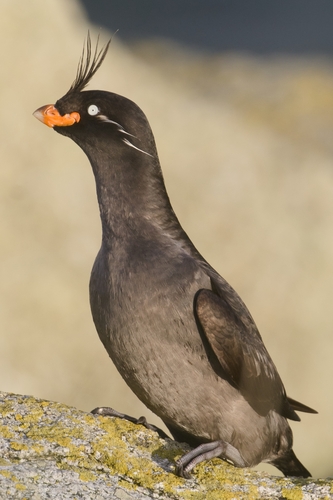
エトロフウミスズメ (Aethia cristatella) エトロフウミスズメ
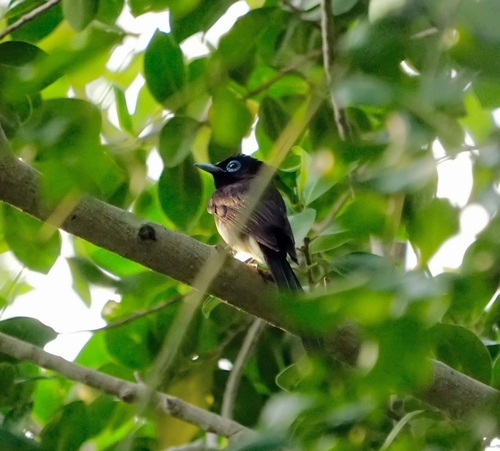
サンコウチョウ (Terpsiphone atrocaudata) サンコウチョウ

メディア

読み込み中…

要点

クレストウミスズメとサンコウチョウを区別する最も信頼できるフィールドマークは、ウミスズメに見られる目の上にある目立つ黒い前方に曲がった冠と明るいオレンジ色のくちばしの存在です。これはサンコウチョウには決して見られません。幼鳥と冬のクレストウミスズメは冠が欠けていますが、短くて太いくちばしと全体的にすす灰色の色合いを示します。一方、サンコウチョウ—特にオスは—非常に長い尾、光沢のある黒い頭、そして栗色の背中を持っています。飛んでいるときや止まっているとき、ウミスズメはずんぐりした短尾の海鳥であり、サンコウチョウは細身で長い尾の森林の鳥です。長くて流れるような尾と栗色の上面を持つ鳥を見たら、それはサンコウチョウです。暗い灰色で短尾で太いくちばしの鳥であれば、それはウミスズメです。

識別のコツ

  1. 繁殖羽のクレストウミスズメ成鳥: 目の上に目立つ黒い前方に曲がった冠、白い耳羽、そして黄色い先端を持つ明るい赤橙色のくちばしを探してください。これらのマークはサンコウチョウには決して存在しません。
  2. 幼鳥と冬のクレストウミスズメ: 冠と耳羽が欠けていますが、短くて太い鈍い茶色がかった黄色のくちばしと均一なすす灰色の羽毛を示します。サンコウチョウは決してすす灰色には見えず、常に細くて繊細なくちばしを持っています。
  3. くちばしの形と色: ウミスズメのくちばしは太く、短く、繁殖期は明るいオレンジ色(非繁殖期/幼鳥は鈍い黄色)ですが、サンコウチョウは細長く、まっすぐで、短い青いくちばしを持っています。
  4. 尾の構造: サンコウチョウのオスは非常に長い黒い中央尾羽(未成熟のオスは短い)を持ち、飛行中や止まっているときに流れるような効果を与えます。クレストウミスズメは、どの年齢でも流れるようなものがない短くて太い尾を持っています。
  5. 全体的な体の形: ウミスズメはずんぐりしていて、コンパクトで、短い首を持ち、ハトのようなまたはアルキドの印象を与えます。サンコウチョウは細身で長い尾を持ち、直立しており、典型的なスズメ目の鳥です。
  6. 羽毛のコントラスト: サンコウチョウは光沢のある黒い頭/胸、栗色の背中/翼、そして白い腹部(オス)または鈍い茶色と黒(メス)の際立ったコントラストを示します。ウミスズメは均一なすす灰色で、顔の装飾を除いてほとんどコントラストがありません。
  7. 目と顔の特徴: サンコウチョウは大きな黒い目と青いアイリングを持ち、ウミスズメは黄色がかった白い虹彩と白い耳羽(繁殖成鳥のみ)を持っています。
  8. 生息地の文脈: ウミスズメは厳密に海洋/沿岸に生息し、岩の島や海で見られます。サンコウチョウは森林の鳥で、海では見られません。
  9. 行動: ウミスズメはしばしば密集したコロニーにいて、食べ物を求めて潜ります。サンコウチョウは孤独またはペアで、木の中で昆虫を捕まえたり、葉の間を飛び回ったりします。
  10. 飛行スタイル: サンコウチョウは流れるようで敏捷な飛行を持ち、尾の流れが後ろに引きずられます。ウミスズメはアルキドに典型的な急速で直接的な飛行を持ち、尾の突出はありません。
  11. サイズの印象: ウミスズメははるかに重くて頑丈です。サンコウチョウは軽くて繊細です。
  12. 鳴き声: ウミスズメの鳴き声は厳しく、社交的で、コロニーのディスプレイに関連しています。サンコウチョウはより音楽的で笛のような鳴き声を持ち(ここでは詳細は述べませんが、グループとして典型的です)。ウミスズメの鳴き声はペア形成や社会的絆に関連しており、サンコウチョウの鳴き声は森林の歌鳥に典型的です。
  13. 季節の変化: ウミスズメは冬に冠と明るいくちばしの色を失いますが、すす灰色で太いくちばしのままです。サンコウチョウは劇的な季節の変化を示しませんが、オスは未成熟のときに尾の流れが短くなることがあります。
  14. 性差: 両種はある程度の性差を示します—ウミスズメのメスはわずかに小さい冠とくちばしを持ち、サンコウチョウのメスは鈍く、尾が短いですが、これらは両種の違いに比べると微妙です。
  15. 一般的な落とし穴: 冠が欠けた未成熟のウミスズメは地味に見えるかもしれませんが、依然として太いくちばしと均一な色を持っています。サンコウチョウの未成熟は常に細い体型といくつかの栗色/白のコントラストを持っています。ウミスズメに長い尾や栗色の色合いを期待しないでください。また、サンコウチョウに冠やオレンジのくちばしを期待しないでください。

大きさ

クレストウミスズメははるかに重くて頑丈で、195–330 gの重さで、長さは18–27 cm、翼幅は34–50 cmです [wikipedia]。対照的に、サンコウチョウは細身のスズメ目の鳥で、重さは約18.7 g [wikidata] で、全体的に小さいです。ウミスズメはずんぐりしたコンパクトな体型で短い尾を持ち、サンコウチョウは特に成鳥のオスにおいて非常に長い尾を持っています。

羽色

幼鳥と冬のクレストウミスズメは均一にすす灰色で、小さく鈍い茶色がかった黄色のくちばしを持ち、冠と耳羽が欠けています。繁殖羽の成鳥は全体的に暗いすす灰色で、変動する黒い前方に曲がった冠、白い耳羽、そして黄色い先端を持つ明るい赤橙色のくちばしを持っています。冬には、くちばしは鈍い黄色になり、冠と羽毛は減少します。サンコウチョウのオス(成鳥)は光沢のある黒いフードと胸、白い腹部、そして非常に長い黒い中央尾羽を持ち、栗色のマントル、背中、翼、そして尾羽を持っています。メスは似ていますが鈍く、尾が短く、栗色の部分が暗くなります。両性とも青いアイリングと青いくちばしを持っています。未成熟のオスは短い尾の流れを持っています。この種には白い形態はありません。サンコウチョウは決して冠、耳羽、またはオレンジのくちばしを示さず、常にウミスズメの均一なすす灰色とは異なる黒、栗色、白のコントラストパターンを持っています。

行動

クレストウミスズメはコロニアルな海鳥で、しばしば岩の崖や海で密集した群れで見られ、食べ物を求めて潜ります。木に止まっているところや海洋環境から離れているところはほとんど見られません。サンコウチョウは孤独またはペアの森林の鳥で、昆虫を捕まえたり、葉の間を飛び回ったりするのがよく見られ、特徴的な波状の飛行と長い尾の流れを持っています。ウミスズメの行動はよりハトのようで水生的であり、サンコウチョウは敏捷でアクロバティックで、厳密に陸生または樹上性です。

生息環境

クレストウミスズメは厳密に海洋で、北太平洋とベーリング海の岩の島や崖で繁殖し、海で餌を探します [wikipedia]。内陸や森林地域では決して見られません。サンコウチョウは東南アジアの森林や樹木の多い地域に生息し、日本、韓国、台湾、フィリピンで繁殖し、さらに南で越冬します。これは移動性の森林のスズメ目の鳥で、海や崖では見られません。

声

クレストウミスズメは、特に求愛やコロニーの相互作用中に、複雑なトランペットの鳴き声やカッカッという鳴き声を含むさまざまな鳴き声を出します。これらは社交的で、視覚的なディスプレイに関連していることがよくあります。サンコウチョウは、詳細は記載されていませんが、典型的なスズメ目の鳥で、ウミスズメの厳しい社会的コロニーの音とはかなり異なる音楽的で笛のような鳴き声を持っています。ウミスズメの鳴き声はペア形成や社会的絆に関連しており、サンコウチョウの鳴き声は森林の歌鳥に典型的です。

より良い説明を送る

比較と同じ項目を使ってください。文章はすぐに公開されます。

The most reliable field mark to separate Crested Auklet from Black Paradise-Flycatcher is the presence of a prominent black forward-curving crest and bright orange bill on the auklet, which is never shown by the flycatcher. Juvenile and winter Crested Auklets lack the crest but still show a short, thick bill and overall sooty-grey coloration, while Black Paradise-Flycatchers—especially males—have extremely long tails, glossy black heads, and chestnut backs. In flight or perched, the auklet is a chunky, short-tailed seabird, while the flycatcher is a slim, long-tailed forest bird. If you see a bird with a long, streamer-like tail and chestnut upperparts, it is the flycatcher; if it is dark grey, short-tailed, and thick-billed, it is the auklet.

  1. Crested Auklet adults in breeding plumage: Look for a prominent black forward-curving crest above the eyes, white auricular plumes, and a bright reddish-orange bill with a yellow tip. These marks are never present on Black Paradise-Flycatcher.
  2. Juvenile and winter Crested Auklet: Lacks crest and auricular plumes, but still shows a short, thick, dull brownish-yellow bill and uniform sooty-grey plumage. The flycatcher never appears sooty-grey and always has a slimmer, more delicate bill.
  3. Bill shape and color: Auklet's bill is thick, short, and bright orange (breeding) or dull yellow (non-breeding/juvenile), while flycatcher has a slender, straight, short blue bill.
  4. Tail structure: Black Paradise-Flycatcher males have extremely long, black central tail feathers (shorter in immature males), giving a streamer effect in flight and when perched. Crested Auklet has a short, stubby tail with no streamers at any age.
  5. Overall body shape: Auklet is chunky, compact, and short-necked, with a pigeon-like or alcid jizz. Flycatcher is slim, long-tailed, and upright, typical of a passerine.
  6. Plumage contrast: Flycatcher shows a striking contrast of glossy black head/chest, chestnut back/wings, and white underparts (males), or duller brown and black (females). Auklet is uniform sooty-grey with little contrast except for facial ornaments.
  7. Eye and facial features: Flycatcher has a large black eye with a blue eye-ring; auklet has yellowish-white irises and white auricular plumes (breeding adults only).
  8. Habitat context: Auklet is strictly marine/coastal, seen on rocky islands or at sea; flycatcher is a forest bird, never found at sea.
  9. Behavior: Auklet is often in dense colonies, diving for food; flycatcher is solitary or in pairs, sallying for insects in trees.
  10. Flight style: Flycatcher has an undulating, agile flight with trailing tail streamers; auklet has rapid, direct flight typical of alcids, with no tail projection.
  11. Size impression: Auklet is much heavier and bulkier; flycatcher is light and delicate.
  12. Vocalizations: Auklet's calls are harsh, social, and linked to colony displays; flycatcher has more musical, whistled calls (not detailed here, but typical for the group).
  13. Seasonal changes: Auklet loses crest and bright bill color in winter, but remains sooty-grey and thick-billed; flycatcher does not show dramatic seasonal changes but males may have shorter tail streamers when immature.
  14. Sex differences: Both species show some sexual dimorphism—auklet females have slightly smaller crests and bills, flycatcher females are duller with shorter tails—but these are subtle compared to the differences between the two species.
  15. Common pitfalls: Immature auklets lacking crest may seem plain, but still have a thick bill and uniform color; flycatcher immatures always have a slimmer build and some chestnut/white contrast. Never expect a long tail or chestnut coloration on auklet, nor a crest or orange bill on flycatcher.

Crested Auklet is much heavier and more robust, weighing 195–330 g and measuring 18–27 cm in length, with a wingspan of 34–50 cm [wikipedia]. In contrast, Black Paradise-Flycatcher is a slender passerine, weighing only about 18.7 g [wikidata], and is smaller overall. The auklet has a stocky, compact build with a short tail, while the flycatcher is slim with a very long tail, especially in adult males.

Juvenile and winter Crested Auklets are uniformly sooty-grey with small, dull brownish-yellow bills and lack the crest and auricular plumes. Adults in breeding plumage are dark sooty-grey overall with a variable black forward-curving crest, white auricular plumes, and a bright reddish-orange bill with yellow tip. In winter, the bill becomes dull yellow, and the crest and plumes are reduced. Black Paradise-Flycatcher males (adult) have a glossy black hood and chest, white underparts, and dark chestnut mantle, back, wings, and rump, with extremely long black central tail feathers. Females are similar but duller, with shorter tails and darker brown chestnut areas. Both sexes have a blue eye-ring and blue bill. Immature males have shorter tail streamers. There is no white morph in this species. The flycatcher never shows a crest, auricular plumes, or orange bill, and always has a contrasting pattern of black, chestnut, and white, unlike the auklet's uniform sooty-grey.

Crested Auklet is a colonial seabird, often seen in dense groups on rocky cliffs or at sea, diving for food. It is rarely, if ever, seen perched in trees or away from marine environments. Black Paradise-Flycatcher is a solitary or paired forest bird, often seen sallying for insects or flitting through foliage, with a distinctive undulating flight and long tail streamers trailing behind. The auklet's behavior is more pigeon-like and aquatic, while the flycatcher is agile, acrobatic, and strictly terrestrial or arboreal.

Crested Auklet is strictly marine, breeding on rocky islands and cliffs in the northern Pacific and Bering Sea, and foraging at sea [wikipedia]. It is never found inland or in forested areas. Black Paradise-Flycatcher inhabits forests and wooded areas in southeastern Asia, breeding in Japan, Korea, Taiwan, and the Philippines, and wintering further south. It is a migratory forest passerine, never seen at sea or on cliffs.

Crested Auklet produces a variety of calls, including complex trumpet calls and cackling displays, especially during courtship and colony interactions. These are described as social and often associated with visual displays. Black Paradise-Flycatcher, while not detailed in the notes, is a typical flycatcher with melodious, whistled calls, quite different from the auklet's harsh, social colony noises. The auklet's calls are linked to pair formation and social bonds, while the flycatcher's are more typical of forest songbirds.

変更を破棄しますか?

保存していない編集があります。今離れると失われます。

エトロフウミスズメ · サンコウチョウ · 苦手な鳥