

Crested Auklet vs Black Paradise-Flycatcher
Aethia cristatella contro Terpsiphone atrocaudata
Fai un quiz con Crested Auklet e Black Paradise-Flycatcher
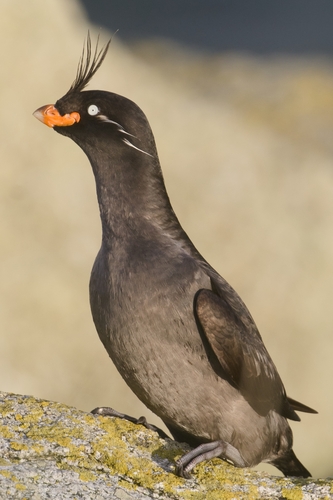 Crested Auklet
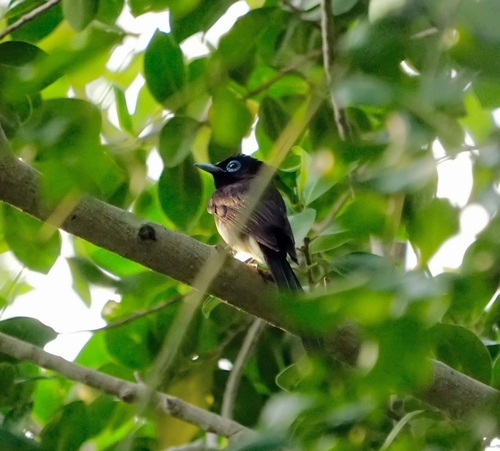 Black Paradise-Flycatcher
In breve
Il segno distintivo più affidabile per separare il Crested Auklet dal Black Paradise-Flycatcher è la presenza di una prominente cresta nera curva in avanti e di un becco arancione brillante sull'auklet, che non è mai presente nel flycatcher. Gli auklet giovanili e invernali mancano della cresta ma mostrano comunque un becco corto e spesso e una colorazione grigia sporca generale, mentre i Black Paradise-Flycatchers—soprattutto i maschi—hanno code estremamente lunghe, teste nere lucide e schiene castane. In volo o posati, l'auklet è un uccello marino tozzo e dalla coda corta, mentre il flycatcher è un uccello forestale snello e dalla coda lunga. Se vedi un uccello con una lunga coda simile a un nastro e parti superiori castane, è il flycatcher; se è grigio scuro, dalla coda corta e con un becco spesso, è l'auklet.
Consigli di identificazione
- Crested Auklet adults in breeding plumage: Cerca una prominente cresta nera curva in avanti sopra gli occhi, piume auricolari bianche e un becco arancione brillante con una punta gialla. Questi segni non sono mai presenti nel Black Paradise-Flycatcher.
- Juvenile and winter Crested Auklet: Manca della cresta e delle piume auricolari, ma mostra comunque un becco corto, spesso e di un giallo-bruno opaco e una plumaggio grigio sporco uniforme. Il flycatcher non appare mai grigio sporco e ha sempre un becco più snello e delicato.
- Bill shape and color: Il becco dell'auklet è spesso, corto e arancione brillante (riproduzione) o giallo opaco (non riproduzione/giovanile), mentre il flycatcher ha un becco blu sottile, dritto e corto.
- Tail structure: I maschi del Black Paradise-Flycatcher hanno piume centrali della coda nere estremamente lunghe (più corte nei maschi immaturi), dando un effetto a nastro in volo e quando sono posati. Il Crested Auklet ha una coda corta e tozza senza nastri a qualsiasi età.
- Overall body shape: L'auklet è tozzo, compatto e con un collo corto, con un aspetto simile a un piccione o a un alcide. Il flycatcher è snello, dalla coda lunga e eretto, tipico di un passeriforme.
- Plumage contrast: Il flycatcher mostra un contrasto sorprendente tra la testa/petto nero lucido, la schiena/ali castane e le parti inferiori bianche (maschi), o un marrone più opaco e nero (femmine). L'auklet è di un grigio sporco uniforme con poco contrasto tranne che per gli ornamenti facciali.
- Eye and facial features: Il flycatcher ha un grande occhio nero con un anello blu; l'auklet ha iridi giallo-biancastre e piume auricolari bianche (solo nei maschi adulti).
- Habitat context: L'auklet è strettamente marino/costiero, visto su isole rocciose o in mare; il flycatcher è un uccello forestale, mai trovato in mare.
- Behavior: L'auklet è spesso in dense colonie, immergendosi per cercare cibo; il flycatcher è solitario o in coppie, che si lancia per cercare insetti sugli alberi.
- Flight style: Il flycatcher ha un volo ondulato e agile con nastri di coda che seguono; l'auklet ha un volo rapido e diretto tipico degli alcidi, senza proiezione della coda.
- Size impression: L'auklet è molto più pesante e bulkier; il flycatcher è leggero e delicato.
- Vocalizations: I richiami dell'auklet sono aspri, sociali e legati a display di colonia; il flycatcher ha richiami più musicali e fischiati (non dettagliati qui, ma tipici per il gruppo).
- Seasonal changes: L'auklet perde la cresta e il colore brillante del becco in inverno, ma rimane grigio sporco e con un becco spesso; il flycatcher non mostra cambiamenti stagionali drammatici, ma i maschi possono avere nastri di coda più corti quando immaturi.
- Sex differences: Entrambe le specie mostrano un certo dimorfismo sessuale—le femmine dell'auklet hanno creste e becchi leggermente più piccoli, le femmine del flycatcher sono più opache con code più corte—ma questi sono sottili rispetto alle differenze tra le due specie.
- Common pitfalls: Gli auklet immaturi privi di cresta possono sembrare semplici, ma hanno comunque un becco spesso e un colore uniforme; gli immaturi del flycatcher hanno sempre una struttura più snella e un certo contrasto castano/bianco. Non aspettarti mai una lunga coda o una colorazione castana sull'auklet, né una cresta o un becco arancione sul flycatcher.
Taglia
Il Crested Auklet è molto più pesante e robusto, pesando 195–330 g e misurando 18–27 cm di lunghezza, con un'apertura alare di 34–50 cm [wikipedia]. Al contrario, il Black Paradise-Flycatcher è un passeriforme snello, pesando solo circa 18,7 g [wikidata], ed è più piccolo nel complesso. L'auklet ha una struttura tozza e compatta con una coda corta, mentre il flycatcher è snello con una coda molto lunga, soprattutto nei maschi adulti.
Piumaggio
Gli auklet giovanili e invernali sono uniformemente grigi sporchi con piccoli becchi giallo-bruni opachi e mancano della cresta e delle piume auricolari. Gli adulti in abito nuziale sono di un grigio sporco scuro con una cresta nera curva in avanti variabile, piume auricolari bianche e un becco arancione brillante con punta gialla. In inverno, il becco diventa giallo opaco e la cresta e le piume sono ridotte. I maschi del Black Paradise-Flycatcher (adulti) hanno un cappuccio e un petto neri lucidi, parti inferiori bianche e un mantello, schiena, ali e coda castani scuri, con piume centrali della coda nere estremamente lunghe. Le femmine sono simili ma più opache, con code più corte e aree castane più scure. Entrambi i sessi hanno un anello oculare blu e un becco blu. I maschi immaturi hanno nastri di coda più corti. Non esiste una forma bianca in questa specie. Il flycatcher non mostra mai una cresta, piume auricolari o un becco arancione, e ha sempre un modello contrastante di nero, castano e bianco, a differenza del grigio sporco uniforme dell'auklet.
Comportamento
Il Crested Auklet è un uccello marino coloniale, spesso visto in gruppi densi su scogliere rocciose o in mare, immergendosi per cercare cibo. È raramente, se non mai, visto posato sugli alberi o lontano dagli ambienti marini. Il Black Paradise-Flycatcher è un uccello forestale solitario o in coppia, spesso visto mentre si lancia per cercare insetti o svolazzando tra il fogliame, con un volo ondulato distintivo e lunghi nastri di coda che seguono. Il comportamento dell'auklet è più simile a quello di un piccione e acquatico, mentre il flycatcher è agile, acrobatico e strettamente terrestre o arboreo.
Habitat
Il Crested Auklet è strettamente marino, nidificando su isole rocciose e scogliere nel Pacifico settentrionale e nel Mare di Bering, e foraggiando in mare [wikipedia]. Non si trova mai nell'entroterra o in aree boschive. Il Black Paradise-Flycatcher abita foreste e aree boschive nel sud-est asiatico, nidificando in Giappone, Corea, Taiwan e Filippine, e svernando più a sud. È un passeriforme forestale migratorio, mai visto in mare o su scogliere.
Voce
Il Crested Auklet produce una varietà di richiami, inclusi richiami complessi a tromba e display di cackling, specialmente durante il corteggiamento e le interazioni di colonia. Questi sono descritti come sociali e spesso associati a display visivi. Il Black Paradise-Flycatcher, sebbene non dettagliato nelle note, è un tipico flycatcher con richiami melodiosi e fischiati, molto diversi dai rumori aspri e sociali di colonia dell'auklet. I richiami dell'auklet sono legati alla formazione di coppie e ai legami sociali, mentre quelli del flycatcher sono più tipici degli uccelli canori forestali.
Crested Auklet · Black Paradise-Flycatcher · I miei uccelli difficili