

torda-de-penacho vs black paradise-flycatcher
Aethia cristatella versus Terpsiphone atrocaudata
Jogue um quiz com torda-de-penacho e black paradise-flycatcher
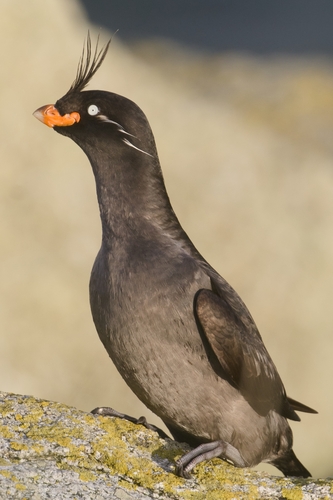 torda-de-penacho
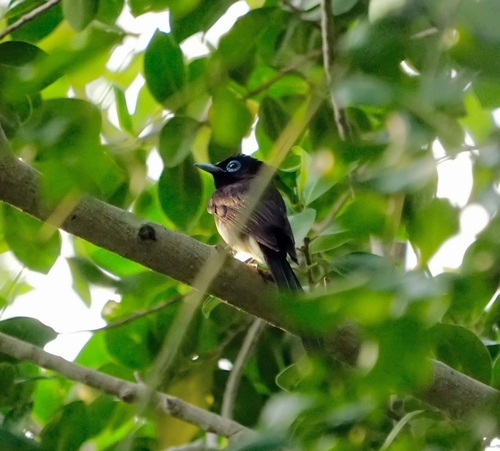 black paradise-flycatcher
Em resumo
A marca de campo mais confiável para separar a torda-de-penacho do black paradise-flycatcher é a presença de uma crista preta proeminente e curvada para frente e um bico laranja brilhante na torda, que nunca é exibido pelo flycatcher. Tordas-de-penacho juvenis e de inverno não têm a crista, mas ainda mostram um bico curto e grosso e uma coloração geral cinza-sujo, enquanto os black paradise-flycatchers—especialmente os machos—têm caudas extremamente longas, cabeças pretas brilhantes e costas castanhas. Em voo ou empoleirados, a torda é uma ave marinha robusta e de cauda curta, enquanto o flycatcher é uma ave florestal esbelta e de cauda longa. Se você ver uma ave com uma cauda longa e semelhante a um streamer e partes superiores castanhas, é o flycatcher; se for cinza escuro, de cauda curta e bico grosso, é a torda.
Dicas de identificação
- Tordas-de-penacho adultas em plumagem de reprodução: Procure uma crista preta proeminente e curvada para frente acima dos olhos, plumas auriculares brancas e um bico laranja-avermelhado brilhante com a ponta amarela. Essas marcas nunca estão presentes no black paradise-flycatcher.
- Torda-de-penacho juvenil e de inverno: Não possui crista e plumas auriculares, mas ainda mostra um bico curto, grosso e de cor amarelo-pardo opaco e plumagem uniforme cinza-sujo. O flycatcher nunca aparece cinza-sujo e sempre tem um bico mais esbelto e delicado.
- Forma e cor do bico: O bico da torda é grosso, curto e laranja brilhante (reprodução) ou amarelo opaco (não reprodução/juvenil), enquanto o flycatcher tem um bico azul, esbelto, reto e curto.
- Estrutura da cauda: Machos de black paradise-flycatcher têm penas centrais da cauda extremamente longas e pretas (mais curtas em machos imaturos), dando um efeito de streamer em voo e quando empoleirados. A torda-de-penacho tem uma cauda curta e robusta, sem streamers em qualquer idade.
- Forma geral do corpo: A torda é robusta, compacta e de pescoço curto, com uma aparência semelhante a um pombo ou alcídeo. O flycatcher é esbelto, de cauda longa e ereto, típico de um passeriforme.
- Contraste da plumagem: O flycatcher apresenta um contraste marcante entre a cabeça/coração preto brilhante, costas/asas castanhas e partes inferiores brancas (machos), ou castanho e preto mais opacos (fêmeas). A torda é uniformemente cinza-sujo, com pouco contraste, exceto pelos ornamentos faciais.
- Olho e características faciais: O flycatcher tem um grande olho preto com um anel ocular azul; a torda tem íris amarelo-esbranquiçadas e plumas auriculares brancas (apenas adultos em reprodução).
- Contexto de habitat: A torda é estritamente marinha/costeira, vista em ilhas rochosas ou no mar; o flycatcher é uma ave florestal, nunca encontrada no mar.
- Comportamento: A torda é frequentemente encontrada em colônias densas, mergulhando em busca de alimento; o flycatcher é solitário ou em pares, caçando insetos nas árvores.
- Estilo de voo: O flycatcher tem um voo ondulante e ágil, com caudas streamers; a torda tem um voo rápido e direto, típico de alcídeos, sem projeção da cauda.
- Impressão de tamanho: A torda é muito mais pesada e bulkier; o flycatcher é leve e delicado.
- Vocalizações: Os chamados da torda são ásperos, sociais e ligados a exibições de colônia; o flycatcher tem chamados mais musicais e assobiados (não detalhados aqui, mas típicos do grupo).
- Mudanças sazonais: A torda perde a crista e a cor brilhante do bico no inverno, mas permanece cinza-sujo e de bico grosso; o flycatcher não apresenta mudanças sazonais dramáticas, mas os machos podem ter streamers de cauda mais curtos quando imaturos.
- Diferenças sexuais: Ambas as espécies apresentam algum dimorfismo sexual—fêmeas de torda têm cristas e bicos ligeiramente menores, fêmeas de flycatcher são mais opacas com caudas mais curtas—mas essas são sutis em comparação com as diferenças entre as duas espécies.
- Armadilhas comuns: Tordas imaturas sem crista podem parecer simples, mas ainda têm um bico grosso e cor uniforme; imaturos de flycatcher sempre têm uma construção mais esbelta e algum contraste castanho/branco. Nunca espere uma cauda longa ou coloração castanha na torda, nem uma crista ou bico laranja no flycatcher.
Tamanho
A torda-de-penacho é muito mais pesada e robusta, pesando entre 195–330 g e medindo 18–27 cm de comprimento, com uma envergadura de 34–50 cm [wikipedia]. Em contraste, o black paradise-flycatcher é um passeriforme esbelto, pesando apenas cerca de 18,7 g [wikidata], e é menor no geral. A torda tem uma construção robusta e compacta com uma cauda curta, enquanto o flycatcher é esbelto com uma cauda muito longa, especialmente em machos adultos.
Plumagem
Tordas-de-penacho juvenis e de inverno são uniformemente cinza-sujo com bicos pequenos e opacos de cor amarelo-pardo e não possuem a crista e as plumas auriculares. Adultos em plumagem de reprodução são escuros e cinza-sujo no geral, com uma crista preta curvada para frente variável, plumas auriculares brancas e um bico laranja-avermelhado brilhante com ponta amarela. No inverno, o bico torna-se amarelo opaco, e a crista e as plumas são reduzidas. Machos de black paradise-flycatcher (adultos) têm uma capuz e peito pretos brilhantes, partes inferiores brancas e manto, costas, asas e rabo castanho-escuro, com penas centrais da cauda extremamente longas e pretas. As fêmeas são semelhantes, mas mais opacas, com caudas mais curtas e áreas castanho-escuro. Ambos os sexos têm um anel ocular azul e bico azul. Machos imaturos têm streamers de cauda mais curtos. Não há morfo branco nesta espécie. O flycatcher nunca mostra uma crista, plumas auriculares ou bico laranja, e sempre tem um padrão contrastante de preto, castanho e branco, ao contrário do cinza-sujo uniforme da torda.
Comportamento
A torda-de-penacho é uma ave marinha colonial, frequentemente vista em grupos densos em penhascos rochosos ou no mar, mergulhando em busca de alimento. Raramente, se é que alguma vez, é vista empoleirada em árvores ou longe de ambientes marinhos. O black paradise-flycatcher é uma ave florestal solitária ou em pares, frequentemente vista caçando insetos ou flutuando através da folhagem, com um voo ondulante distinto e longos streamers de cauda atrás. O comportamento da torda é mais semelhante ao de um pombo e aquático, enquanto o flycatcher é ágil, acrobático e estritamente terrestre ou arbóreo.
Habitat
A torda-de-penacho é estritamente marinha, nidificando em ilhas rochosas e penhascos no Pacífico norte e no Mar de Bering, e forrageando no mar [wikipedia]. Nunca é encontrada em áreas interiores ou florestais. O black paradise-flycatcher habita florestas e áreas arborizadas no sudeste da Ásia, nidificando no Japão, Coreia, Taiwan e Filipinas, e invernando mais ao sul. É um passeriforme florestal migratório, nunca visto no mar ou em penhascos.
Voz
A torda-de-penacho produz uma variedade de chamados, incluindo chamados complexos de trompete e exibições de cacarejo, especialmente durante o acasalamento e interações de colônia. Estes são descritos como sociais e frequentemente associados a exibições visuais. O black paradise-flycatcher, embora não detalhado nas notas, é um flycatcher típico com chamados melodiosos e assobiados, bem diferentes dos sons ásperos e sociais da colônia da torda. Os chamados da torda estão ligados à formação de pares e laços sociais, enquanto os do flycatcher são mais típicos de pássaros canoros florestais.
torda-de-penacho · black paradise-flycatcher · Minhas aves difíceis