

Common Chiffchaff vs Spanish Sparrow
Phylloscopus collybita versus Passer hispaniolensis
Play a quiz with Common Chiffchaff and Spanish Sparrow
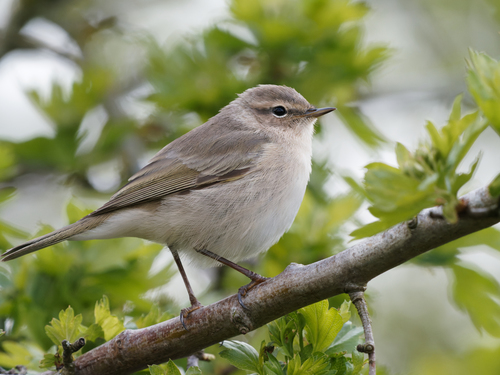 Common Chiffchaff
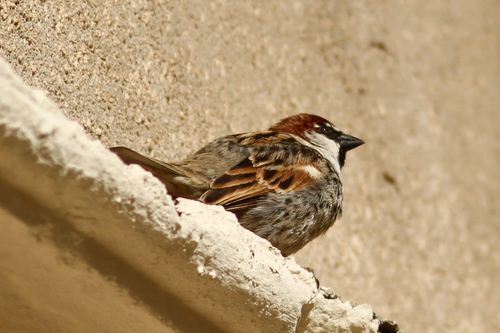 Spanish Sparrow
In short
The most reliable field mark between Common Chiffchaff and Spanish Sparrow is overall structure and plumage: chiffchaffs are small, slender, greenish-brown leaf warblers with short, rounded wings and dark legs, while Spanish Sparrows are much larger, chunky, and boldly patterned sparrows with a heavier bill and (in males) a chestnut crown and heavily streaked underparts. Juvenile and adult chiffchaffs never show the strong black streaking or chestnut crown of male Spanish Sparrows. In flight, chiffchaffs look dumpy and short-tailed, with rapid, bounding flight, while sparrows are bulkier and more direct. Even at a distance, size and shape are usually enough to separate them, but beware female/immature Spanish Sparrows, which are duller and could be confused with other small brown birds. Voice and habitat can help, but focus on structure and plumage first.
Identification tips
- Size and structure: Chiffchaffs are tiny, slender, and dumpy (10–12 cm, 6–8 g); Spanish Sparrows are much larger and bulkier (15–16 cm, 22–36 g). Use size as your first check, especially if both species are present.
- Bill shape: Chiffchaffs have a fine, pointed bill suited to insect-eating; Spanish Sparrows have a thick, conical bill for seed-cracking. Bill shape is obvious at close range.
- Leg color: Chiffchaffs have dark legs, a subtle but reliable mark in good light. Spanish Sparrows have pale to pinkish legs, but this is less reliable at distance.
- Wing shape and projection: Chiffchaffs show short, rounded wings with very short primary projection (the tips of the longest flight feathers barely extend beyond the tertials when perched). Spanish Sparrows have longer, broader wings, but this is most useful in direct comparison.
- Tail movement: Chiffchaffs frequently dip and then wag their tail sideways—a unique behavior among European warblers. Spanish Sparrows do not show this tail action.
- Plumage—male Spanish Sparrow: Look for a chestnut crown, white cheeks, and heavy black streaks on the underparts. Chiffchaffs never show these features at any age or season.
- Plumage—female/immature Spanish Sparrow: Duller, grey-brown, with subtle streaking and a pale supercilium. Still bulkier and more heavily marked below than chiffchaffs, which remain plain and greenish-brown above, off-white below.
- Plumage—chiffchaff: Always greenish-brown above, off-white or yellowish below, with a short pale supercilium and no strong streaking or facial pattern. Juveniles are browner above, but never streaked below.
- Underpart streaking: Spanish Sparrows (especially males) have bold black streaks on the breast and flanks; chiffchaffs are plain or faintly yellowish on the flanks, never streaked.
- Crown color: Only male Spanish Sparrows have a chestnut crown; chiffchaffs have a plain brownish or greenish crown.
- Habitat: Chiffchaffs are more likely in wooded or shrubby areas; Spanish Sparrows in open farmland, fields, or urban settings, especially in the Mediterranean.
- Flock size: Spanish Sparrows are often in large, noisy flocks; chiffchaffs are solitary or in small groups.
- Voice: Chiffchaff's 'chiff-chaff' song and sharp 'hweet' call are diagnostic; Spanish Sparrow calls are sparrow-like, never warbler-like.
- Flight style: Chiffchaffs are fluttery, with bounding flight; sparrows are more direct and powerful in flight.
- Pitfalls: Female/immature Spanish Sparrows can look dull, but are always bulkier, with a stouter bill and more streaking than chiffchaffs. Chiffchaffs never show bold streaking, chestnut crown, or sparrow-like behavior.
Size
Common Chiffchaff is a small warbler, 10–12 cm in length and weighing 6–8 g ([wikipedia]). Spanish Sparrow is much larger and heavier, at 15–16 cm and 22–36 g ([wikipedia]). The sparrow is not only longer but also noticeably bulkier and more robust, with a stouter bill. Even at a glance, the chiffchaff appears delicate and petite compared to the chunky, barrel-chested sparrow. This size difference is obvious in the field unless the birds are very distant or obscured.
Plumage
-
Juvenile/immature birds: Juvenile chiffchaffs are browner above and yellowish below, but never show bold streaking or a strong facial pattern. Juvenile and female Spanish Sparrows are brownish and streaked, with pale supercilium and some streaking on the sides, but again, the sparrow is always bulkier and more heavily marked below than any chiffchaff.
-
Adult males: Male Spanish Sparrows are unmistakable with a chestnut crown, white cheeks, and heavy black streaks on the underparts. Chiffchaffs never show these features; they are plain greenish-brown above, off-white below (sometimes yellowish on the flanks), with a short pale supercilium and dark legs.
-
Adult females: Female Spanish Sparrows are duller, with grey-brown overall color and subtle streaking, but still more boldly marked than chiffchaffs, and with a stouter bill. Chiffchaffs remain plain and lack any strong streaking or chestnut tones.
-
Wing pattern: No distinctive wing panels or bold upperwing marks in either species, but chiffchaffs have short, rounded wings and short primary projection, while sparrows have longer, broader wings.
Behaviour
Chiffchaffs are active, restless birds, often flicking their tails down and then wagging them sideways—a diagnostic behavior for the species. They move through foliage, gleaning insects, and rarely come to the ground for long. Spanish Sparrows are more terrestrial, often feeding on the ground in flocks, moving with a hopping gait. In flight, chiffchaffs look dumpy and fluttery, with rapid, bounding movements, while sparrows fly more directly and powerfully. Chiffchaffs are usually solitary or in small groups, sparrows often in larger, noisy flocks.
Habitat
Chiffchaffs breed in open woodlands, especially with some undergrowth, and are often found in scrub, parks, and gardens during migration and winter ([wikipedia]). Spanish Sparrows prefer farmland, open woodland, and sometimes urban areas, especially in the Mediterranean and southwest/central Asia. In the Mediterranean, Spanish Sparrows are more likely in agricultural or open country, while chiffchaffs are more tied to trees and shrubs. Overlap can occur in migration or winter, but habitat preference is a useful clue.
Voice
Chiffchaffs have a distinctive, repetitive 'chiff-chaff' song, and a sharp 'hweet' call, which is less disyllabic than the calls of similar warblers. Spanish Sparrows have loud, strident, disyllabic chirps ('chweeng-chweeng'), and other calls similar to House Sparrow, including 'tschilp' and 'quer quer quer.' The chiffchaff's song is diagnostic if heard, but beware that Spanish Sparrows are also vocal and noisy, though their calls are always sparrow-like and never warbler-like.