

Citrine Wagtail vs Richard's Pipit
Motacilla citreola versus Anthus richardi
Play a quiz with Citrine Wagtail and Richard's Pipit
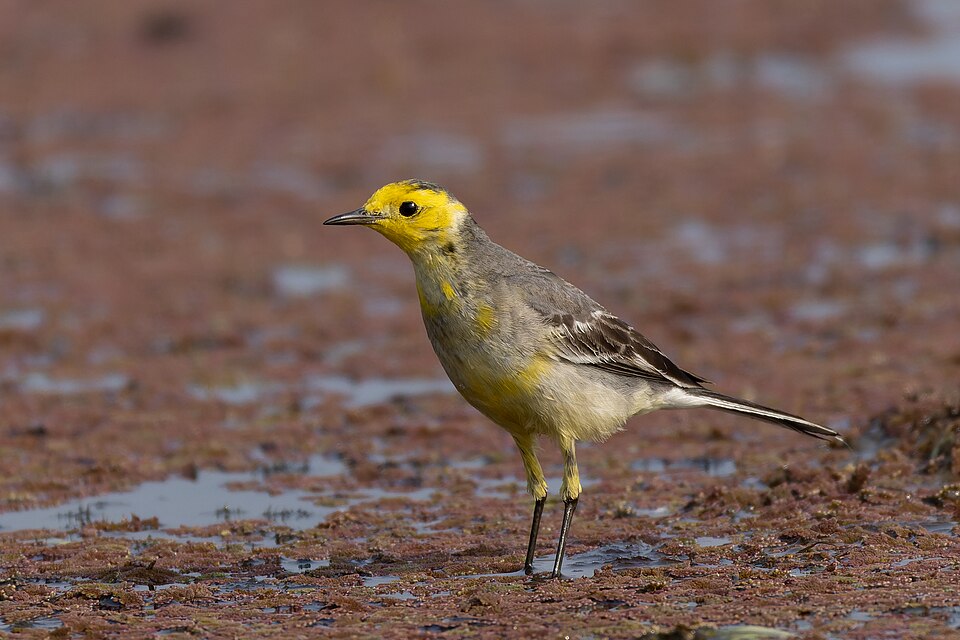 Citrine Wagtail
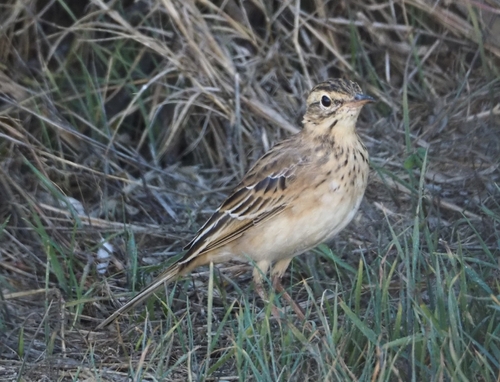 Richard's Pipit
In short
The most reliable field mark between Citrine Wagtail and Richard's Pipit is the wagtail’s bright yellow underparts and head (especially in breeding males), compared to the pipit's much duller, streaked brown-and-buff appearance. Juvenile and winter Citrine Wagtails can look paler and less yellow, but they still show a more contrasting face and body pattern than the pipit. Structurally, Richard's Pipit is larger, stands more upright, and has a longer, straighter hindclaw and heavier bill. In flight, Citrine Wagtail shows more white in the wings and tail, while Richard's Pipit appears plainer and browner. Both species can be found in open country, but wagtails are more likely near water and pipits in drier grasslands.
Identification tips
- Yellow coloration: Any bright yellow on the underparts or head strongly favors Citrine Wagtail (especially adult males in breeding plumage). Richard's Pipit is never yellow, always brown and buff.
- Facial pattern: Both can show a pale supercilium, but Citrine Wagtail in all plumages has a cleaner, less streaked face, often with yellowish tones. Richard's Pipit has a more complex face: pale lores and supercilium, but also a strong dark eyestripe, moustachial and malar stripes.
- Breast and flank streaking: Richard's Pipit has dark streaks on the breast (sometimes extending to the flanks), but the belly and lower flanks are plain. Citrine Wagtail is usually unstreaked below, especially in adults, but juveniles and females may show some faint mottling.
- Upperparts: Citrine Wagtail is grey or black above (breeding males) or brownish (females/immatures), but always with a cleaner, less streaked look than the pipit. Richard's Pipit is streaked brown above in all ages.
- Wing pattern: In flight, Citrine Wagtail shows white in the remiges and tail; Richard's Pipit has less obvious wing contrast, with two pale wingbars and white only in the outer tail feathers. Juvenile/first-winter wagtails may show less contrast, but still more than pipit.
- Tail shape and behavior: Wagtail’s tail is long and constantly wagged; pipit’s tail is also long but less actively moved.
- Legs and stance: Richard's Pipit has long, yellow-brown legs and stands very upright. Citrine Wagtail is more horizontal and has shorter legs.
- Bill: Pipit’s bill is longer, heavier, and has a yellowish base to the lower mandible. Wagtail’s bill is finer and more pointed.
- Hindclaw: Pipit’s hindclaw is long and fairly straight, a subtle but useful mark if seen well; wagtail’s is shorter and less straight.
- Size: Richard's Pipit is larger and bulkier, with a longer tail and wingspan. Wagtail is smaller and more delicate.
- Flight style: Pipit’s flight is strong and undulating; wagtail’s is more fluttery and direct.
- Habitat: Wagtail near water or wet meadows; pipit in drier grassland or cultivated fields.
- Voice: A loud, harsh "shreep" call is diagnostic for Richard's Pipit. Wagtail’s calls are not described here.
- Seasonal variation: Citrine Wagtail is brightest in spring/summer (breeding males); in winter, both sexes and immatures are paler and less yellow, but still cleaner and less streaked than pipit.
- Pitfalls: Juvenile and female wagtails can be surprisingly pale and brownish, but still lack the pipit’s heavy streaking and facial complexity. Always check for yellow tones and overall contrast.
Size
Richard's Pipit is noticeably larger: 17–20 cm in length with a wingspan of 29–33 cm and a weight of 25–36 g [wikipedia]. Citrine Wagtail is smaller and more delicate, at 15.5–17 cm long [wikipedia]. The pipit’s longer legs, tail, and bill, as well as its upright stance, make it appear lankier and more robust in the field. The wagtail is more slender and shorter-legged, with a finer bill.
Plumage
- Juvenile/first-winter birds: Citrine Wagtail juveniles and females in non-breeding plumage are paler below, with yellowish supercilium and less extensive yellow on the underparts and head. Even so, they retain a cleaner, more contrasting appearance than Richard's Pipit, which is always streaked brown above and pale below with a strong facial pattern (pale supercilium, dark eyestripe, moustachial and malar stripes).
- Adults in breeding plumage: Citrine Wagtail males are unmistakable with bright yellow underparts and head (except black nape), grey or black upperparts, and white in the wings. Richard's Pipit never shows yellow: it is brown above with dark streaks, pale below with streaking on the breast, and plain belly/flanks. The pipit’s face is strongly marked but never yellow.
- In flight: Citrine Wagtail shows white in the remiges and tail, often more obvious than the pipit's white outer tail feathers. Richard's Pipit’s wingbars (pale tips to coverts) are subtle and its upperwing is generally plain brown with less contrast. Both have white in the tail, but the wagtail’s is more extensive and the tail is more actively wagged.
Behaviour
Citrine Wagtail is constantly wagging its tail and moves with a more horizontal, active gait. It often forages near water or in wet meadows. Richard's Pipit stands very upright, walks or runs in a more stately fashion, and is less likely to wag its tail. In flight, the pipit’s strong, undulating flight is distinctive compared to the wagtail’s more fluttery, direct flight. Wagtails are often seen singly or in loose flocks, pipits may be solitary or in small groups.
Habitat
Citrine Wagtail breeds in wet meadows and tundra, and winters in highland wetlands or near water in South Asia. It is rarely found far from water, even as a vagrant. Richard's Pipit prefers open grasslands, steppe, and cultivated fields, especially flat lowland areas, and is less tied to water. In Europe, pipits are most often seen on headlands and islands during migration. Both can occur in similar open habitats as vagrants, but wagtails are more likely at wet edges, pipits in drier, grassy expanses.
Voice
Richard's Pipit gives a loud, explosive "shreep" call, reminiscent of a House Sparrow but harsher and more piercing. Its song is a series of monotonous buzzy notes delivered in undulating flight. Citrine Wagtail’s calls and songs are not described in the provided notes, so voice is most useful for confirming Richard's Pipit if the "shreep" is heard.