

Citril Finch vs Eurasian Siskin
Carduelis citrinella versus Spinus spinus
Play a quiz with Citril Finch and Eurasian Siskin
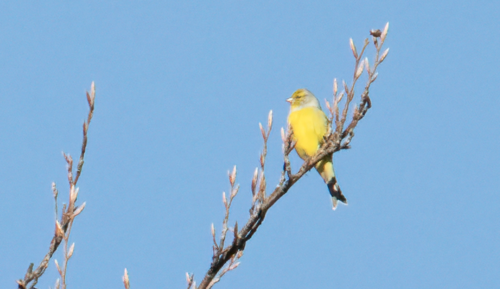 Citril Finch
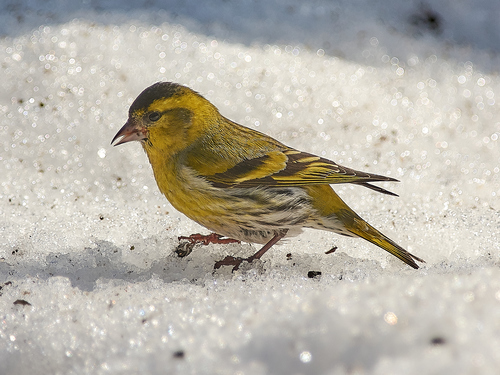 Eurasian Siskin
In short
The most reliable way to separate Citril Finch from Eurasian Siskin is by focusing on head pattern and wing coloration, especially in adult males: Siskin males have a striking black cap and bib, while Citril Finches show a bright yellow face mask but lack any black on the head. Juvenile Citril Finches are brown and lack yellow or green tones, whereas juvenile Siskins are drabber but still show some yellow in the wing. Both species have yellow in the wing, but Siskin's wingbar is broader and more striking. Structure is similar, but Siskin is slightly heavier and often appears slimmer and more active. Be cautious with dull females and juveniles, as they can be confusing, but the absence of a black cap and the presence of a yellow face mask in Citril Finch are key.
Identification tips
- Adult male Siskin always shows a black cap and bib—if you see black on the head, it's not Citril Finch. This is the single most reliable field mark for adult males.
- Citril Finch has a bright yellow face mask with no black on the head; Siskin never shows a yellow mask, and any yellow on the face is diffuse and mixed with green.
- Juvenile Citril Finch is brown overall, lacking any yellow or green—if you see a brown, streaky finch with no yellow or green, it's a juvenile Citril Finch. Juvenile Siskin, by contrast, always shows some yellow in the wing and a more olive tone.
- Wingbars: Siskin has a single, broad yellow wingbar with white tips, very striking in flight or at rest. Citril Finch has double yellow wingbars, but these are narrower and less contrasting.
- Underparts: Citril Finch shows yellow underparts in adults, while Siskin males have a yellow breast but a white, often unstreaked belly. Female Siskins are more streaked below, but the ground color is usually whiter than Citril Finch.
- Back color: Citril Finch is greyish with a brown-tinged, streaked back; Siskin is greenish above, with a yellow rump in males.
- Bill shape: Both have finch-like bills, but Siskin's is slightly more slender and decurved, adapted for extracting seeds from cones.
- Behavior: Siskin is much more acrobatic, often hanging upside down; Citril Finch is more likely to feed on the ground or low in vegetation.
- Flock size: Siskins are highly sociable, often in large flocks, especially outside the breeding season. Citril Finches are less gregarious.
- Habitat: Citril Finch is restricted to high-altitude, open coniferous forests and alpine meadows in southwestern Europe; Siskin is widespread, common in lowland forests, parks, and gardens, especially in winter.
- Sex differences: Female Siskin lacks the black cap and is more olive, but still shows a yellow wingbar and some yellow in the plumage. Female Citril Finch is duller than the male but still shows the yellow face mask and underparts.
- Flight pattern: Both have bounding flight, but Siskin is more rapid and erratic, often calling in flight.
- Voice: Siskin's song is a varied mix of trills and twitters; Citril Finch's is a silvery twitter, less complex. Calls are similar and not reliable for separation.
- Seasonal context: In winter, Siskin is much more likely in lowland or garden settings; Citril Finch is unlikely outside its mountain breeding range.
- Pitfalls: Dull female and juvenile Siskins can lack obvious yellow and black, but will still show some yellow in the wing and a more olive tone than the brown, yellow-less juvenile Citril Finch.
Size
Both species are very similar in length (Citril Finch about 12 cm, Siskin 11–12.5 cm), but Siskin is slightly heavier on average (13.8 g vs. Citril Finch's 12.5 g). In the field, Siskin may appear a bit slimmer and more delicate, especially due to its active, acrobatic movements. Size alone is not a reliable separator, but Siskin can look more elongated and less compact than Citril Finch.
Plumage
- Juveniles: Juvenile Citril Finches are brown overall, lacking any yellow or green in the plumage, which is unique among similar finches. Juvenile Siskins are duller than adults but still show some yellow tones, especially in the wing, and have a more subdued version of the adult pattern.
- Adult males: Citril Finch males have a greyish upperpart with a brown-tinged, streaked back, yellow underparts, and a bright yellow face mask. There is no black on the head. Siskin males are brighter, with a greenish back, yellow rump, a bold black cap and bib, and a broad yellow wingbar. The underparts are yellowish with a white, often unstreaked, belly.
- Adult females: Female Citril Finches are similar to males but duller, especially below. Female Siskins are more olive, lack the black cap, and have a greenish head with a white bib. Both have yellow in the wing, but Siskin's wingbar is broader and more obvious.
- Wing pattern: Both species show yellow wingbars, but Siskin's are broader with white tips, and the overall wing contrast is higher. Citril Finch has double yellow wingbars, but these are less bold than Siskin's single broad stripe.
Behaviour
Siskins are notably active, acrobatic feeders, often seen hanging upside down on twigs and cones, and are very sociable, frequently found in flocks. Citril Finches are less acrobatic and tend to be more reserved, often seen feeding on the ground or in low vegetation. In flight, both have bounding, finch-like flight, but Siskin's rapid, energetic movements and flocking behavior are distinctive, especially outside the breeding season.
Habitat
Citril Finch is a resident breeder in high-altitude mountain regions of southwestern Europe, from Spain to the Alps, often associated with open coniferous forests and alpine meadows. Eurasian Siskin is much more widespread, common throughout Europe and Eurosiberia, and prefers forested areas, especially coniferous and mixed woodland, but is also seen in gardens and parks, especially in winter. If observed in lowland gardens or broadleaf woodland, Siskin is much more likely.
Voice
Both species have twittering, finch-like songs, but Siskin's song is a pleasant mix of tweets and trills, often given in flight or from treetops. Citril Finch's song is a silvery twitter, resembling European Goldfinch and Serin, and its main call is a 'tee-ee', similar to Siskin. Voice is not a strong separator, but Siskin's song is more varied and musical, while Citril Finch's is more silvery and less complex.