
Chinspot Batis vs Pririt Batis
Batis molitor versus Batis pririt
Play a quiz with Chinspot Batis and Pririt Batis
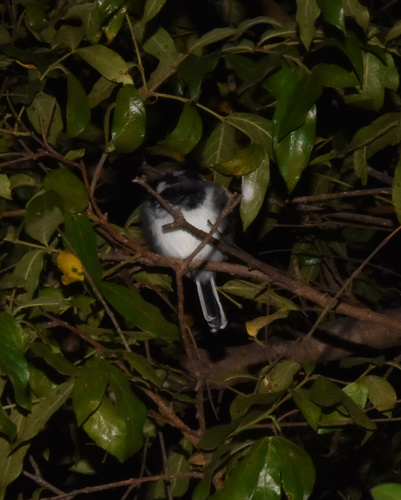 Chinspot Batis
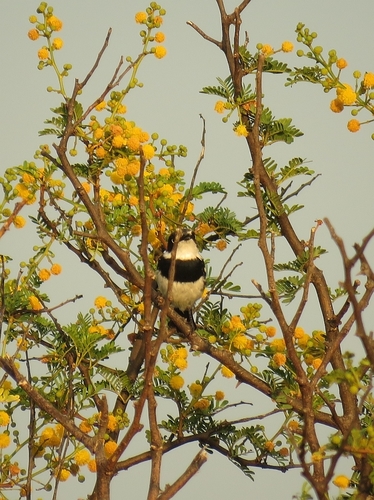 Pririt Batis
In short
The most reliable way to separate Chinspot Batis from Pririt Batis is by the color and pattern of the breast band: male Chinspot Batis has a solid black breast band, while the female shows a chestnut band and throat spot; Pririt Batis males have a black breast band but also show black speckles on the flanks, and females/juveniles lack the band entirely, instead showing a warm buff throat and breast. Both species have a black mask, white throat, and prominent white wing markings, but the Pririt Batis has a longer white shoulder patch and more extensive black on the rump and tail. Juvenile and female plumages are especially prone to confusion, but the presence or absence of the breast band and the color of the throat are key. Structure and behavior are similar, but habitat preferences can help: Chinspot Batis favors moister woodlands, while Pririt Batis is more typical of dry thorn scrub.
Identification tips
- Breast band color and presence: Male Chinspot Batis shows a solid black breast band; female has a chestnut band and throat spot. Pririt Batis male has a black breast band with black speckles on the flanks; female and juvenile lack the band, showing a warm buff throat and breast. This is the most reliable field mark, especially in perched birds.
- Throat color: Female and juvenile Chinspot Batis have a chestnut or tawny spot on the throat, while Pririt Batis females/juveniles have a warm buff throat and breast with no distinct spot.
- Flank pattern: Pririt Batis males have black speckles on the flanks, absent in Chinspot Batis.
- Wing markings: Both have white wing stripes, but Pririt Batis has a longer white shoulder patch, while Chinspot Batis's is shorter and more of a stripe.
- Rump and tail: Pririt Batis has a black rump and tail, which can be more extensive than the grey upperparts of Chinspot Batis.
- Cap color: Chinspot Batis has a grey cap and back; Pririt Batis's crown and back are dark grey, but this is subtle and not always reliable in the field.
- Juvenile confusion: Juvenile Chinspot Batis resembles the female (tawny breast band and throat spot), while juvenile Pririt Batis lacks a breast band and is buff below. If you see a band (even faint/tawny), lean Chinspot.
- Behavior: Chinspot Batis may form small winter/spring groups ('parliaments') with wing-flicking displays; Pririt Batis is more solitary or paired.
- Habitat: In dry thorn scrub or arid woodland, Pririt Batis is more likely; in moister, denser woodland, Chinspot Batis is favored. Use habitat as a supporting clue, not a primary mark.
- Voice: Both species have descending whistled calls; Chinspot Batis gives a three-note whistle, Pririt Batis a slower series of 'teuu' notes. Use with caution unless familiar with both.
- Bill, legs, and eyes: Both have black bills and legs and yellow eyes; these features do not separate them.
- Flight views: Both show strong white in the wing, but no unique upperwing patterns are described that reliably separate them in flight. Focus on underpart pattern if possible.
- Perched posture: Both are active, upright, and flick their tails and wings; posture is not a reliable separator.
- Sex differences: Only Chinspot Batis female shows a chestnut breast band and throat spot; Pririt Batis female is buff below with no band.
- Pitfalls: Beware of faded or worn birds, especially juveniles and females, as breast band color can be subtle. Always check for the presence, color, and shape of the band and throat spot, and use multiple marks when possible.
Size
Both species are small, stout batises with similar overall proportions. Chinspot Batis has a documented average body mass of 8.7g [wikidata], while no precise mass is available for Pririt Batis, but both are in the same size class and are unlikely to be reliably separated by size in the field. Length is similar (Chinspot Batis: 12–13 cm), and both have compact, short-tailed, broad-headed profiles typical of the genus.
Plumage
For adult males, both species have a black mask, white throat, and black breast band, but Chinspot Batis shows a solid black band with clean white underparts, while Pririt Batis adds black speckles on the flanks and has a longer white shoulder patch on the wing. Chinspot Batis males have a grey cap and back, while Pririt Batis males have a dark grey crown and back, but with a black rump and tail. Females and juveniles are more distinct: female Chinspot Batis has a chestnut (not black) breast band and a chestnut spot on the throat, while female and juvenile Pririt Batis lack any breast band and instead have a warm buff throat and breast. Juvenile Chinspot Batis resembles the female but with tawny (not chestnut) breast band and throat spot. Both species show a prominent white wing stripe/patch, but Pririt Batis's is longer and more obvious. In flight, both show strong contrast on the wings, but there are no unique upperwing patterns described that separate them at a distance.
Behaviour
Both species are active, restless foragers, often flicking their tails and wings, and are usually seen singly or in pairs. Chinspot Batis is noted for forming small 'parliaments' (groups) in winter and spring, sometimes with wing-flicking displays and noisy interactions, which is less often described for Pririt Batis. Both hunt insects by flycatching or gleaning from foliage, but Pririt Batis may also take prey from the ground, shrike-like. Territoriality is strong in Chinspot Batis, with males advertising from exposed perches. Both species can be aggressive towards intruders.
Habitat
Chinspot Batis is widespread in southern African woodlands, favoring moister broadleaf habitats from the Eastern Cape northwards, while Pririt Batis is more typical of dry broadleaf woodland and thorn scrub, especially in southwestern Angola and southern Africa. Overlap is possible, but Chinspot Batis is less likely in arid thornveld, and Pririt Batis is less common in wetter, denser woodland. Habitat context can help, especially at the extremes of their ranges.
Voice
Both species have whistled calls, but Chinspot Batis gives a descending three-note whistle, often as a duet, while Pririt Batis's song is a slow, descending series of whistled 'teuu, teuu, teuu' notes. Both may call from prominent perches, but their songs are similar enough that voice alone is rarely diagnostic without experience.