

Motmot

Chestnut Thrush vs Red-throated Thrush

Turdus rubrocanus versus Turdus ruficollis

Play a quiz with Chestnut Thrush and Red-throated Thrush
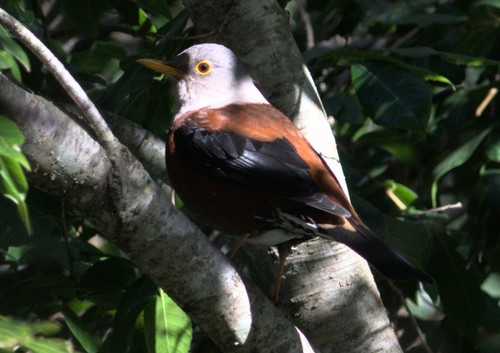
Chestnut Thrush (Turdus rubrocanus) Chestnut Thrush
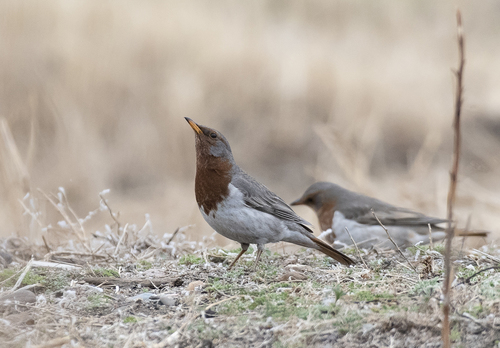
Red-throated Thrush (Turdus ruficollis) Red-throated Thrush

Media

Loading…

In short

The most reliable field mark to separate Chestnut Thrush from Red-throated Thrush is the presence of a distinct red throat patch in adult male Red-throated Thrush, which Chestnut Thrush never shows. In contrast, Chestnut Thrush lacks any strong throat coloration and is generally more uniformly colored. Juvenile and female Red-throated Thrush can be trickier, as they lack the red bib and show streaked underparts, but Chestnut Thrush remains more uniform overall. Both species are large thrushes with overlapping ranges in parts of the Himalayas and China, so careful attention to plumage details and context is needed.

Identification tips

  1. Red throat patch (adult male Red-throated Thrush): Look for a clear red or rufous patch on the throat; Chestnut Thrush never shows this, making it the best single field mark for adult males.
  2. Streaked underparts (female/juvenile Red-throated Thrush): Females and young Red-throated Thrush lack the red bib but have black-streaked underparts, while Chestnut Thrush is more uniform below; this is most useful in perched birds.
  3. Uniformity (Chestnut Thrush): Chestnut Thrush appears more evenly colored overall, lacking strong throat or underpart markings; this can help rule out Red-throated Thrush in ambiguous cases.
  4. Underwing color (Red-throated Thrush): Red-throated Thrush has reddish underwings, which may be glimpsed in flight or when preening; Chestnut Thrush does not show this feature.
  5. Back color: Red-throated Thrush has a plain grey back, while Chestnut Thrush is generally more brownish, though this can be subtle and affected by light.
  6. Sexual dimorphism: Both species are sexually dimorphic, but in Chestnut Thrush the difference is not usually visible to humans; do not rely on sex-based color differences for Chestnut Thrush.
  7. Age confusion: Juvenile Red-throated Thrush can be mistaken for Chestnut Thrush due to the lack of a red throat, but streaked underparts are a clue; Chestnut Thrush juveniles are not described as streaked.
  8. Flight views: No distinctive upperwing or flight pattern differences are described; focus on underwing color and overall impression if seen in flight.
  9. Habitat and range: Use with caution; Chestnut Thrush is more likely in temperate forests of the Himalayas and southwestern China, while Red-throated Thrush is a migrant from further north and east, but both can overlap in winter.
  10. Size and structure: Both are large, robust thrushes with similar structure; do not rely on size or shape for separation.
  11. Voice: No distinguishing vocal differences are described in the available sources; do not use voice as a separator.
  12. Seasonal context: Red-throated Thrush is a rare vagrant to western Europe, so in that region, Chestnut Thrush is highly unlikely; in the core range, both are possible.
  13. Bill and jizz: No distinctive bill or structural differences are described; focus on plumage.
  14. Pitfall – female/immature Red-throated Thrush: These can lack the red throat and appear similar to Chestnut Thrush; look for streaked underparts and reddish underwings to confirm Red-throated Thrush.
  15. Pitfall – lighting: Back and underpart colors can be affected by lighting and wear; always try to confirm with multiple field marks.

Size

Chestnut Thrush averages about 92 grams in body mass [wikidata], making it a robust thrush; no direct mass data is available for Red-throated Thrush, but both are considered large thrushes and are similar in overall size and structure. Size alone is not a reliable separator between these two species in the field.

Plumage

Adult male Red-throated Thrush is best identified by its bold red throat patch, contrasting with a plain grey back and reddish underwings. Females and juveniles lack the red bib but show black-streaked underparts, which can be a helpful clue in immature birds. Chestnut Thrush, by contrast, is more uniform in coloration and does not show a red throat or strong streaking on the underparts. Both species are sexually dimorphic, but the difference in Chestnut Thrush is not usually visible to human observers. No distinctive age-specific upperwing or flight patterns are described for either species, so separation relies on underpart and throat coloration, especially in perched birds.

Behaviour

Both species are typical thrushes in behavior, foraging on the ground or in low vegetation and moving with hops and short flights. No distinctive behavioral differences are noted in the available sources, so behavior is not a reliable separator.

Habitat

Chestnut Thrush breeds in the western Himalayas and central/southwestern China, favoring temperate forests, and winters in the eastern Himalayas and northern Southeast Asia. Red-throated Thrush breeds further north and east, in East Siberia to North Manchuria, and winters in West China, Myanmar, and Northeast India. Their ranges overlap in parts of China and the Himalayas, so habitat and range may help but are not definitive, especially in winter or on migration.

Submit a better description

Use the same sections as the comparison. Your text is published immediately.

The most reliable field mark to separate Chestnut Thrush from Red-throated Thrush is the presence of a distinct red throat patch in adult male Red-throated Thrush, which Chestnut Thrush never shows. In contrast, Chestnut Thrush lacks any strong throat coloration and is generally more uniformly colored. Juvenile and female Red-throated Thrush can be trickier, as they lack the red bib and show streaked underparts, but Chestnut Thrush remains more uniform overall. Both species are large thrushes with overlapping ranges in parts of the Himalayas and China, so careful attention to plumage details and context is needed.

  1. Red throat patch (adult male Red-throated Thrush): Look for a clear red or rufous patch on the throat; Chestnut Thrush never shows this, making it the best single field mark for adult males.
  2. Streaked underparts (female/juvenile Red-throated Thrush): Females and young Red-throated Thrush lack the red bib but have black-streaked underparts, while Chestnut Thrush is more uniform below; this is most useful in perched birds.
  3. Uniformity (Chestnut Thrush): Chestnut Thrush appears more evenly colored overall, lacking strong throat or underpart markings; this can help rule out Red-throated Thrush in ambiguous cases.
  4. Underwing color (Red-throated Thrush): Red-throated Thrush has reddish underwings, which may be glimpsed in flight or when preening; Chestnut Thrush does not show this feature.
  5. Back color: Red-throated Thrush has a plain grey back, while Chestnut Thrush is generally more brownish, though this can be subtle and affected by light.
  6. Sexual dimorphism: Both species are sexually dimorphic, but in Chestnut Thrush the difference is not usually visible to humans; do not rely on sex-based color differences for Chestnut Thrush.
  7. Age confusion: Juvenile Red-throated Thrush can be mistaken for Chestnut Thrush due to the lack of a red throat, but streaked underparts are a clue; Chestnut Thrush juveniles are not described as streaked.
  8. Flight views: No distinctive upperwing or flight pattern differences are described; focus on underwing color and overall impression if seen in flight.
  9. Habitat and range: Use with caution; Chestnut Thrush is more likely in temperate forests of the Himalayas and southwestern China, while Red-throated Thrush is a migrant from further north and east, but both can overlap in winter.
  10. Size and structure: Both are large, robust thrushes with similar structure; do not rely on size or shape for separation.
  11. Voice: No distinguishing vocal differences are described in the available sources; do not use voice as a separator.
  12. Seasonal context: Red-throated Thrush is a rare vagrant to western Europe, so in that region, Chestnut Thrush is highly unlikely; in the core range, both are possible.
  13. Bill and jizz: No distinctive bill or structural differences are described; focus on plumage.
  14. Pitfall – female/immature Red-throated Thrush: These can lack the red throat and appear similar to Chestnut Thrush; look for streaked underparts and reddish underwings to confirm Red-throated Thrush.
  15. Pitfall – lighting: Back and underpart colors can be affected by lighting and wear; always try to confirm with multiple field marks.

Chestnut Thrush averages about 92 grams in body mass [wikidata], making it a robust thrush; no direct mass data is available for Red-throated Thrush, but both are considered large thrushes and are similar in overall size and structure. Size alone is not a reliable separator between these two species in the field.

Adult male Red-throated Thrush is best identified by its bold red throat patch, contrasting with a plain grey back and reddish underwings. Females and juveniles lack the red bib but show black-streaked underparts, which can be a helpful clue in immature birds. Chestnut Thrush, by contrast, is more uniform in coloration and does not show a red throat or strong streaking on the underparts. Both species are sexually dimorphic, but the difference in Chestnut Thrush is not usually visible to human observers. No distinctive age-specific upperwing or flight patterns are described for either species, so separation relies on underpart and throat coloration, especially in perched birds.

Both species are typical thrushes in behavior, foraging on the ground or in low vegetation and moving with hops and short flights. No distinctive behavioral differences are noted in the available sources, so behavior is not a reliable separator.

Chestnut Thrush breeds in the western Himalayas and central/southwestern China, favoring temperate forests, and winters in the eastern Himalayas and northern Southeast Asia. Red-throated Thrush breeds further north and east, in East Siberia to North Manchuria, and winters in West China, Myanmar, and Northeast India. Their ranges overlap in parts of China and the Himalayas, so habitat and range may help but are not definitive, especially in winter or on migration.

Discard your changes?

You have unsaved edits. If you leave now, those changes will be lost.

Chestnut Thrush · Red-throated Thrush · My Tricky Birds