

Zorzal Castaño vs Zorzal Papirrojo
Turdus rubrocanus frente a Turdus ruficollis
Juega un quiz con Zorzal Castaño y Zorzal Papirrojo
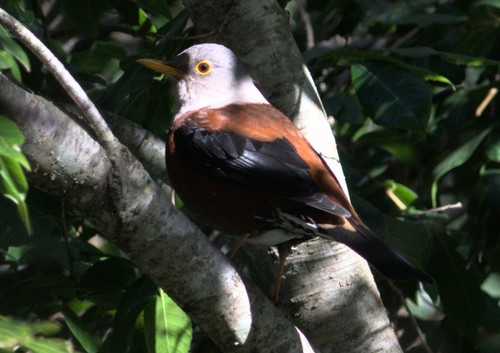 Zorzal Castaño
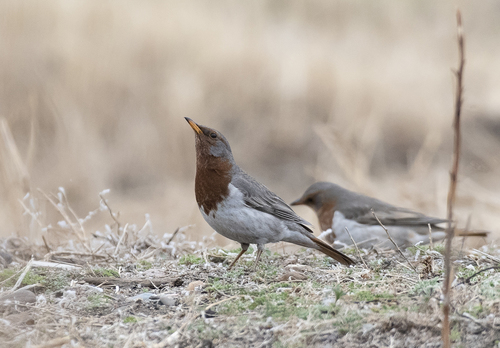 Zorzal Papirrojo
En breve
La marca de campo más confiable para separar el Zorzal Castaño del Zorzal Papirrojo es la presencia de una distintiva mancha roja en la garganta en el Zorzal Papirrojo macho adulto, que el Zorzal Castaño nunca muestra. En contraste, el Zorzal Castaño carece de cualquier coloración fuerte en la garganta y es generalmente de color más uniforme. El Zorzal Papirrojo juvenil y hembra puede ser más complicado, ya que carecen del babero rojo y muestran partes inferiores estriadas, pero el Zorzal Castaño sigue siendo más uniforme en general. Ambas especies son zorzales grandes con rangos superpuestos en partes del Himalaya y China, por lo que se necesita prestar atención cuidadosa a los detalles del plumaje y el contexto.
Consejos de identificación
- Mancha roja en la garganta (Zorzal Papirrojo macho adulto): Busca una clara mancha roja o rufo en la garganta; el Zorzal Castaño nunca muestra esto, lo que lo convierte en la mejor marca de campo única para machos adultos.
- Partes inferiores estriadas (Zorzal Papirrojo hembra/juvenil): Las hembras y los jóvenes Zorzal Papirrojo carecen del babero rojo pero tienen partes inferiores estriadas de negro, mientras que el Zorzal Castaño es más uniforme por debajo; esto es más útil en aves posadas.
- Uniformidad (Zorzal Castaño): El Zorzal Castaño parece tener un color más uniforme en general, careciendo de marcas fuertes en la garganta o partes inferiores; esto puede ayudar a descartar el Zorzal Papirrojo en casos ambiguos.
- Color de las alas inferiores (Zorzal Papirrojo): El Zorzal Papirrojo tiene alas inferiores rojizas, que pueden verse en vuelo o cuando se acicala; el Zorzal Castaño no muestra esta característica.
- Color de la espalda: El Zorzal Papirrojo tiene una espalda gris simple, mientras que el Zorzal Castaño es generalmente más marrón, aunque esto puede ser sutil y estar afectado por la luz.
- Dimorfismo sexual: Ambas especies son dimórficas sexualmente, pero en el Zorzal Castaño la diferencia no suele ser visible para los humanos; no confíes en las diferencias de color basadas en el sexo para el Zorzal Castaño.
- Confusión de edad: El Zorzal Papirrojo juvenil puede confundirse con el Zorzal Castaño debido a la falta de una garganta roja, pero las partes inferiores estriadas son una pista; los juveniles de Zorzal Castaño no se describen como estriados.
- Vistas en vuelo: No se describen diferencias distintivas en las alas superiores o patrones de vuelo; concéntrate en el color de las alas inferiores y la impresión general si se ve en vuelo.
- Hábitat y rango: Úsalo con precaución; el Zorzal Castaño es más probable en bosques templados de los Himalayas y el suroeste de China, mientras que el Zorzal Papirrojo es un migrante de más al norte y al este, pero ambos pueden superponerse en invierno.
- Tamaño y estructura: Ambos son zorzales grandes y robustos con una estructura similar; no confíes en el tamaño o la forma para la separación.
- Voz: No se describen diferencias vocales distintivas en las fuentes disponibles; no uses la voz como separador.
- Contexto estacional: El Zorzal Papirrojo es un vagabundo raro en el oeste de Europa, por lo que en esa región, el Zorzal Castaño es muy poco probable; en el rango central, ambos son posibles.
- Pico y jizz: No se describen diferencias distintivas en el pico o la estructura; concéntrate en el plumaje.
- Trampa – Zorzal Papirrojo hembra/immaduro: Estos pueden carecer de la garganta roja y parecerse al Zorzal Castaño; busca partes inferiores estriadas y alas inferiores rojizas para confirmar el Zorzal Papirrojo.
- Trampa – iluminación: Los colores de la espalda y las partes inferiores pueden verse afectados por la iluminación y el desgaste; siempre intenta confirmar con múltiples marcas de campo.
Tamaño
El Zorzal Castaño promedia alrededor de 92 gramos en masa corporal [wikidata], lo que lo convierte en un zorzal robusto; no hay datos directos de masa disponibles para el Zorzal Papirrojo, pero ambos se consideran zorzales grandes y son similares en tamaño y estructura general. El tamaño por sí solo no es un separador confiable entre estas dos especies en el campo.
Plumaje
El Zorzal Papirrojo macho adulto se identifica mejor por su audaz mancha roja en la garganta, que contrasta con una espalda gris simple y alas inferiores rojizas. Las hembras y los juveniles carecen del babero rojo pero muestran partes inferiores estriadas de negro, lo que puede ser una pista útil en aves inmaduras. El Zorzal Castaño, en contraste, es más uniforme en coloración y no muestra una garganta roja ni estrías fuertes en las partes inferiores. Ambas especies son dimórficas sexualmente, pero la diferencia en el Zorzal Castaño no suele ser visible para los observadores humanos. No se describen patrones de alas superiores o de vuelo específicos por edad para ninguna de las especies, por lo que la separación se basa en la coloración de las partes inferiores y la garganta, especialmente en aves posadas.
Comportamiento
Ambas especies son zorzales típicos en comportamiento, forrajeando en el suelo o en vegetación baja y moviéndose con saltos y vuelos cortos. No se notan diferencias de comportamiento distintivas en las fuentes disponibles, por lo que el comportamiento no es un separador confiable.
Hábitat
El Zorzal Castaño cría en los Himalayas occidentales y en el centro/suroeste de China, favoreciendo los bosques templados, y pasa el invierno en los Himalayas orientales y el norte del sudeste asiático. El Zorzal Papirrojo cría más al norte y al este, desde Siberia Oriental hasta el norte de Manchuria, y pasa el invierno en el oeste de China, Myanmar y el noreste de India. Sus rangos se superponen en partes de China y los Himalayas, por lo que el hábitat y el rango pueden ayudar, pero no son definitivos, especialmente en invierno o durante la migración.