

Chestnut Thrush vs Tordo golarossa
Turdus rubrocanus contro Turdus ruficollis
Fai un quiz con Chestnut Thrush e Tordo golarossa
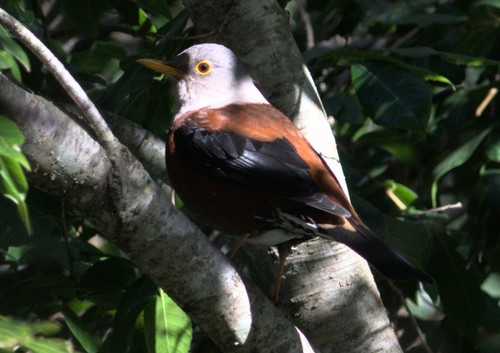 Chestnut Thrush
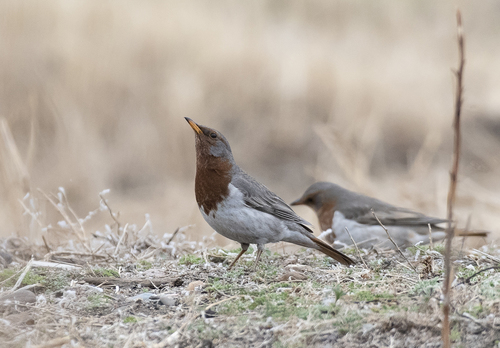 Tordo golarossa
In breve
Il segno distintivo più affidabile per separare il Chestnut Thrush dal Tordo golarossa è la presenza di una chiara macchia rossa sulla gola nei maschi adulti di Tordo golarossa, che il Chestnut Thrush non mostra mai. Al contrario, il Chestnut Thrush non presenta alcuna forte colorazione della gola ed è generalmente più uniformemente colorato. I giovani e le femmine di Tordo golarossa possono essere più difficili da identificare, poiché mancano del pettorale rosso e mostrano parti inferiori striate, ma il Chestnut Thrush rimane più uniforme nel complesso. Entrambe le specie sono grandi tordi con aree di sovrapposizione in alcune parti dell'Himalaya e della Cina, quindi è necessaria un'attenzione particolare ai dettagli del piumaggio e al contesto.
Consigli di identificazione
- Macchia rossa sulla gola (maschio adulto di Tordo golarossa): Cerca una chiara macchia rossa o ruggine sulla gola; il Chestnut Thrush non mostra mai questo, rendendolo il miglior segno distintivo per i maschi adulti.
- Parti inferiori striate (femmina/giovane di Tordo golarossa): Le femmine e i giovani di Tordo golarossa mancano del pettorale rosso ma hanno parti inferiori striate di nero, mentre il Chestnut Thrush è più uniforme sotto; questo è più utile negli uccelli posati.
- Uniformità (Chestnut Thrush): Il Chestnut Thrush appare più uniformemente colorato nel complesso, mancando di forti segni sulla gola o sulle parti inferiori; questo può aiutare a escludere il Tordo golarossa in casi ambigui.
- Colore delle ali inferiori (Tordo golarossa): Il Tordo golarossa ha ali inferiori rossastre, che possono essere intraviste in volo o durante la pulizia; il Chestnut Thrush non mostra questa caratteristica.
- Colore della schiena: Il Tordo golarossa ha una schiena grigia uniforme, mentre il Chestnut Thrush è generalmente più marrone, anche se questo può essere sottile e influenzato dalla luce.
- Dimorfismo sessuale: Entrambe le specie sono dimorfiche sessualmente, ma nel Chestnut Thrush la differenza non è di solito visibile agli esseri umani; non fare affidamento sulle differenze di colore basate sul sesso per il Chestnut Thrush.
- Confusione di età: Il giovane Tordo golarossa può essere scambiato per Chestnut Thrush a causa della mancanza di una gola rossa, ma le parti inferiori striate sono un indizio; i giovani di Chestnut Thrush non sono descritti come striati.
- Visioni in volo: Non sono descritte differenze distintive nei modelli delle ali superiori o nel volo; concentrati sul colore delle ali inferiori e sull'impressione generale se visti in volo.
- Habitat e distribuzione: Usare con cautela; il Chestnut Thrush è più probabile nelle foreste temperate dell'Himalaya e della Cina sud-occidentale, mentre il Tordo golarossa è un migrante proveniente da nord e est, ma entrambi possono sovrapporsi in inverno.
- Dimensioni e struttura: Entrambi sono grandi, robusti tordi con struttura simile; non fare affidamento su dimensioni o forma per la separazione.
- Voce: Non sono descritte differenze vocali distintive nelle fonti disponibili; non usare la voce come separatore.
- Contesto stagionale: Il Tordo golarossa è un raro vagabondo in Europa occidentale, quindi in quella regione, il Chestnut Thrush è altamente improbabile; nella gamma principale, entrambi sono possibili.
- Becco e jizz: Non sono descritte differenze distintive nel becco o nella struttura; concentrati sul piumaggio.
- Trappola – femmina/immaturo Tordo golarossa: Questi possono mancare della gola rossa e apparire simili al Chestnut Thrush; cerca parti inferiori striate e ali inferiori rossastre per confermare il Tordo golarossa.
- Trappola – illuminazione: I colori della schiena e delle parti inferiori possono essere influenzati dall'illuminazione e dall'usura; cerca sempre di confermare con più segni distintivi.
Taglia
Il Chestnut Thrush pesa in media circa 92 grammi [wikidata], rendendolo un tordo robusto; non sono disponibili dati diretti sulla massa del Tordo golarossa, ma entrambi sono considerati grandi tordi e sono simili in dimensioni e struttura complessive. Le dimensioni da sole non sono un separatore affidabile tra queste due specie sul campo.
Piumaggio
Il maschio adulto di Tordo golarossa è meglio identificato dalla sua audace macchia rossa sulla gola, in contrasto con una schiena grigia uniforme e ali inferiori rossastre. Le femmine e i giovani mancano del pettorale rosso ma mostrano parti inferiori striate di nero, che possono essere un utile indizio negli uccelli immaturi. Il Chestnut Thrush, al contrario, è più uniforme nella colorazione e non mostra una gola rossa o forti striature sulle parti inferiori. Entrambe le specie sono dimorfiche sessualmente, ma la differenza nel Chestnut Thrush non è di solito visibile agli osservatori umani. Non sono descritti modelli distintivi delle ali superiori o di volo specifici per età per nessuna delle due specie, quindi la separazione si basa sulla colorazione delle parti inferiori e della gola, specialmente negli uccelli posati.
Comportamento
Entrambe le specie sono tordi tipici nel comportamento, cercando cibo a terra o in bassa vegetazione e muovendosi con salti e brevi voli. Non sono notate differenze comportamentali distintive nelle fonti disponibili, quindi il comportamento non è un separatore affidabile.
Habitat
Il Chestnut Thrush nidifica nell'Himalaya occidentale e nella Cina centrale/sud-occidentale, preferendo le foreste temperate, e sverna nell'Himalaya orientale e nel sud-est asiatico settentrionale. Il Tordo golarossa nidifica più a nord e a est, dalla Siberia orientale alla Manciuria settentrionale, e sverna nella Cina occidentale, in Myanmar e nel nord-est dell'India. Le loro aree di distribuzione si sovrappongono in alcune parti della Cina e dell'Himalaya, quindi l'habitat e la distribuzione possono aiutare ma non sono definitivi, specialmente in inverno o durante la migrazione.
Chestnut Thrush · Tordo golarossa · I miei uccelli difficili