

chestnut thrush vs tordo-de-garganta-ruiva
Turdus rubrocanus versus Turdus ruficollis
Jogue um quiz com chestnut thrush e tordo-de-garganta-ruiva
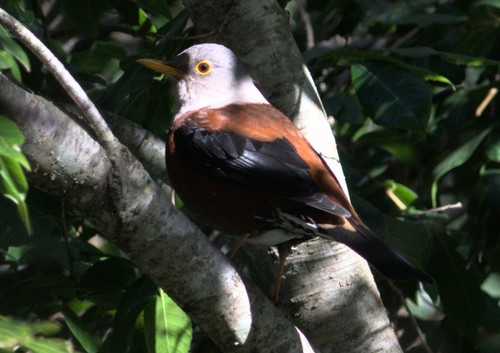 chestnut thrush
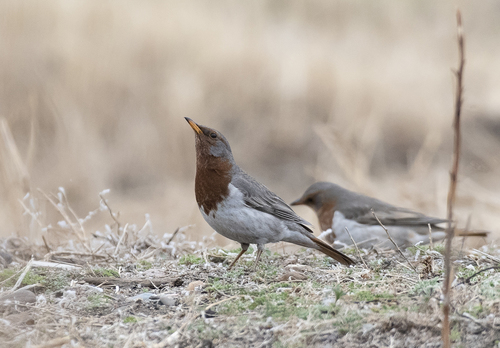 tordo-de-garganta-ruiva
Em resumo
A marca de campo mais confiável para separar o chestnut thrush do tordo-de-garganta-ruiva é a presença de uma distinta mancha vermelha na garganta do macho adulto do tordo-de-garganta-ruiva, que o chestnut thrush nunca apresenta. Em contraste, o chestnut thrush não possui coloração forte na garganta e é geralmente mais uniformemente colorido. O tordo-de-garganta-ruiva juvenil e fêmea pode ser mais complicado, pois eles não têm o babador vermelho e apresentam partes inferiores estriadas, mas o chestnut thrush permanece mais uniforme no geral. Ambas as espécies são grandes thrushes com áreas de sobreposição em partes do Himalaia e da China, portanto, é necessário prestar atenção cuidadosa aos detalhes da plumagem e ao contexto.
Dicas de identificação
- Mancha vermelha na garganta (macho adulto do tordo-de-garganta-ruiva): Procure uma mancha vermelha ou ruiva clara na garganta; o chestnut thrush nunca apresenta isso, tornando-se a melhor marca de campo única para machos adultos.
- Partes inferiores estriadas (fêmea/juvenil do tordo-de-garganta-ruiva): Fêmeas e jovens do tordo-de-garganta-ruiva não têm o babador vermelho, mas possuem partes inferiores estriadas em preto, enquanto o chestnut thrush é mais uniforme embaixo; isso é mais útil em aves empoleiradas.
- Uniformidade (chestnut thrush): O chestnut thrush parece mais uniformemente colorido no geral, sem marcas fortes na garganta ou nas partes inferiores; isso pode ajudar a descartar o tordo-de-garganta-ruiva em casos ambíguos.
- Cor da asa inferior (tordo-de-garganta-ruiva): O tordo-de-garganta-ruiva tem asas inferiores avermelhadas, que podem ser vistas em voo ou ao se limpar; o chestnut thrush não apresenta essa característica.
- Cor das costas: O tordo-de-garganta-ruiva tem costas cinzas simples, enquanto o chestnut thrush é geralmente mais acastanhado, embora isso possa ser sutil e afetado pela luz.
- Dimorfismo sexual: Ambas as espécies são sexualmente dimórficas, mas no chestnut thrush a diferença geralmente não é visível para os humanos; não confie em diferenças de cor baseadas no sexo para o chestnut thrush.
- Confusão de idade: O juvenil do tordo-de-garganta-ruiva pode ser confundido com o chestnut thrush devido à falta de uma garganta vermelha, mas as partes inferiores estriadas são uma pista; os juvenis do chestnut thrush não são descritos como estriados.
- Visões de voo: Nenhuma diferença distintiva nas asas superiores ou padrões de voo é descrita; concentre-se na cor da asa inferior e na impressão geral se visto em voo.
- Habitat e área: Use com cautela; o chestnut thrush é mais provável de ser encontrado em florestas temperadas do Himalaia e sudoeste da China, enquanto o tordo-de-garganta-ruiva é um migrante de regiões mais ao norte e a leste, mas ambos podem se sobrepor no inverno.
- Tamanho e estrutura: Ambas são grandes, robustas thrushes com estrutura semelhante; não confie no tamanho ou na forma para separação.
- Voz: Nenhuma diferença vocal distintiva é descrita nas fontes disponíveis; não use a voz como separador.
- Contexto sazonal: O tordo-de-garganta-ruiva é um vagrante raro na Europa ocidental, então nessa região, o chestnut thrush é altamente improvável; na área central, ambos são possíveis.
- Bico e jizz: Nenhuma diferença distintiva de bico ou estrutura é descrita; concentre-se na plumagem.
- Armadilha – fêmea/juvenil do tordo-de-garganta-ruiva: Estes podem não ter a garganta vermelha e parecer semelhantes ao chestnut thrush; procure partes inferiores estriadas e asas inferiores avermelhadas para confirmar o tordo-de-garganta-ruiva.
- Armadilha – iluminação: As cores das costas e das partes inferiores podem ser afetadas pela iluminação e desgaste; sempre tente confirmar com múltiplas marcas de campo.
Tamanho
O chestnut thrush tem uma média de cerca de 92 gramas de massa corporal [wikidata], tornando-se uma thrush robusta; não há dados diretos de massa disponíveis para o tordo-de-garganta-ruiva, mas ambos são considerados grandes thrushes e são semelhantes em tamanho e estrutura geral. O tamanho sozinho não é um separador confiável entre essas duas espécies em campo.
Plumagem
O macho adulto do tordo-de-garganta-ruiva é melhor identificado por sua ousada mancha vermelha na garganta, contrastando com um dorso cinza simples e asas inferiores avermelhadas. Fêmeas e juvenis não têm o babador vermelho, mas apresentam partes inferiores estriadas em preto, o que pode ser uma pista útil em aves imaturas. O chestnut thrush, em contraste, é mais uniforme em coloração e não apresenta uma garganta vermelha ou estriações fortes nas partes inferiores. Ambas as espécies são sexualmente dimórficas, mas a diferença no chestnut thrush geralmente não é visível para observadores humanos. Nenhum padrão de asa superior ou de voo específico para idade é descrito para qualquer uma das espécies, portanto, a separação depende da coloração das partes inferiores e da garganta, especialmente em aves empoleiradas.
Comportamento
Ambas as espécies são típicas de thrushes em comportamento, forrageando no chão ou em vegetação baixa e se movendo com pulos e voos curtos. Nenhuma diferença comportamental distintiva é notada nas fontes disponíveis, portanto, o comportamento não é um separador confiável.
Habitat
O chestnut thrush se reproduz nas montanhas ocidentais do Himalaia e na China central/sudoeste, preferindo florestas temperadas, e inverna no leste do Himalaia e no norte do Sudeste Asiático. O tordo-de-garganta-ruiva se reproduz mais ao norte e a leste, na Sibéria Oriental até a Manchúria do Norte, e inverna na China Ocidental, Mianmar e Nordeste da Índia. Suas áreas se sobrepõem em partes da China e do Himalaia, portanto, o habitat e a área podem ajudar, mas não são definitivos, especialmente no inverno ou durante a migração.
chestnut thrush · tordo-de-garganta-ruiva · Minhas aves difíceis