

Chestnut Bulbul vs Mountain Bulbul
Hemixos castanonotus versus Ixos mcclellandii
Play a quiz with Chestnut Bulbul and Mountain Bulbul
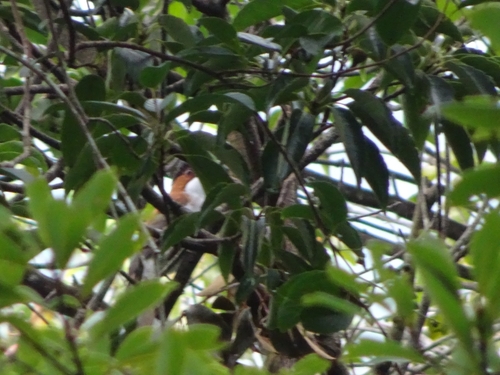 Chestnut Bulbul
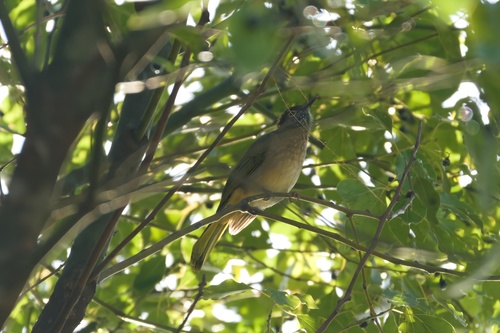 Mountain Bulbul
In short
The most reliable way to separate Chestnut Bulbul from Mountain Bulbul is by focusing on the distinctive chestnut or rufous coloration on the back of Chestnut Bulbul, which is absent in Mountain Bulbul. Mountain Bulbul is sometimes called 'green-winged bulbul' or 'rufous-bellied bulbul', but it lacks the solid chestnut back and instead shows a more olive or greenish wing tone. Both species are similar in size and shape, and both belong to the bulbul family, so structural differences are subtle. Pay close attention to the upperparts and wing coloration, especially in perched birds, as these are the most consistently visible field marks. Age-specific wing patterns are not described in the sources for either species, so focus on adult plumage differences.
Identification tips
- Look for a chestnut or rufous back: Chestnut Bulbul always shows a rich chestnut coloration on the back, which is absent in Mountain Bulbul. This is the single most reliable field mark in perched birds of all ages.
- Olive or greenish wings: Mountain Bulbul has olive or greenish tones on the wings and upperparts, sometimes leading to confusion with other greenish bulbuls, but never shows a solid chestnut back.
- Rufous belly in Mountain Bulbul: While Mountain Bulbul may show some rufous on the belly, this is not as extensive or as diagnostic as the chestnut back of Chestnut Bulbul. Do not rely solely on belly color for ID.
- No distinctive juvenile or immature wing pattern: Neither species is described with unique age-specific upperwing patterns, so do not expect to separate them in flight by wing markings.
- Similar size and structure: Both species have similar proportions and size, so do not use bulk or length as a primary separator.
- Perched views are best: The chestnut back of Chestnut Bulbul is most obvious when the bird is perched, so prioritize views of the upperparts.
- Flight views are less helpful: Without distinctive wing panels or contrasting flight feathers, these species are best separated when perched.
- Habitat overlap: In areas where both species occur, do not rely on habitat alone, but Chestnut Bulbul is more likely in lowland forests of southern China and northern Vietnam.
- Alternate names can mislead: Mountain Bulbul is sometimes called 'green-winged bulbul' or 'rufous-bellied bulbul,' but these names refer to subtle plumage features and should not be confused with the solid chestnut back of Chestnut Bulbul.
- No strong sexual dimorphism: Both species are similar in appearance between sexes, so all field marks apply to both males and females.
- Ignore voice for separation: No diagnostic vocal differences are described in the sources, so do not attempt to separate these species by song or call.
- Group foraging: Both species may join mixed flocks, so check each individual carefully for the chestnut back or greenish wings.
- Streaking and underpart color: Some streaking or variation in underpart color may be present in both species, but these are not reliable for separation.
- Range context: If you are outside southern China and northern Vietnam, Chestnut Bulbul is less likely, but always confirm with plumage.
- Photograph upperparts when possible: If in doubt, a clear photo of the back will usually clinch the ID.
Size
Both species are medium-sized bulbuls with similar proportions. The Mountain Bulbul has a documented average body mass of 33 grams [wikidata], while no specific mass is given for Chestnut Bulbul, but it is likely comparable. Size alone is not a reliable separator between these two species in the field.
Plumage
No age-specific wing or flight patterns are described for either species, so identification relies on overall plumage. Chestnut Bulbul is best recognized by its rich chestnut or rufous coloration on the back, which is a standout feature in all plumages. In contrast, Mountain Bulbul lacks this chestnut back and instead has olive or greenish tones on the wings and upperparts, sometimes leading to the alternate name 'green-winged bulbul.' Mountain Bulbul may also show some rufous on the belly, but this is not as extensive or as diagnostic as the chestnut back of Chestnut Bulbul. Both species may show some streaking or variation in underpart coloration, but the back and wing color are the most reliable field marks.
Behaviour
Both species are typical bulbuls in behavior, foraging in the mid to upper canopy and often moving in small groups. No diagnostic behavioral differences are noted in the sources provided.
Habitat
Chestnut Bulbul is found in southern China and northern Vietnam, while Mountain Bulbul occurs more broadly in Southeast Asia. Both species occupy forested habitats, but Chestnut Bulbul is more restricted to its range. Habitat alone is not a reliable separator where ranges overlap, but Chestnut Bulbul may be more likely in lowland and foothill forests in its core range, while Mountain Bulbul is often associated with montane or hilly forests.