

Motmot

Burrowing Owl vs Spotted Owl

Athene cunicularia versus Strix occidentalis

Play a quiz with Burrowing Owl and Spotted Owl
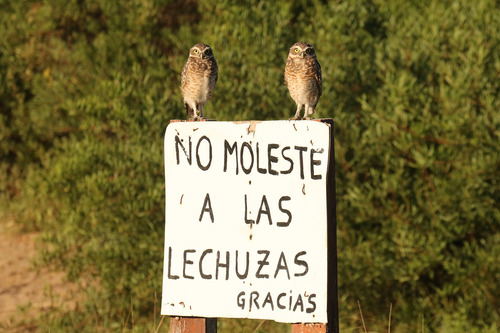
Burrowing Owl (Athene cunicularia) Burrowing Owl
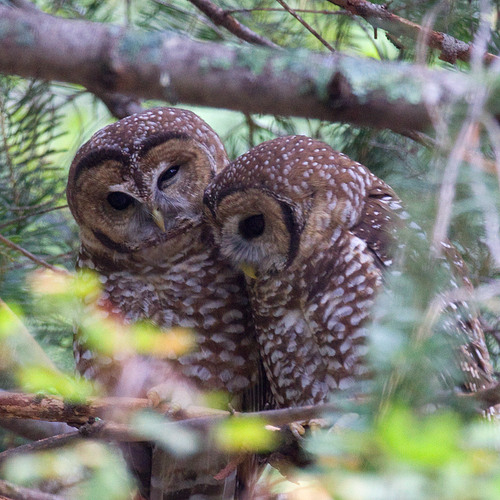
Spotted Owl (Strix occidentalis) Spotted Owl

Media

Loading…

In short

The most reliable field mark is size and structure: Spotted Owl is much larger and bulkier, with a broad, rounded head and short tail, while Burrowing Owl is small, long-legged, and often seen standing upright on the ground. Juvenile Burrowing Owls have a distinctive buff wing bar and lack white spotting above, unlike any age of Spotted Owl. In flight, Burrowing Owl's long legs and small size are obvious, while Spotted Owl appears broad-winged and powerful. Habitat is also a strong clue: Burrowing Owl is found in open grasslands and fields, often perched on the ground or low posts, while Spotted Owl is strictly a forest species, usually deep in old-growth woods and rarely seen in open country.

Identification tips

  1. Size is the first check: If the owl is small, barely larger than a robin, it's a Burrowing Owl; if it's large, nearly hawk-sized, it's a Spotted Owl. Use nearby birds or objects for scale.
  2. Habitat is decisive: Burrowing Owl is only found in open, grassy, or arid landscapes, often on the ground; Spotted Owl is strictly a forest bird, deep in old-growth woods, never in open fields.
  3. Leg length and posture: Burrowing Owl has very long, grayish legs and stands upright, often on the ground or low posts. Spotted Owl has short legs and perches horizontally on branches, never upright on the ground.
  4. Facial markings: Burrowing Owl shows prominent white eyebrows and a white chin patch; Spotted Owl lacks these, having a plain, dark face.
  5. Plumage pattern (adults): Burrowing Owl is brown above with white spots, white below with brown barring or spotting. Spotted Owl is dark brown with pale, cross-shaped spots on the underparts, not bars or streaks.
  6. Juvenile/immature marks: Juvenile Burrowing Owls lack white spots above, have a buff wing bar, and buff-colored breasts. No Spotted Owl of any age shows this combination.
  7. In flight: Burrowing Owl is small, with long legs trailing behind and quick, bounding flight. Spotted Owl is large, broad-winged, and powerful, with legs not visible in flight.
  8. Perching behavior: Burrowing Owl often perches on the ground or low objects in the open; Spotted Owl perches high in trees, rarely visible except as a silhouette in dense forest.
  9. Activity pattern: Burrowing Owl is often active by day; Spotted Owl is strictly nocturnal and rarely seen in daylight.
  10. Nesting site: Burrowing Owl nests in burrows in the ground; Spotted Owl nests in tree hollows or old nests high above the ground.
  11. Sexual dimorphism: Both species have little visible difference between sexes, but male Burrowing Owls may look paler due to sun exposure.
  12. Sun-bleaching: Only male Burrowing Owls may appear paler from sun-bleaching; Spotted Owl does not show this effect.
  13. White chin patch display: If you see an owl bobbing its head and displaying a white chin patch, it's a Burrowing Owl.
  14. Urban adaptation: Burrowing Owl may be found in urban parks, golf courses, or even near roads; Spotted Owl avoids human-modified landscapes.
  15. Confusion risk: In poor light or at a distance, Spotted Owl could be confused with other large forest owls, but never with the small, ground-dwelling Burrowing Owl if size and habitat are noted.

Size

Burrowing Owl is much smaller: 19–28 cm (7–11 in) long, with a wingspan of 50.8–61 cm (20–24 in), and weighs 140–240 g (5–8 oz) [wikipedia]. Spotted Owl is a large owl: 43 cm (17 in) long, with a wingspan of 114 cm (45 in), and weighs about 600 g (1.3 lb) [wikipedia]. This is a dramatic size difference—Spotted Owl is more than twice the length and wingspan, and nearly three times the mass of Burrowing Owl. If you see the bird near other species, Burrowing Owl is only a bit larger than an American Robin, while Spotted Owl is much bigger than any thrush or jay.

Plumage

Juvenile Burrowing Owls are distinctive: they lack most of the white spotting above and brown barring below seen in adults, and show a buff bar across the upper wings, with buff-colored breasts rather than white [wikipedia]. No age of Spotted Owl shows this pattern. Adult Burrowing Owls have brown heads and wings with white spots, prominent white eyebrows, and a white chin patch. Spotted Owls, by contrast, are dark brown with pale, cross-shaped spots on the underparts (not bars or streaks), and lack the Burrowing Owl's white facial markings. Spotted Owl does not have white eyebrows or a white chin patch. Both sexes are similar in both species, but adult male Burrowing Owls may appear paler due to sun-bleaching. In flight, Burrowing Owl's long grayish legs are often visible trailing behind, while Spotted Owl's legs are short and not usually visible in flight.

Behaviour

Burrowing Owl is primarily terrestrial, often seen standing upright on the ground or on low perches in open areas, and is active by day as well as at dusk and dawn. It often bobs its head and may display its white chin patch when agitated. Spotted Owl is strictly nocturnal, rarely seen in daylight, and hunts from perches in dense forests, swooping or pouncing on prey. Spotted Owl is never seen standing on the ground in open country. Burrowing Owl may be seen in loose colonies, especially near burrows, while Spotted Owl is solitary or in pairs, deep in forest.

Habitat

Burrowing Owl is found in open, dry habitats with low vegetation: grasslands, rangelands, deserts, agricultural fields, airport grasslands, and even urban parks or golf courses [wikipedia]. It nests and roosts in burrows, often those made by mammals. Spotted Owl is a resident of old-growth or mature forests in western North America, nesting in tree hollows, old raptor nests, or rock crevices high above the ground [wikipedia]. It is never found in open country or on the ground in fields. If you are in a forest, especially old-growth, Spotted Owl is possible; in open grassland or urban fields, only Burrowing Owl is likely.

Submit a better description

Use the same sections as the comparison. Your text is published immediately.

The most reliable field mark is size and structure: Spotted Owl is much larger and bulkier, with a broad, rounded head and short tail, while Burrowing Owl is small, long-legged, and often seen standing upright on the ground. Juvenile Burrowing Owls have a distinctive buff wing bar and lack white spotting above, unlike any age of Spotted Owl. In flight, Burrowing Owl's long legs and small size are obvious, while Spotted Owl appears broad-winged and powerful. Habitat is also a strong clue: Burrowing Owl is found in open grasslands and fields, often perched on the ground or low posts, while Spotted Owl is strictly a forest species, usually deep in old-growth woods and rarely seen in open country.

  1. Size is the first check: If the owl is small, barely larger than a robin, it's a Burrowing Owl; if it's large, nearly hawk-sized, it's a Spotted Owl. Use nearby birds or objects for scale.
  2. Habitat is decisive: Burrowing Owl is only found in open, grassy, or arid landscapes, often on the ground; Spotted Owl is strictly a forest bird, deep in old-growth woods, never in open fields.
  3. Leg length and posture: Burrowing Owl has very long, grayish legs and stands upright, often on the ground or low posts. Spotted Owl has short legs and perches horizontally on branches, never upright on the ground.
  4. Facial markings: Burrowing Owl shows prominent white eyebrows and a white chin patch; Spotted Owl lacks these, having a plain, dark face.
  5. Plumage pattern (adults): Burrowing Owl is brown above with white spots, white below with brown barring or spotting. Spotted Owl is dark brown with pale, cross-shaped spots on the underparts, not bars or streaks.
  6. Juvenile/immature marks: Juvenile Burrowing Owls lack white spots above, have a buff wing bar, and buff-colored breasts. No Spotted Owl of any age shows this combination.
  7. In flight: Burrowing Owl is small, with long legs trailing behind and quick, bounding flight. Spotted Owl is large, broad-winged, and powerful, with legs not visible in flight.
  8. Perching behavior: Burrowing Owl often perches on the ground or low objects in the open; Spotted Owl perches high in trees, rarely visible except as a silhouette in dense forest.
  9. Activity pattern: Burrowing Owl is often active by day; Spotted Owl is strictly nocturnal and rarely seen in daylight.
  10. Nesting site: Burrowing Owl nests in burrows in the ground; Spotted Owl nests in tree hollows or old nests high above the ground.
  11. Sexual dimorphism: Both species have little visible difference between sexes, but male Burrowing Owls may look paler due to sun exposure.
  12. Sun-bleaching: Only male Burrowing Owls may appear paler from sun-bleaching; Spotted Owl does not show this effect.
  13. White chin patch display: If you see an owl bobbing its head and displaying a white chin patch, it's a Burrowing Owl.
  14. Urban adaptation: Burrowing Owl may be found in urban parks, golf courses, or even near roads; Spotted Owl avoids human-modified landscapes.
  15. Confusion risk: In poor light or at a distance, Spotted Owl could be confused with other large forest owls, but never with the small, ground-dwelling Burrowing Owl if size and habitat are noted.

Burrowing Owl is much smaller: 19–28 cm (7–11 in) long, with a wingspan of 50.8–61 cm (20–24 in), and weighs 140–240 g (5–8 oz) [wikipedia]. Spotted Owl is a large owl: 43 cm (17 in) long, with a wingspan of 114 cm (45 in), and weighs about 600 g (1.3 lb) [wikipedia]. This is a dramatic size difference—Spotted Owl is more than twice the length and wingspan, and nearly three times the mass of Burrowing Owl. If you see the bird near other species, Burrowing Owl is only a bit larger than an American Robin, while Spotted Owl is much bigger than any thrush or jay.

Juvenile Burrowing Owls are distinctive: they lack most of the white spotting above and brown barring below seen in adults, and show a buff bar across the upper wings, with buff-colored breasts rather than white [wikipedia]. No age of Spotted Owl shows this pattern. Adult Burrowing Owls have brown heads and wings with white spots, prominent white eyebrows, and a white chin patch. Spotted Owls, by contrast, are dark brown with pale, cross-shaped spots on the underparts (not bars or streaks), and lack the Burrowing Owl's white facial markings. Spotted Owl does not have white eyebrows or a white chin patch. Both sexes are similar in both species, but adult male Burrowing Owls may appear paler due to sun-bleaching. In flight, Burrowing Owl's long grayish legs are often visible trailing behind, while Spotted Owl's legs are short and not usually visible in flight.

Burrowing Owl is primarily terrestrial, often seen standing upright on the ground or on low perches in open areas, and is active by day as well as at dusk and dawn. It often bobs its head and may display its white chin patch when agitated. Spotted Owl is strictly nocturnal, rarely seen in daylight, and hunts from perches in dense forests, swooping or pouncing on prey. Spotted Owl is never seen standing on the ground in open country. Burrowing Owl may be seen in loose colonies, especially near burrows, while Spotted Owl is solitary or in pairs, deep in forest.

Burrowing Owl is found in open, dry habitats with low vegetation: grasslands, rangelands, deserts, agricultural fields, airport grasslands, and even urban parks or golf courses [wikipedia]. It nests and roosts in burrows, often those made by mammals. Spotted Owl is a resident of old-growth or mature forests in western North America, nesting in tree hollows, old raptor nests, or rock crevices high above the ground [wikipedia]. It is never found in open country or on the ground in fields. If you are in a forest, especially old-growth, Spotted Owl is possible; in open grassland or urban fields, only Burrowing Owl is likely.

Discard your changes?

You have unsaved edits. If you leave now, those changes will be lost.

Burrowing Owl · Spotted Owl · My Tricky Birds