

Motmot

アナホリフクロウ 対 ニシアメリカフクロウ

Athene cunicularia 対 Strix occidentalis

アナホリフクロウとニシアメリカフクロウのクイズ
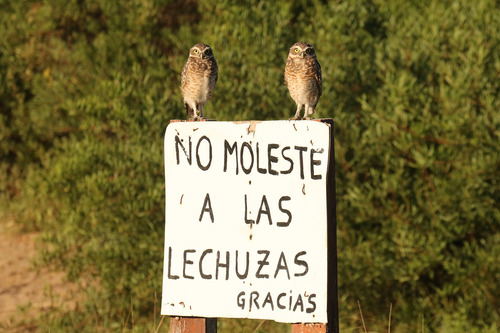
アナホリフクロウ (Athene cunicularia) アナホリフクロウ
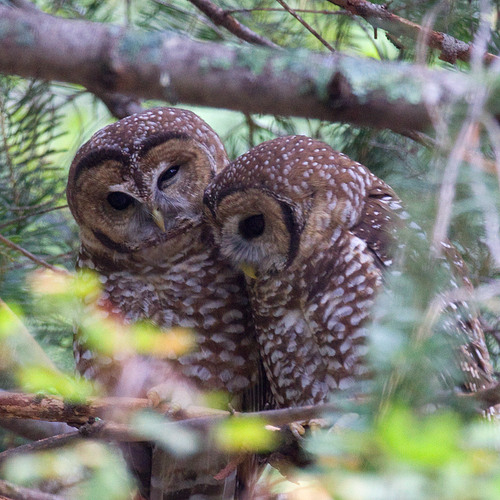
ニシアメリカフクロウ (Strix occidentalis) ニシアメリカフクロウ

メディア

読み込み中…

要点

最も信頼できるフィールドマークはサイズと構造です:ニシアメリカフクロウははるかに大きく、ずんぐりした体形で、広く丸い頭と短い尾を持っています。一方、アナホリフクロウは小さく、脚が長く、しばしば地面に直立しているのが見られます。幼鳥のアナホリフクロウは特徴的なバフ色の翼帯を持ち、ニシアメリカフクロウのどの年齢とも異なり、上部に白い斑点がありません。飛行中、アナホリフクロウの長い脚と小さなサイズは明らかで、ニシアメリカフクロウは広い翼を持ち、力強く見えます。生息地も強い手がかりです:アナホリフクロウは開けた草原や畑に生息し、しばしば地面や低い柱に止まっていますが、ニシアメリカフクロウは厳密に森林の種で、通常は古い成長の森の奥深くに生息し、開けた土地ではめったに見られません。

識別のコツ

  1. サイズが最初のチェック:フクロウが小さく、ロビンよりわずかに大きい場合はアナホリフクロウです;大きく、ほぼタカのサイズの場合はニシアメリカフクロウです。近くの鳥や物体をスケールとして使用してください。
  2. 生息地が決定的:アナホリフクロウは開けた草地や乾燥した風景にのみ見られ、しばしば地面にいます;ニシアメリカフクロウは厳密に森林の鳥で、古い成長の森の奥深くに生息し、開けた畑には決していません。
  3. 脚の長さと姿勢:アナホリフクロウは非常に長い灰色の脚を持ち、しばしば地面や低い柱の上に直立しています。ニシアメリカフクロウは短い脚を持ち、決して地面に直立して止まることはなく、枝の上に水平に止まります。
  4. 顔のマーキング:アナホリフクロウは目立つ白い眉と白い顎の斑点を示します;ニシアメリカフクロウはこれらがなく、平坦で暗い顔を持っています。
  5. 羽毛のパターン(成鳥):アナホリフクロウは上部が茶色で白い斑点があり、下部は白で茶色の横縞または斑点があります。ニシアメリカフクロウは暗い茶色で、下部に淡い十字形の斑点があり、横縞や筋はありません。
  6. 幼鳥/未熟なマーキング:幼鳥のアナホリフクロウは上部に白い斑点がなく、バフ色の翼帯とバフ色の胸を持っています。ニシアメリカフクロウのどの年齢もこの組み合わせを示しません。
  7. 飛行中:アナホリフクロウは小さく、長い脚が後ろに引きずられ、速く跳ねるように飛びます。ニシアメリカフクロウは大きく、広い翼を持ち、力強く、飛行中に脚は見えません。
  8. 止まり方の行動:アナホリフクロウはしばしば開けた場所の地面や低い物体に止まります;ニシアメリカフクロウは高い木に止まり、密な森林の中でシルエットとしてしか見えません。
  9. 活動パターン:アナホリフクロウはしばしば昼間に活動します;ニシアメリカフクロウは厳密に夜行性で、昼間に見られることはめったにありません。
  10. 巣の場所:アナホリフクロウは地面の穴に巣を作ります;ニシアメリカフクロウは地面から高い木の空洞や古い巣に巣を作ります。
  11. 性差の二形性:両種は性別間に目立った違いはほとんどありませんが、オスのアナホリフクロウは日光にさらされているため、より淡く見えることがあります。
  12. 日焼け:オスのアナホリフクロウだけが日焼けで淡く見えることがあります;ニシアメリカフクロウはこの効果を示しません。
  13. 白い顎の斑点の表示:もしフクロウが頭を上下に動かし、白い顎の斑点を見せているのを見たら、それはアナホリフクロウです。
  14. 都市適応:アナホリフクロウは都市公園、ゴルフコース、あるいは道路の近くでも見られることがあります;ニシアメリカフクロウは人間が改変した風景を避けます。
  15. 混乱のリスク:薄暗い場所や距離がある場合、ニシアメリカフクロウは他の大型森林フクロウと混同される可能性がありますが、サイズと生息地が考慮されれば、小さく地面に住むアナホリフクロウとは決して混同されません。

大きさ

アナホリフクロウははるかに小さく、長さは19〜28 cm(7〜11インチ)、翼幅は50.8〜61 cm(20〜24インチ)、体重は140〜240 g(5〜8オンス)です [wikipedia]。ニシアメリカフクロウは大型のフクロウで、長さは43 cm(17インチ)、翼幅は114 cm(45インチ)、体重は約600 g(1.3ポンド)です [wikipedia]。これは劇的なサイズの違いで、ニシアメリカフクロウはアナホリフクロウの長さと翼幅が2倍以上、質量はほぼ3倍です。もし他の種の近くで鳥を見た場合、アナホリフクロウはアメリカロビンよりわずかに大きいだけですが、ニシアメリカフクロウはどのツグミやカケスよりもはるかに大きいです。

羽色

幼鳥のアナホリフクロウは特徴的です:成鳥に見られる上部のほとんどの白い斑点と下部の茶色の横縞がなく、上翼にバフ色の帯があり、白ではなくバフ色の胸を持っています [wikipedia]。ニシアメリカフクロウのどの年齢もこのパターンを示しません。成鳥のアナホリフクロウは白い斑点のある茶色の頭と翼、目立つ白い眉、白い顎の斑点を持っています。それに対してニシアメリカフクロウは暗い茶色で、下部に淡い十字形の斑点があり(横縞や筋ではなく)、アナホリフクロウの白い顔のマーキングがありません。ニシアメリカフクロウには白い眉や白い顎の斑点はありません。両種の両性は似ていますが、成鳥のオスのアナホリフクロウは日焼けのために淡く見えることがあります。飛行中、アナホリフクロウの長い灰色の脚はしばしば後ろに引きずられて見えますが、ニシアメリカフクロウの脚は短く、通常は飛行中に見えません。

行動

アナホリフクロウは主に地上性で、しばしば開けた場所の地面や低い止まり木に直立しているのが見られ、昼間だけでなく、夕暮れや夜明けにも活動します。しばしば頭を上下に動かし、興奮すると白い顎の斑点を見せることがあります。ニシアメリカフクロウは厳密に夜行性で、昼間に見られることはめったになく、密な森林の止まり木から獲物に急降下したり、飛びかかります。ニシアメリカフクロウは開けた土地に直立していることは決してありません。アナホリフクロウは特に巣穴の近くで、ゆるいコロニーで見られることがありますが、ニシアメリカフクロウは孤独またはペアで、森林の奥深くにいます。

生息環境

アナホリフクロウは低い植生の開けた乾燥した生息地に見られます:草原、放牧地、砂漠、農業用地、空港の草地、さらには都市公園やゴルフコースでも見られます [wikipedia]。巣を作り、しばしば哺乳類が作った穴に止まります。ニシアメリカフクロウは北アメリカ西部の古い成長または成熟した森林の住民で、木の空洞、古い猛禽類の巣、または地面から高い岩の隙間に巣を作ります [wikipedia]。開けた土地や畑の地面には決して見られません。もしあなたが森林、特に古い成長の森林にいるなら、ニシアメリカフクロウが見られる可能性があります;開けた草原や都市の畑では、アナホリフクロウだけが見られる可能性があります。

より良い説明を送る

比較と同じ項目を使ってください。文章はすぐに公開されます。

The most reliable field mark is size and structure: Spotted Owl is much larger and bulkier, with a broad, rounded head and short tail, while Burrowing Owl is small, long-legged, and often seen standing upright on the ground. Juvenile Burrowing Owls have a distinctive buff wing bar and lack white spotting above, unlike any age of Spotted Owl. In flight, Burrowing Owl's long legs and small size are obvious, while Spotted Owl appears broad-winged and powerful. Habitat is also a strong clue: Burrowing Owl is found in open grasslands and fields, often perched on the ground or low posts, while Spotted Owl is strictly a forest species, usually deep in old-growth woods and rarely seen in open country.

  1. Size is the first check: If the owl is small, barely larger than a robin, it's a Burrowing Owl; if it's large, nearly hawk-sized, it's a Spotted Owl. Use nearby birds or objects for scale.
  2. Habitat is decisive: Burrowing Owl is only found in open, grassy, or arid landscapes, often on the ground; Spotted Owl is strictly a forest bird, deep in old-growth woods, never in open fields.
  3. Leg length and posture: Burrowing Owl has very long, grayish legs and stands upright, often on the ground or low posts. Spotted Owl has short legs and perches horizontally on branches, never upright on the ground.
  4. Facial markings: Burrowing Owl shows prominent white eyebrows and a white chin patch; Spotted Owl lacks these, having a plain, dark face.
  5. Plumage pattern (adults): Burrowing Owl is brown above with white spots, white below with brown barring or spotting. Spotted Owl is dark brown with pale, cross-shaped spots on the underparts, not bars or streaks.
  6. Juvenile/immature marks: Juvenile Burrowing Owls lack white spots above, have a buff wing bar, and buff-colored breasts. No Spotted Owl of any age shows this combination.
  7. In flight: Burrowing Owl is small, with long legs trailing behind and quick, bounding flight. Spotted Owl is large, broad-winged, and powerful, with legs not visible in flight.
  8. Perching behavior: Burrowing Owl often perches on the ground or low objects in the open; Spotted Owl perches high in trees, rarely visible except as a silhouette in dense forest.
  9. Activity pattern: Burrowing Owl is often active by day; Spotted Owl is strictly nocturnal and rarely seen in daylight.
  10. Nesting site: Burrowing Owl nests in burrows in the ground; Spotted Owl nests in tree hollows or old nests high above the ground.
  11. Sexual dimorphism: Both species have little visible difference between sexes, but male Burrowing Owls may look paler due to sun exposure.
  12. Sun-bleaching: Only male Burrowing Owls may appear paler from sun-bleaching; Spotted Owl does not show this effect.
  13. White chin patch display: If you see an owl bobbing its head and displaying a white chin patch, it's a Burrowing Owl.
  14. Urban adaptation: Burrowing Owl may be found in urban parks, golf courses, or even near roads; Spotted Owl avoids human-modified landscapes.
  15. Confusion risk: In poor light or at a distance, Spotted Owl could be confused with other large forest owls, but never with the small, ground-dwelling Burrowing Owl if size and habitat are noted.

Burrowing Owl is much smaller: 19–28 cm (7–11 in) long, with a wingspan of 50.8–61 cm (20–24 in), and weighs 140–240 g (5–8 oz) [wikipedia]. Spotted Owl is a large owl: 43 cm (17 in) long, with a wingspan of 114 cm (45 in), and weighs about 600 g (1.3 lb) [wikipedia]. This is a dramatic size difference—Spotted Owl is more than twice the length and wingspan, and nearly three times the mass of Burrowing Owl. If you see the bird near other species, Burrowing Owl is only a bit larger than an American Robin, while Spotted Owl is much bigger than any thrush or jay.

Juvenile Burrowing Owls are distinctive: they lack most of the white spotting above and brown barring below seen in adults, and show a buff bar across the upper wings, with buff-colored breasts rather than white [wikipedia]. No age of Spotted Owl shows this pattern. Adult Burrowing Owls have brown heads and wings with white spots, prominent white eyebrows, and a white chin patch. Spotted Owls, by contrast, are dark brown with pale, cross-shaped spots on the underparts (not bars or streaks), and lack the Burrowing Owl's white facial markings. Spotted Owl does not have white eyebrows or a white chin patch. Both sexes are similar in both species, but adult male Burrowing Owls may appear paler due to sun-bleaching. In flight, Burrowing Owl's long grayish legs are often visible trailing behind, while Spotted Owl's legs are short and not usually visible in flight.

Burrowing Owl is primarily terrestrial, often seen standing upright on the ground or on low perches in open areas, and is active by day as well as at dusk and dawn. It often bobs its head and may display its white chin patch when agitated. Spotted Owl is strictly nocturnal, rarely seen in daylight, and hunts from perches in dense forests, swooping or pouncing on prey. Spotted Owl is never seen standing on the ground in open country. Burrowing Owl may be seen in loose colonies, especially near burrows, while Spotted Owl is solitary or in pairs, deep in forest.

Burrowing Owl is found in open, dry habitats with low vegetation: grasslands, rangelands, deserts, agricultural fields, airport grasslands, and even urban parks or golf courses [wikipedia]. It nests and roosts in burrows, often those made by mammals. Spotted Owl is a resident of old-growth or mature forests in western North America, nesting in tree hollows, old raptor nests, or rock crevices high above the ground [wikipedia]. It is never found in open country or on the ground in fields. If you are in a forest, especially old-growth, Spotted Owl is possible; in open grassland or urban fields, only Burrowing Owl is likely.

変更を破棄しますか?

保存していない編集があります。今離れると失われます。

アナホリフクロウ · ニシアメリカフクロウ · 苦手な鳥