

Motmot

Brown-rumped Minivet vs Red-throated Thrush

Pericrocotus cantonensis versus Turdus ruficollis

Play a quiz with Brown-rumped Minivet and Red-throated Thrush
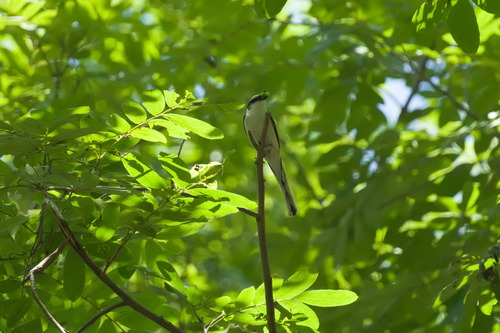
Brown-rumped Minivet (Pericrocotus cantonensis) Brown-rumped Minivet
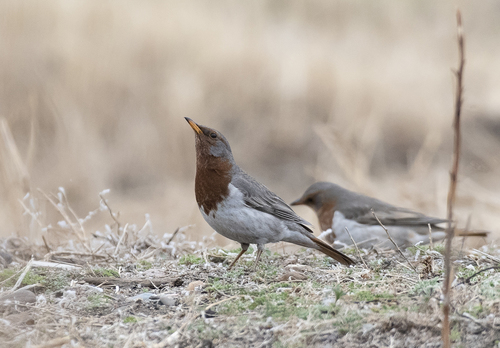
Red-throated Thrush (Turdus ruficollis) Red-throated Thrush

Media

Loading…

In short

The most reliable way to separate Brown-rumped Minivet from Red-throated Thrush is by overall structure and plumage: minivets are slim, active birds with a contrasting brown rump, while red-throated thrushes are larger, heavier-bodied, and show a plain grey back with reddish underwings and, in adult males, a distinctive red throat. Immature thrushes lack the red bib but have black-streaked underparts, unlike any minivet. In flight, thrushes reveal reddish underwings, while minivets show a more uniform wing pattern. Both species are migratory, but their ranges and habitats differ, with minivets favoring wooded areas and thrushes more often seen in open woodland or on the ground. Structure, flight style, and context are crucial for quick field separation.

Identification tips

  1. Size and Structure: Red-throated Thrush is much larger and bulkier than Brown-rumped Minivet. Thrushes have a robust, upright posture and thick bill; minivets are slim, with a finer, slightly hooked bill. This is often the first clue at a distance.
  2. Flight Style: Minivets are agile and quick, often flying in flocks through the canopy; thrushes have a more direct, powerful flight and are less likely to be seen in tight, active groups.
  3. Rump Color: Brown-rumped Minivet shows a contrasting brown rump, especially visible in flight or when perched with the back exposed. Red-throated Thrush has a plain grey back and rump with no contrast.
  4. Underwing Color in Flight: Red-throated Thrush (all ages/sexes) shows reddish underwings in flight—a key mark. Minivets lack any reddish tones in the underwing.
  5. Throat and Underparts: Adult male Red-throated Thrush has a red throat (bib), unique among these two. Females and immatures lack the bib but have black-streaked underparts. Minivets never show a red throat or streaked underparts; their underparts are plain.
  6. Back and Upperparts: Minivets are more uniform above, with a brown rump. Thrushes have a plain grey back and no contrasting rump.
  7. Bill Shape: Minivet's bill is slender and slightly hooked at the tip; thrush's bill is thicker, straight, and more robust.
  8. Perching Behavior: Minivets usually perch in trees, often high or mid-level, rarely on the ground. Thrushes are often seen on the ground or low perches.
  9. Group Size: Minivets often move in small, active flocks; thrushes are more solitary or in loose groups.
  10. Habitat: Minivets are canopy birds of wooded areas; thrushes prefer open woodland, forest edge, or even gardens, and are more terrestrial.
  11. Juvenile/Immature Marks: Juvenile thrushes have black-streaked underparts and reddish underwings; minivet juveniles do not show these marks.
  12. Sexual Dimorphism: Only the male Red-throated Thrush has a red throat; minivets show little sexual dimorphism in the field.
  13. Seasonal Context: If seen in China during the breeding season in a forest canopy, minivet is more likely; in open woodland or on the ground in winter, especially with reddish underwings, suspect thrush.
  14. Vocalizations: Not diagnostic with current information.
  15. Pitfalls: Immature thrushes lacking the red throat can be confused with minivets if size and structure are not carefully noted; always check for streaked underparts and reddish underwing in flight for thrush.

Size

Red-throated Thrush is substantially larger and bulkier than Brown-rumped Minivet. Thrushes have a classic thrush shape: robust body, longer legs, and a relatively thick, straight bill. Minivets are smaller, more slender, and have a finer, slightly hooked bill typical of cuckooshrikes. Even at a distance, the thrush's size and upright stance are obvious compared to the minivet's more delicate, agile appearance.

Plumage

Juvenile and female Red-throated Thrushes lack the adult male's red throat but show black-streaked underparts and a plain grey back, with reddish tones visible in the underwing during flight—this reddish underwing is a key mark for all ages and sexes. Brown-rumped Minivet, by contrast, has a distinctive brown rump (diagnostic when seen), and lacks any reddish tones on the underwing or throat. Minivets are more uniform in color, with no streaking below and no bib. In adult male Red-throated Thrush, the red throat is unmistakable; in females and immatures, look for the streaked underparts and lack of contrasting rump. Minivets never show streaked underparts or a red throat. In flight, thrushes show broad, rounded wings and reddish underwings, while minivets have more pointed wings and a less contrasting flight pattern.

Behaviour

Brown-rumped Minivets are typically seen moving actively in flocks through the canopy or mid-levels of trees, often sallying for insects and rarely coming to the ground. Their movements are quick and agile. Red-throated Thrushes, in contrast, are often found singly or in loose groups, spending much time on the ground or in low vegetation, hopping or walking in search of food. Their flight is strong and direct but less acrobatic than minivets, and they often perch upright on exposed branches.

Habitat

Brown-rumped Minivet breeds in forested areas of China and winters in Indochina, favoring wooded habitats and forest edges. They are canopy or mid-story specialists. Red-throated Thrush breeds in East Siberia to North Manchuria and winters in West China, Myanmar, and Northeast India, preferring open woodland, forest edges, and sometimes parks or gardens. Thrushes are more likely to be seen on the ground or in open areas than minivets, which stick to trees.

Submit a better description

Use the same sections as the comparison. Your text is published immediately.

The most reliable way to separate Brown-rumped Minivet from Red-throated Thrush is by overall structure and plumage: minivets are slim, active birds with a contrasting brown rump, while red-throated thrushes are larger, heavier-bodied, and show a plain grey back with reddish underwings and, in adult males, a distinctive red throat. Immature thrushes lack the red bib but have black-streaked underparts, unlike any minivet. In flight, thrushes reveal reddish underwings, while minivets show a more uniform wing pattern. Both species are migratory, but their ranges and habitats differ, with minivets favoring wooded areas and thrushes more often seen in open woodland or on the ground. Structure, flight style, and context are crucial for quick field separation.

  1. Size and Structure: Red-throated Thrush is much larger and bulkier than Brown-rumped Minivet. Thrushes have a robust, upright posture and thick bill; minivets are slim, with a finer, slightly hooked bill. This is often the first clue at a distance.
  2. Flight Style: Minivets are agile and quick, often flying in flocks through the canopy; thrushes have a more direct, powerful flight and are less likely to be seen in tight, active groups.
  3. Rump Color: Brown-rumped Minivet shows a contrasting brown rump, especially visible in flight or when perched with the back exposed. Red-throated Thrush has a plain grey back and rump with no contrast.
  4. Underwing Color in Flight: Red-throated Thrush (all ages/sexes) shows reddish underwings in flight—a key mark. Minivets lack any reddish tones in the underwing.
  5. Throat and Underparts: Adult male Red-throated Thrush has a red throat (bib), unique among these two. Females and immatures lack the bib but have black-streaked underparts. Minivets never show a red throat or streaked underparts; their underparts are plain.
  6. Back and Upperparts: Minivets are more uniform above, with a brown rump. Thrushes have a plain grey back and no contrasting rump.
  7. Bill Shape: Minivet's bill is slender and slightly hooked at the tip; thrush's bill is thicker, straight, and more robust.
  8. Perching Behavior: Minivets usually perch in trees, often high or mid-level, rarely on the ground. Thrushes are often seen on the ground or low perches.
  9. Group Size: Minivets often move in small, active flocks; thrushes are more solitary or in loose groups.
  10. Habitat: Minivets are canopy birds of wooded areas; thrushes prefer open woodland, forest edge, or even gardens, and are more terrestrial.
  11. Juvenile/Immature Marks: Juvenile thrushes have black-streaked underparts and reddish underwings; minivet juveniles do not show these marks.
  12. Sexual Dimorphism: Only the male Red-throated Thrush has a red throat; minivets show little sexual dimorphism in the field.
  13. Seasonal Context: If seen in China during the breeding season in a forest canopy, minivet is more likely; in open woodland or on the ground in winter, especially with reddish underwings, suspect thrush.
  14. Vocalizations: Not diagnostic with current information.
  15. Pitfalls: Immature thrushes lacking the red throat can be confused with minivets if size and structure are not carefully noted; always check for streaked underparts and reddish underwing in flight for thrush.

Red-throated Thrush is substantially larger and bulkier than Brown-rumped Minivet. Thrushes have a classic thrush shape: robust body, longer legs, and a relatively thick, straight bill. Minivets are smaller, more slender, and have a finer, slightly hooked bill typical of cuckooshrikes. Even at a distance, the thrush's size and upright stance are obvious compared to the minivet's more delicate, agile appearance.

Juvenile and female Red-throated Thrushes lack the adult male's red throat but show black-streaked underparts and a plain grey back, with reddish tones visible in the underwing during flight—this reddish underwing is a key mark for all ages and sexes. Brown-rumped Minivet, by contrast, has a distinctive brown rump (diagnostic when seen), and lacks any reddish tones on the underwing or throat. Minivets are more uniform in color, with no streaking below and no bib. In adult male Red-throated Thrush, the red throat is unmistakable; in females and immatures, look for the streaked underparts and lack of contrasting rump. Minivets never show streaked underparts or a red throat. In flight, thrushes show broad, rounded wings and reddish underwings, while minivets have more pointed wings and a less contrasting flight pattern.

Brown-rumped Minivets are typically seen moving actively in flocks through the canopy or mid-levels of trees, often sallying for insects and rarely coming to the ground. Their movements are quick and agile. Red-throated Thrushes, in contrast, are often found singly or in loose groups, spending much time on the ground or in low vegetation, hopping or walking in search of food. Their flight is strong and direct but less acrobatic than minivets, and they often perch upright on exposed branches.

Brown-rumped Minivet breeds in forested areas of China and winters in Indochina, favoring wooded habitats and forest edges. They are canopy or mid-story specialists. Red-throated Thrush breeds in East Siberia to North Manchuria and winters in West China, Myanmar, and Northeast India, preferring open woodland, forest edges, and sometimes parks or gardens. Thrushes are more likely to be seen on the ground or in open areas than minivets, which stick to trees.

Discard your changes?

You have unsaved edits. If you leave now, those changes will be lost.

Brown-rumped Minivet · Red-throated Thrush · My Tricky Birds