

Motmot

Bristle-thighed Curlew vs Samoan Flycatcher

Numenius tahitiensis versus Myiagra albiventris

Play a quiz with Bristle-thighed Curlew and Samoan Flycatcher
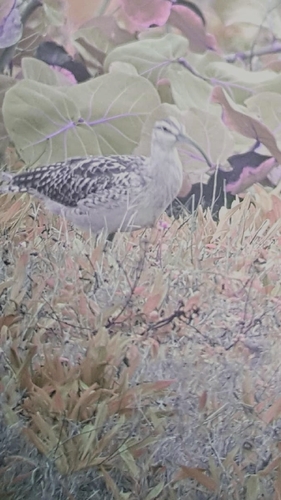
Bristle-thighed Curlew (Numenius tahitiensis) Bristle-thighed Curlew
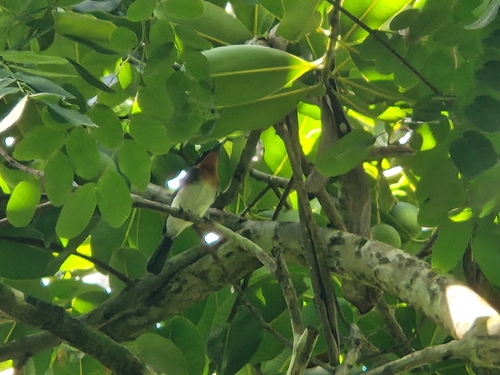
Samoan Flycatcher (Myiagra albiventris) Samoan Flycatcher

Media

Loading…

In short

The most reliable separation is structure: Bristle-thighed Curlew is a large, long-legged shorebird with a long, decurved bill, while Samoan Flycatcher is a much smaller, short-billed, perching songbird. In flight or at rest, the curlew’s buffy tail and pale rump, along with its size and shape, are unmistakable compared to the compact, upright flycatcher. Even immature curlews show these structural and plumage differences. Habitat is also a strong clue: curlews are found on open ground or shorelines, flycatchers in forest or gardens. Confusion is unlikely except in a quiz, but if you see a long-billed, wader-like bird, it’s the curlew.

Identification tips

  1. Size is decisive: Bristle-thighed Curlew is much larger than Samoan Flycatcher; even at a distance, the curlew’s size and long legs stand out. No flycatcher in the region approaches this size.
  2. Bill shape: Curlew has a long, strongly decurved bill, used for probing; flycatcher has a short, straight bill suited for catching insects. Bill length and shape are visible in most views.
  3. Legs and posture: Curlew has long, visible legs and walks or runs on the ground; flycatcher perches upright, with short legs rarely seen clearly.
  4. Tail and rump pattern (all ages): Curlew shows a buffy or rust-colored tail and pale buffy-orange rump, especially obvious in flight or when preening. Flycatcher lacks any such tail or rump coloration.
  5. Upperparts spotting: Curlew’s upperparts are heavily spotted with large buff marks; flycatcher is plain or subtly marked, never spotted like a curlew.
  6. Belly and flanks: Curlew’s belly is pale and unmarked, with barely marked flanks; flycatcher’s underparts may be paler but not in the same pattern, and never with the curlew’s clean, unmarked look.
  7. Habitat context: Curlew is found on open ground, beaches, or mudflats; flycatcher is in forest, woodland, or gardens. If the bird is in trees, it is almost certainly the flycatcher.
  8. Behavior: Curlew walks or runs on the ground, often probing with its bill; flycatcher perches and sallies for insects, rarely seen on the ground.
  9. Flight silhouette: Curlew in flight shows long wings, long legs trailing, and a long decurved bill; flycatcher is compact, with short wings and tail, and no bill projection.
  10. Perched shape: Curlew stands horizontally with body parallel to the ground; flycatcher perches upright, often cocking its tail.
  11. Age confusion: Juvenile and immature curlews still show the key tail and rump marks and structural features; no flycatcher age ever resembles a curlew.
  12. Sex differences: Female curlews are slightly larger, but both sexes share all key field marks; flycatcher sexual dimorphism is not described as diagnostic here.
  13. Voice: Not described in the notes, so not reliable for separation.
  14. Seasonal context: Curlew is migratory and only present in the Pacific islands in the non-breeding season; flycatcher is resident in Samoa year-round. If seen in Samoa outside the curlew’s migration window, more likely the flycatcher, but structure and plumage are always better clues.
  15. Common pitfalls: The only real confusion is in a quiz or with a poor photo; in the field, size, bill, and habitat are decisive. Do not rely on subtle plumage marks when structure and context are so different.

Size

Bristle-thighed Curlew is dramatically larger: about 40–44 cm (16–17 in) long with an 84 cm (33 in) wingspan [wikipedia]. Samoan Flycatcher is a small passerine, much shorter and lighter (exact measurements not given, but typical Monarchidae are around 15–20 cm long). The curlew’s size is comparable to a Whimbrel, while the flycatcher is closer to a sparrow or small thrush. This size gap is obvious even at a distance.

Plumage

For all ages, Bristle-thighed Curlew shows brown upperparts with large buff spots, a pale unmarked belly, and a distinctive buffy or rust-colored tail and pale buffy-orange rump. These marks are visible in flight and at rest, including in immatures. The curlew’s flanks are barely marked, and the tail/rump contrast is strong. Samoan Flycatcher, by contrast, lacks any of these shorebird-type patterns: it is a typical flycatcher with no buffy tail or rump, and its plumage is adapted for forest life, not open ground. No age or sex of flycatcher shows curlew-like upperwing or tail pattern. Even juvenile curlews retain the key tail and rump marks, so age confusion is minimal.

Behaviour

Curlews are ground-dwelling, often probing mud or sand with their long bills, and walk or run with a deliberate gait. In flight, they show strong, direct wingbeats and long wings. Samoan Flycatchers perch upright on branches, sallying out to catch insects in the air, and rarely if ever walk on the ground. Their movements are quick, agile, and more typical of woodland songbirds. These behavioral differences are obvious if you watch for more than a few seconds.

Habitat

Bristle-thighed Curlew breeds in Alaska and winters on tropical Pacific islands, always favoring open ground, shorelines, or grassy flats. Samoan Flycatcher is endemic to Samoa and stays in subtropical or tropical moist forests, montane forests, or rural gardens. The curlew is never found in dense forest or gardens, and the flycatcher avoids open mudflats or beaches. If you see the bird in a forest or garden, it is the flycatcher; on open ground or shore, it is the curlew.

Submit a better description

Use the same sections as the comparison. Your text is published immediately.

The most reliable separation is structure: Bristle-thighed Curlew is a large, long-legged shorebird with a long, decurved bill, while Samoan Flycatcher is a much smaller, short-billed, perching songbird. In flight or at rest, the curlew’s buffy tail and pale rump, along with its size and shape, are unmistakable compared to the compact, upright flycatcher. Even immature curlews show these structural and plumage differences. Habitat is also a strong clue: curlews are found on open ground or shorelines, flycatchers in forest or gardens. Confusion is unlikely except in a quiz, but if you see a long-billed, wader-like bird, it’s the curlew.

  1. Size is decisive: Bristle-thighed Curlew is much larger than Samoan Flycatcher; even at a distance, the curlew’s size and long legs stand out. No flycatcher in the region approaches this size.
  2. Bill shape: Curlew has a long, strongly decurved bill, used for probing; flycatcher has a short, straight bill suited for catching insects. Bill length and shape are visible in most views.
  3. Legs and posture: Curlew has long, visible legs and walks or runs on the ground; flycatcher perches upright, with short legs rarely seen clearly.
  4. Tail and rump pattern (all ages): Curlew shows a buffy or rust-colored tail and pale buffy-orange rump, especially obvious in flight or when preening. Flycatcher lacks any such tail or rump coloration.
  5. Upperparts spotting: Curlew’s upperparts are heavily spotted with large buff marks; flycatcher is plain or subtly marked, never spotted like a curlew.
  6. Belly and flanks: Curlew’s belly is pale and unmarked, with barely marked flanks; flycatcher’s underparts may be paler but not in the same pattern, and never with the curlew’s clean, unmarked look.
  7. Habitat context: Curlew is found on open ground, beaches, or mudflats; flycatcher is in forest, woodland, or gardens. If the bird is in trees, it is almost certainly the flycatcher.
  8. Behavior: Curlew walks or runs on the ground, often probing with its bill; flycatcher perches and sallies for insects, rarely seen on the ground.
  9. Flight silhouette: Curlew in flight shows long wings, long legs trailing, and a long decurved bill; flycatcher is compact, with short wings and tail, and no bill projection.
  10. Perched shape: Curlew stands horizontally with body parallel to the ground; flycatcher perches upright, often cocking its tail.
  11. Age confusion: Juvenile and immature curlews still show the key tail and rump marks and structural features; no flycatcher age ever resembles a curlew.
  12. Sex differences: Female curlews are slightly larger, but both sexes share all key field marks; flycatcher sexual dimorphism is not described as diagnostic here.
  13. Voice: Not described in the notes, so not reliable for separation.
  14. Seasonal context: Curlew is migratory and only present in the Pacific islands in the non-breeding season; flycatcher is resident in Samoa year-round. If seen in Samoa outside the curlew’s migration window, more likely the flycatcher, but structure and plumage are always better clues.
  15. Common pitfalls: The only real confusion is in a quiz or with a poor photo; in the field, size, bill, and habitat are decisive. Do not rely on subtle plumage marks when structure and context are so different.

Bristle-thighed Curlew is dramatically larger: about 40–44 cm (16–17 in) long with an 84 cm (33 in) wingspan [wikipedia]. Samoan Flycatcher is a small passerine, much shorter and lighter (exact measurements not given, but typical Monarchidae are around 15–20 cm long). The curlew’s size is comparable to a Whimbrel, while the flycatcher is closer to a sparrow or small thrush. This size gap is obvious even at a distance.

For all ages, Bristle-thighed Curlew shows brown upperparts with large buff spots, a pale unmarked belly, and a distinctive buffy or rust-colored tail and pale buffy-orange rump. These marks are visible in flight and at rest, including in immatures. The curlew’s flanks are barely marked, and the tail/rump contrast is strong. Samoan Flycatcher, by contrast, lacks any of these shorebird-type patterns: it is a typical flycatcher with no buffy tail or rump, and its plumage is adapted for forest life, not open ground. No age or sex of flycatcher shows curlew-like upperwing or tail pattern. Even juvenile curlews retain the key tail and rump marks, so age confusion is minimal.

Curlews are ground-dwelling, often probing mud or sand with their long bills, and walk or run with a deliberate gait. In flight, they show strong, direct wingbeats and long wings. Samoan Flycatchers perch upright on branches, sallying out to catch insects in the air, and rarely if ever walk on the ground. Their movements are quick, agile, and more typical of woodland songbirds. These behavioral differences are obvious if you watch for more than a few seconds.

Bristle-thighed Curlew breeds in Alaska and winters on tropical Pacific islands, always favoring open ground, shorelines, or grassy flats. Samoan Flycatcher is endemic to Samoa and stays in subtropical or tropical moist forests, montane forests, or rural gardens. The curlew is never found in dense forest or gardens, and the flycatcher avoids open mudflats or beaches. If you see the bird in a forest or garden, it is the flycatcher; on open ground or shore, it is the curlew.

Discard your changes?

You have unsaved edits. If you leave now, those changes will be lost.

Bristle-thighed Curlew · Samoan Flycatcher · My Tricky Birds