

Bonaparte's Gull vs Black-headed Gull
Chroicocephalus philadelphia versus Chroicocephalus ridibundus
Play a quiz with Bonaparte's Gull and Black-headed Gull
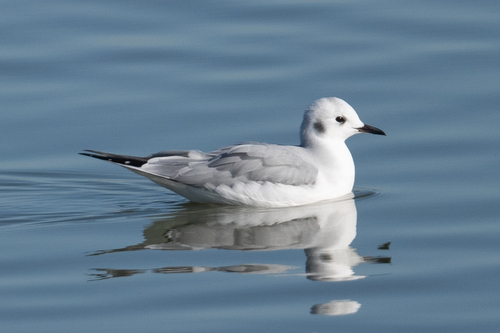 Bonaparte's Gull
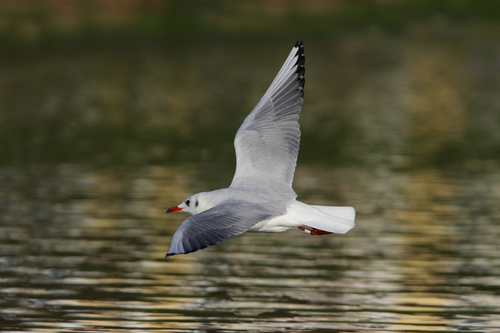 Black-headed Gull
In short
The most reliable way to separate Bonaparte's Gull from Black-headed Gull is by the underwing pattern in flight: Bonaparte's Gull shows a strikingly white underwing, while Black-headed Gull has a darker underside to the primaries. Juvenile and first-winter birds of both species can be especially confusing, but Bonaparte's is always smaller, with a slimmer, darker bill and pinker legs. Structural differences—Bonaparte's is more delicate overall—are useful at all ages. Leg color, bill shape, and the extent of the hood in breeding plumage also help, but focus on wing pattern and size for the most consistent field separation.
Identification tips
- Underwing in flight (all ages): Bonaparte's Gull has a bright white underwing, while Black-headed Gull shows a dark underside to the primaries. This is the single most reliable field mark, especially on flying birds.
- Size and structure: Bonaparte's is smaller, more delicate, with a smaller head and bill. Black-headed Gull is noticeably larger and heavier, with a broader, stouter bill. Compare directly in mixed flocks when possible.
- Bill color and shape: Bonaparte's bill is thin, short, and black; Black-headed's is longer, thicker, and red. This is visible at close range or with good optics.
- Leg color: Bonaparte's legs are pinkish-red in winter, orangish-red in summer. Black-headed Gull's legs are a brighter red, but this can be variable and affected by lighting.
- Rear neck color: Bonaparte's has a pale grey rear neck, especially noticeable in non-breeding plumage. Black-headed Gull's neck remains white.
- Breeding hood color: Bonaparte's hood is slaty-black (not chocolate-brown), and Black-headed's is chocolate-brown (appearing black at a distance). This is best seen in good light.
- Non-breeding head pattern: Both lose the hood, but Bonaparte's has a paler head with a pale grey nape, while Black-headed Gull retains two dark spots behind the eye.
- Juvenile/first-winter upperwing: Both have a brown carpal bar and black tail band, but Bonaparte's is generally paler above and below, and the underwing is always whiter.
- Second-year birds: Look for lingering brown marks on the wings and tail tip—more common and extensive in Black-headed Gull.
- Flight style: Bonaparte's is more buoyant and tern-like, with quicker wingbeats; Black-headed Gull is steadier and less agile.
- Habitat context: In North America, a small hooded gull is more likely Bonaparte's; in Europe, Black-headed is far more common. However, both can occur as vagrants in each other's range.
- Bare part color in immatures: Both species' immatures have duller bare parts, but Bonaparte's bill remains dark, while Black-headed's may show some reddish tones as it ages.
- Plumage wear: Bonaparte's first-year birds in summer are paler due to feather wear and fading, while Black-headed's may look more mottled.
- Sex differences: Both species are similar between sexes in plumage; size differences are subtle and not reliable for field ID.
- Pitfalls: Do not rely solely on hood color in poor light or at distance; always check underwing pattern and structure if possible.
Size
Bonaparte's Gull is noticeably smaller and lighter than Black-headed Gull. Bonaparte's measures 28–38 cm in length with a wingspan of 76–84 cm, while Black-headed Gull is larger at 34–39 cm long with a wingspan of 100–110 cm. Black-headed Gull is also heavier, averaging about 280.5 g (with a broad range up to 400 g), compared to Bonaparte's 180–225 g. In mixed flocks, Bonaparte's appears daintier, with a smaller head and bill.
Plumage
- Juvenile/First-winter (most likely to be confused): Both species have a brown bar across the forewing and blackish tips to the secondaries, but Bonaparte's Gull is more scalloped brown on the back and patchy brown on the head as a juvenile, while Black-headed Gull juveniles are more mottled overall. Both retain a brown carpal bar and black tail band in first-winter plumage. However, in flight, Bonaparte's underwing is much whiter, lacking the dark underside to the primaries that is diagnostic for Black-headed Gull at all ages.
- Adults (breeding): Both species develop a dark hood, but Bonaparte's is slaty-black and Black-headed's is chocolate-brown (often appearing black at a distance). Bonaparte's has a pale grey rear neck, while Black-headed's neck is white. Bill and leg color differ: Bonaparte's bill is thin and black, legs pinkish-red to orangish-red; Black-headed's bill and legs are red.
- Adults (non-breeding): Both lose the hood, but Bonaparte's has a paler head with a pale grey nape, while Black-headed Gull shows just two dark spots behind the eye.
- Immature birds (second year): Both approach adult plumage, but lingering brown marks on the wings and tail tip are more common in Black-headed Gull. Bonaparte's may retain some brown on the forewing and tail tips, but usually less extensive.
- In all plumages: Bonaparte's upperwing is paler, and the grey of the back extends up the rear neck, unlike Black-headed Gull.
Behaviour
Both species are gregarious and often seen in flocks, especially outside the breeding season. Bonaparte's Gull is more delicate and tern-like in flight, with quicker, more buoyant wingbeats. Black-headed Gull is bulkier and less agile, with a more direct flight. On the ground, Black-headed Gull may show head-bobbing walking, but this is not a reliable separation feature.
Habitat
Bonaparte's Gull is mainly found in northern North America, while Black-headed Gull is widespread across Europe and Asia, with small numbers in eastern Canada. Both species are regular winter visitors within each other's ranges, especially along coasts and large inland water bodies. Black-headed Gull is more likely in large reed beds, marshes, and urban habitats in Europe, while Bonaparte's prefers more northern, less urbanized sites in North America.