

Blue Quail vs Harlequin Quail
Synoicus adansonii versus Coturnix delegorguei
Play a quiz with Blue Quail and Harlequin Quail
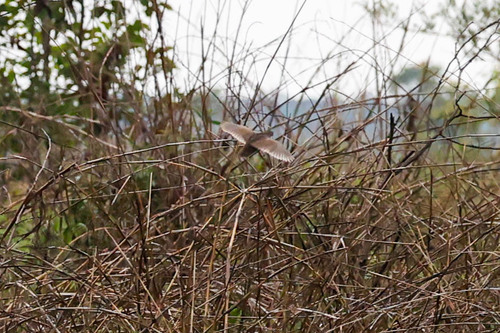 Blue Quail
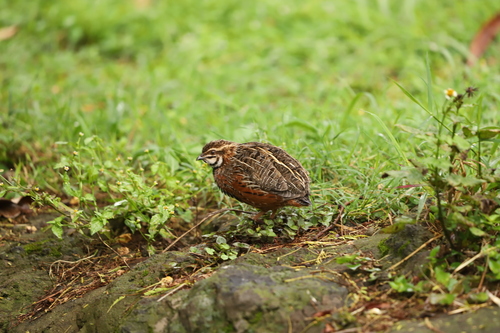 Harlequin Quail
In short
The most reliable field mark to separate Blue Quail from Harlequin Quail is the Blue Quail male's distinctive dark slaty-blue body with a white breast patch and rufous wing patches, versus the more cryptic, mottled appearance of Harlequin Quail. Female and juvenile Blue Quail are orange-buff on the head and neck and have buff underparts with black bars, while Harlequin Quail lacks these orange-buff tones. Blue Quail is noticeably smaller and lighter than Harlequin Quail, which is a key structural clue if seen side-by-side. Leg color (yellow in Blue Quail) and eye color (red in breeding male Blue Quail) can also help, especially at close range. Both species overlap in sub-Saharan Africa, so careful attention to these details is essential.
Identification tips
- Size: Blue Quail is much smaller and lighter (43–44 g) than Harlequin Quail (75 g). Use this when you have a good sense of scale or see both together.
- Male Plumage: Male Blue Quail is unmistakable with its dark slaty-blue body, white breast patch, and rufous wing patches. Harlequin Quail males are never blue and lack the white breast patch.
- Female/Immature Head and Neck: Female and juvenile Blue Quail have orange-buff on the forehead, sides of head and neck, and flanks. Harlequin Quail females and immatures do not show this color; they are more uniformly brown.
- Underparts Pattern: Blue Quail females and juveniles have buff underparts with distinct black bars. Harlequin Quail is more evenly mottled and lacks strong barring.
- Upperparts: Blue Quail females and juveniles have black and rufous mottling and streaking on the upperparts. Harlequin Quail is more cryptic and lacks the rufous tones.
- Leg Color: Blue Quail has yellow legs in all plumages. Harlequin Quail's leg color is not specified here, but yellow legs are a useful mark for Blue Quail.
- Eye Color: Breeding male Blue Quail has red eyes, while juveniles have brown eyes. Harlequin Quail eye color is not noted, but red eyes in a slaty-blue male are diagnostic for Blue Quail.
- Bill Color: Male Blue Quail has a black beak; female's is brownish. Harlequin Quail's bill color is not specified, but a black bill in a blue-bodied bird is a strong Blue Quail mark.
- Throat Pattern: Male Blue Quail has a black and white throat. Harlequin Quail does not show this pattern.
- Crown and Head Pattern: Female Blue Quail has a brown crown with black mottles, which can help if seen well. Harlequin Quail is more uniformly brown.
- Flight Feathers: Both have brown flight feathers; no strong contrast in wing pattern, so rely on body and head coloration in flight.
- Habitat: Not helpful for separation, as both overlap in sub-Saharan Africa.
- Behavior: Both species behave similarly, so do not use behavior for separation.
- Voice: No vocal differences are provided in the sources; do not rely on call or song for separation.
- Pitfall: Female and juvenile Blue Quail can be confused with Harlequin Quail due to their cryptic coloration, but look for the orange-buff tones and barred underparts to clinch the ID.
Size
Blue Quail is significantly smaller and lighter than Harlequin Quail. Blue Quail measures 14–16.5 cm in length and weighs around 43–44 g, while Harlequin Quail is much heavier at about 75 g [wikidata]. This size difference can be apparent in direct comparison or with experience, but may be subtle in the field unless both are seen together. Structure is otherwise similar, with no notes on major differences in bill or tail shape.
Plumage
-
Juvenile/Immature: Juvenile Blue Quail resembles the adult female, with orange-buff on the head and neck, buff underparts with black bars, and upperparts mottled with black and rufous. Harlequin Quail juveniles are not described in detail here, but lack the orange-buff tones and are generally more cryptically patterned overall.
-
Adult Male: Blue Quail males are strikingly dark slaty-blue with rufous patches on the wings, a white breast patch, a black and white throat, and a brown head. Their eyes become red in breeding season. Harlequin Quail males do not show this blue coloration or white breast patch, instead being more brown and cryptic.
-
Adult Female: Female Blue Quail have orange-buff on the forehead, sides of head and neck, and flanks, with a brown, black-mottled crown and buff underparts with black bars. Harlequin Quail females are more uniformly brown and lack the orange-buff and strong barring.
-
Flight Feathers: Blue Quail has brown flight feathers; no contrasting wing pattern is noted for either species, so in-flight separation relies on overall coloration and size.
Behaviour
Both species are ground-dwelling quails in the same family and region, so their behavior is likely very similar—skulking in grass, flushing with rapid, low flight when disturbed. No behavioral differences are noted in the sources.
Habitat
Both species occur in sub-Saharan Africa and can overlap in range. No habitat differences are detailed in the sources, so habitat is not a reliable separator.