

Black-throated Wattle-eye vs Chinspot Batis
Platysteira peltata versus Batis molitor
Play a quiz with Black-throated Wattle-eye and Chinspot Batis
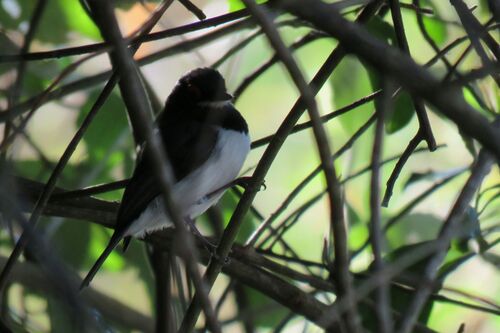 Black-throated Wattle-eye
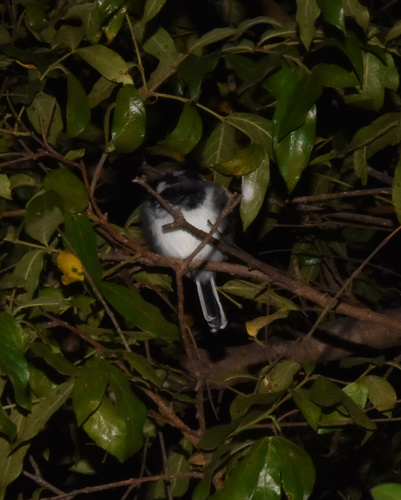 Chinspot Batis
In short
The most reliable field mark to separate Chinspot Batis from Black-throated Wattle-eye is the presence of a bold black (male) or chestnut (female) breast band and a distinct black facial mask with a white eyestripe in Chinspot Batis, versus the more uniform black throat and lack of a strong facial mask in Black-throated Wattle-eye. Chinspot Batis also shows a prominent white wing stripe and a white throat, often exposed in display, while Black-throated Wattle-eye lacks these contrasting features. Juvenile Chinspot Batis resemble females but have a tawny breast band and throat spot, which is not matched by Black-throated Wattle-eye at any age. Both species are small, active insectivores in southern and eastern Africa, but Chinspot Batis is more likely to be seen in dry woodlands and is usually more conspicuous due to its territorial displays and vocalizations.
Identification tips
- Breast band: Chinspot Batis males have a bold black breast band; females and juveniles have a chestnut or tawny band and throat spot. Black-throated Wattle-eye lacks any breast band at all ages.
- Facial pattern: Chinspot Batis shows a strong black mask with a short white eyestripe and grey cap. Black-throated Wattle-eye lacks this mask and appears more uniformly dark-throated.
- White wing stripe: Chinspot Batis of all ages has a prominent white wing stripe, visible both perched and in flight. Black-throated Wattle-eye lacks this feature and looks plainer-winged.
- White throat: Chinspot Batis has a conspicuous white throat, often highlighted in display. Black-throated Wattle-eye has a black throat and does not show this contrast.
- Juvenile/female confusion: Juvenile and female Chinspot Batis can be mistaken for Black-throated Wattle-eye, but always show some form of breast band and a paler throat spot, which Black-throated Wattle-eye never has.
- Body shape and size: Both are small, compact birds with short bills, so structure is not a reliable separator.
- Behavior: Chinspot Batis is highly active, flicking wings and tail, and often perches conspicuously. It may form small groups ('parliaments') in winter/spring, displaying with wing-fripping and calls. Black-throated Wattle-eye is less conspicuous and not known for such displays.
- Display posture: Territorial Chinspot Batis males perch with head up, exposing the white throat, and may perform short, jinking flights with fluffed rump. This behavior is not described for Black-throated Wattle-eye.
- Habitat: In southern Africa, Chinspot Batis is more likely in dry woodland and forest edge, while Black-throated Wattle-eye may occur in denser or moister woodland. Habitat alone is not diagnostic but can support identification.
- Vocalizations: Chinspot Batis gives a descending three-note whistle and other calls, often from a prominent perch. Black-throated Wattle-eye's voice is not described here, so hearing a distinctive batis call is a positive ID for Chinspot Batis.
- Foraging behavior: Both species forage for insects in trees, but Chinspot Batis is more likely to sally out or hawk prey in flycatcher style, sometimes with audible bill snaps.
- Group behavior: Only Chinspot Batis forms 'parliaments'—small, noisy groups in winter/spring. Black-throated Wattle-eye is not known for this.
- Sex differences: Only Chinspot Batis shows strong sexual dimorphism in the breast band color (black in males, chestnut in females). Black-throated Wattle-eye does not show this variation.
- Pitfalls: Beware confusing juvenile/female Chinspot Batis with Black-throated Wattle-eye; always check for any hint of a breast band or throat spot, and look for the white wing stripe and facial mask.
- When in doubt: Focus on the presence or absence of a breast band, the facial mask, and the white wing stripe—these are the most consistent field marks across all ages and sexes.
Size
Chinspot Batis is a small, stout bird measuring 12–13 cm in length and weighing about 8.7 grams [wikidata]. No direct mass data is available for Black-throated Wattle-eye, but both species are similarly small and compact, so size alone is not a reliable separator in the field. Both have short bills and similar overall proportions typical of Platysteiridae.
Plumage
Juvenile and female Chinspot Batis are best separated from Black-throated Wattle-eye by the presence of a breast band (black in males, chestnut in females, tawny in juveniles) and a chestnut or tawny spot on the throat. Chinspot Batis of all ages have a black facial mask and a short white eyestripe, with a grey cap and prominent white wing stripe. The underparts are always white, with the breast band as the main separator. Black-throated Wattle-eye, by contrast, has a more uniform black throat and lacks the strong facial mask and wing stripe; its plumage is less contrasting overall. In flight or perched, the white wing stripe of Chinspot Batis is a key feature, while Black-throated Wattle-eye appears plainer. The white throat of Chinspot Batis is often shown off in display, especially when the bird adopts a head-up posture.
Behaviour
Chinspot Batis is highly active, frequently flicking its wings and tail, jerking its body, and cocking its head while foraging. It is usually solitary or in pairs, but may form small, noisy 'parliaments' in winter and early spring, where birds display with wing-fripping and vocalizations. Territorial males perch prominently and perform short, jinking flights above the canopy, often with fluffed rump and conspicuous white throat. Black-throated Wattle-eye's behavior is less described in the notes, but it is generally less conspicuous and not known for the same level of display or group behavior. Both species forage for insects in trees, but Chinspot Batis is more likely to be noticed due to its active movements and vocal displays.
Habitat
Chinspot Batis is common and widespread in southern African woodlands, from the Eastern Cape north to southern Kenya and Gabon, favoring dry, open woodland and forest edges. Black-throated Wattle-eye has a broader range across central and eastern Africa but is less specifically tied to dry woodland and may occur in a wider variety of wooded habitats. In southern Africa, Chinspot Batis is more likely in drier, open woodland, while Black-throated Wattle-eye may be found in denser or moister woodland and forest edges.
Voice
Chinspot Batis males give a distinctive descending three-note whistle from a prominent perch, often joined by the female in a duet. During high-intensity territorial displays, males add frog-like calls, whistling, and wing-fripping. The white throat is exposed during these calls. No vocalization details are provided for Black-throated Wattle-eye in the notes, so voice is only a positive separator for Chinspot Batis.
Black-throated Wattle-eye · Chinspot Batis · My Tricky Birds