

Motmot

Black Currawong vs Australian Raven

Strepera fuliginosa versus Corvus coronoides

Play a quiz with Black Currawong and Australian Raven
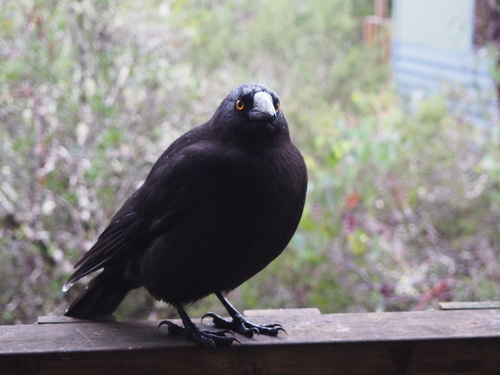
Black Currawong (Strepera fuliginosa) Black Currawong
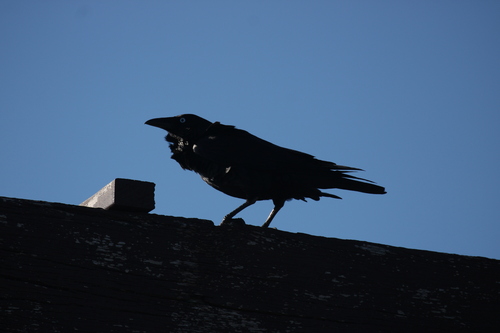
Australian Raven (Corvus coronoides) Australian Raven

Media

Loading…

In short

The most reliable way to separate Black Currawong from Australian Raven is the presence of bold white patches on the wings and tail of the currawong, visible in all ages and especially striking in flight; the raven is entirely black without any white in the wings or tail. Eye color is also diagnostic at all ages: Black Currawong has bright yellow irises, while adult Australian Ravens have white irises (immatures have darker eyes). Structure differs: currawongs have a heavier bill and a slightly shorter, stockier look, while ravens are bulkier overall and have a more wedge-shaped tail. Both are large, black, crow-like birds, but the currawong is endemic to Tasmania and nearby islands, whereas the raven is widespread on mainland Australia.

Identification tips

  1. White wing and tail patches (all ages, all seasons): Black Currawong always shows white at the tips of the wings and tail, forming a clear white trailing edge in flight and visible white spots when perched. Australian Raven is entirely black in these areas.
  2. Eye color (all ages, but especially adults): Black Currawong has bright yellow irises at all ages. Adult Australian Ravens have white irises, but immatures have dark or hazel eyes, so beware of young ravens.
  3. Bill shape and size: Currawong has a heavy, deep bill with a slight hook, but it is proportionally shorter than the raven's very long, heavy, and slightly hooked bill. The raven's bill is longer than its head.
  4. Gloss and feather texture: Australian Raven adults have a glossy, blue-purple or greenish sheen on the upperparts, especially in good light. Black Currawong is matte black, sometimes fading to dark brown with wear, and lacks the strong gloss.
  5. Throat hackles (adults): When calling, adult Australian Ravens show long, pointed throat hackles, giving a bearded look. Currawongs do not have this feature.
  6. Juvenile plumage: Young currawongs are browner with a yellow gape, but still show white in the wings/tail. Juvenile ravens are softer, browner, lack hackles, and may have a pinkish gape, but are all-black in the wings and tail.
  7. Flight pattern: Black Currawong has an undulating, bounding flight with prominent white flashes in the wings. Raven's flight is steadier, with broad wings and a wedge-shaped tail.
  8. Tail shape: Raven has a rounded to wedge-shaped tail, often obvious in flight. Currawong's tail is slightly shorter and less wedge-shaped.
  9. Legs and feet: Both have strong black legs, but the raven's are especially robust and the tibia is fully feathered.
  10. Habitat and range: If you are in Tasmania or the Bass Strait islands, a large black bird with white in the wings is a currawong. On mainland Australia, ravens are much more likely.
  11. Group behavior: Currawongs may gather in large flocks, especially outside breeding season, and often engage in playful or social behaviors. Ravens are more often solitary or in small groups.
  12. Vocalizations: Currawong's call is distinctive and not like the raven's drawn-out wails or croaks. Use voice as a supporting clue.
  13. Context with other species: If you see a bird associating with butcherbirds or magpies, currawong is more likely; ravens are more often with other corvids.
  14. Plumage wear: Both species can look browner when feathers are worn, but only currawong will ever show white in the wings/tail.
  15. Pitfalls: Beware of immature ravens with dark eyes and brownish plumage; check for white in the wings/tail and eye color to confirm currawong.

Size

Australian Raven is significantly heavier (average adult mass ~630 g) and has a longer wingspan (about 100 cm) compared to Black Currawong (average adult mass ~377 g, wingspan ~80 cm). Both species are similar in length (currawong ~50 cm, raven 46–53 cm), but the raven is bulkier and more robust overall. In the field, unless both are seen side by side, size alone is not always reliable due to overlap and posture differences.

Plumage

For all ages, Black Currawong shows clear white patches on the tips of the wings and tail feathers, forming a white trailing edge and a pale arc across the bases of the primaries, especially noticeable in flight. Immature currawongs are browner-tinged and have a yellow gape until age two, but still show the white wing/tail markings. Australian Raven is entirely black with no white in the wings or tail at any age. Adult ravens have glossy upperparts with a blue-purple or greenish sheen, and their throat hackles (long, pointed feathers) can be seen when calling. Juvenile ravens lack these hackles and have a softer, browner plumage with a pinkish gape and dark eyes. Eye color is a strong age cue: currawong eyes are always yellow, while raven eyes change from blue-grey (nestling), to brown (juvenile), to hazel, and finally to white (adult). The white iris of adult ravens is not as bright as the currawong's yellow and can be hard to see at distance.

Behaviour

Black Currawongs often cock their tails when landing and may be seen in playful or social behaviors, sometimes in large flocks. Their flight is undulating, matching their wingbeats, and the white wing patches flash conspicuously. Australian Ravens have a steadier, more direct flight with broad wings and a wedge-shaped tail. Ravens may appear more solitary or in small groups, and their posture is more upright and robust. Both species can be seen foraging on the ground, but currawongs are more likely to be seen manipulating objects or engaging in social play.

Habitat

Black Currawong is restricted to Tasmania and nearby Bass Strait islands, rarely if ever occurring on the Australian mainland. It is found in a variety of Tasmanian habitats, often in forested or mountainous areas. Australian Raven is widespread across mainland Australia and is absent from Tasmania. It occupies a wide range of habitats, including open woodlands, urban areas, and farmland. Thus, location is a strong clue: a large black bird with white in the wings on Tasmania is almost certainly a Black Currawong.

Voice

Black Currawong has a distinctive call, quite different from the raven's. The currawong's voice is not described in detail here, but it is noted as unlike the raven's. Australian Raven is famous for its drawn-out, wailing calls and can also produce a variety of harsh croaks and screams. Voice can be helpful, but is less reliable than plumage and structure for quick field separation.

Submit a better description

Use the same sections as the comparison. Your text is published immediately.

The most reliable way to separate Black Currawong from Australian Raven is the presence of bold white patches on the wings and tail of the currawong, visible in all ages and especially striking in flight; the raven is entirely black without any white in the wings or tail. Eye color is also diagnostic at all ages: Black Currawong has bright yellow irises, while adult Australian Ravens have white irises (immatures have darker eyes). Structure differs: currawongs have a heavier bill and a slightly shorter, stockier look, while ravens are bulkier overall and have a more wedge-shaped tail. Both are large, black, crow-like birds, but the currawong is endemic to Tasmania and nearby islands, whereas the raven is widespread on mainland Australia.

  1. White wing and tail patches (all ages, all seasons): Black Currawong always shows white at the tips of the wings and tail, forming a clear white trailing edge in flight and visible white spots when perched. Australian Raven is entirely black in these areas.
  2. Eye color (all ages, but especially adults): Black Currawong has bright yellow irises at all ages. Adult Australian Ravens have white irises, but immatures have dark or hazel eyes, so beware of young ravens.
  3. Bill shape and size: Currawong has a heavy, deep bill with a slight hook, but it is proportionally shorter than the raven's very long, heavy, and slightly hooked bill. The raven's bill is longer than its head.
  4. Gloss and feather texture: Australian Raven adults have a glossy, blue-purple or greenish sheen on the upperparts, especially in good light. Black Currawong is matte black, sometimes fading to dark brown with wear, and lacks the strong gloss.
  5. Throat hackles (adults): When calling, adult Australian Ravens show long, pointed throat hackles, giving a bearded look. Currawongs do not have this feature.
  6. Juvenile plumage: Young currawongs are browner with a yellow gape, but still show white in the wings/tail. Juvenile ravens are softer, browner, lack hackles, and may have a pinkish gape, but are all-black in the wings and tail.
  7. Flight pattern: Black Currawong has an undulating, bounding flight with prominent white flashes in the wings. Raven's flight is steadier, with broad wings and a wedge-shaped tail.
  8. Tail shape: Raven has a rounded to wedge-shaped tail, often obvious in flight. Currawong's tail is slightly shorter and less wedge-shaped.
  9. Legs and feet: Both have strong black legs, but the raven's are especially robust and the tibia is fully feathered.
  10. Habitat and range: If you are in Tasmania or the Bass Strait islands, a large black bird with white in the wings is a currawong. On mainland Australia, ravens are much more likely.
  11. Group behavior: Currawongs may gather in large flocks, especially outside breeding season, and often engage in playful or social behaviors. Ravens are more often solitary or in small groups.
  12. Vocalizations: Currawong's call is distinctive and not like the raven's drawn-out wails or croaks. Use voice as a supporting clue.
  13. Context with other species: If you see a bird associating with butcherbirds or magpies, currawong is more likely; ravens are more often with other corvids.
  14. Plumage wear: Both species can look browner when feathers are worn, but only currawong will ever show white in the wings/tail.
  15. Pitfalls: Beware of immature ravens with dark eyes and brownish plumage; check for white in the wings/tail and eye color to confirm currawong.

Australian Raven is significantly heavier (average adult mass ~630 g) and has a longer wingspan (about 100 cm) compared to Black Currawong (average adult mass ~377 g, wingspan ~80 cm). Both species are similar in length (currawong ~50 cm, raven 46–53 cm), but the raven is bulkier and more robust overall. In the field, unless both are seen side by side, size alone is not always reliable due to overlap and posture differences.

For all ages, Black Currawong shows clear white patches on the tips of the wings and tail feathers, forming a white trailing edge and a pale arc across the bases of the primaries, especially noticeable in flight. Immature currawongs are browner-tinged and have a yellow gape until age two, but still show the white wing/tail markings. Australian Raven is entirely black with no white in the wings or tail at any age. Adult ravens have glossy upperparts with a blue-purple or greenish sheen, and their throat hackles (long, pointed feathers) can be seen when calling. Juvenile ravens lack these hackles and have a softer, browner plumage with a pinkish gape and dark eyes. Eye color is a strong age cue: currawong eyes are always yellow, while raven eyes change from blue-grey (nestling), to brown (juvenile), to hazel, and finally to white (adult). The white iris of adult ravens is not as bright as the currawong's yellow and can be hard to see at distance.

Black Currawongs often cock their tails when landing and may be seen in playful or social behaviors, sometimes in large flocks. Their flight is undulating, matching their wingbeats, and the white wing patches flash conspicuously. Australian Ravens have a steadier, more direct flight with broad wings and a wedge-shaped tail. Ravens may appear more solitary or in small groups, and their posture is more upright and robust. Both species can be seen foraging on the ground, but currawongs are more likely to be seen manipulating objects or engaging in social play.

Black Currawong is restricted to Tasmania and nearby Bass Strait islands, rarely if ever occurring on the Australian mainland. It is found in a variety of Tasmanian habitats, often in forested or mountainous areas. Australian Raven is widespread across mainland Australia and is absent from Tasmania. It occupies a wide range of habitats, including open woodlands, urban areas, and farmland. Thus, location is a strong clue: a large black bird with white in the wings on Tasmania is almost certainly a Black Currawong.

Black Currawong has a distinctive call, quite different from the raven's. The currawong's voice is not described in detail here, but it is noted as unlike the raven's. Australian Raven is famous for its drawn-out, wailing calls and can also produce a variety of harsh croaks and screams. Voice can be helpful, but is less reliable than plumage and structure for quick field separation.

Discard your changes?

You have unsaved edits. If you leave now, those changes will be lost.

Black Currawong · Australian Raven · My Tricky Birds