

Motmot

Banded Bay Cuckoo vs Lesser Cuckoo

Cacomantis sonneratii versus Cuculus poliocephalus

Play a quiz with Banded Bay Cuckoo and Lesser Cuckoo
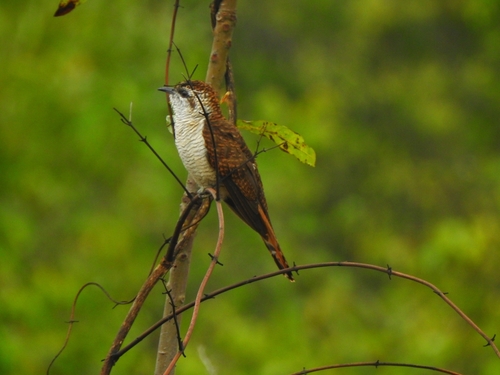
Banded Bay Cuckoo (Cacomantis sonneratii) Banded Bay Cuckoo
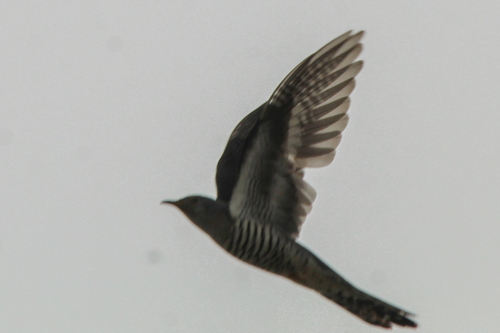
Lesser Cuckoo (Cuculus poliocephalus) Lesser Cuckoo

Media

Loading…

In short

The most reliable field mark to separate Banded Bay Cuckoo from Lesser Cuckoo is the bold white supercilium (eyebrow) and strongly barred rufous upperparts of the Banded Bay Cuckoo, which contrast with the much plainer, less rufous, and more uniformly grayish appearance of the Lesser Cuckoo. Juvenile Banded Bay Cuckoos also show white feather fringes and a pale lower mandible, while Lesser Cuckoo juveniles lack these features. In flight or perched, the Banded Bay Cuckoo’s tail is distinctly barred with a subterminal black band and white tips, unlike the Lesser Cuckoo’s more uniform tail. Structure also helps: Banded Bay Cuckoo has a longer, slightly decurved bill and a generally more compact, short-tailed look. Calls are very different, with Banded Bay Cuckoo giving a high-pitched, four-note whistle, while Lesser Cuckoo’s song is a classic, repeated 'cuckoo' phrase.

Identification tips

  1. White supercilium (eyebrow): Banded Bay Cuckoo always shows a bold white eyebrow above a dark eye-line; Lesser Cuckoo lacks this, having a plain face. This is visible on perched birds of all ages.
  2. Rufous and barred upperparts: Adult Banded Bay Cuckoo is bright rufous or bay above with broad dark barring across the head and back; Lesser Cuckoo is much plainer and grayer or brownish above, with little or no barring.
  3. Tail pattern: Banded Bay Cuckoo has a graduated tail with a dark brown center, a subterminal black band, and white tips to the feathers. Lesser Cuckoo’s tail is more uniform, lacking bold barring and white tips. This is visible in both perched and flying birds.
  4. Juvenile marks: Juvenile Banded Bay Cuckoo shows white fringes to the upper body feathers and a pale lower mandible, which are absent in Lesser Cuckoo juveniles. Look for these on young birds in late summer or early autumn.
  5. Bill shape: Banded Bay Cuckoo has a long, slightly decurved bill with a black upper mandible and greenish-grey base to the lower mandible (pale in juveniles). Lesser Cuckoo’s bill is shorter and straighter.
  6. Underparts: Banded Bay Cuckoo has whitish underparts with fine striations; Lesser Cuckoo is more uniform below, lacking fine streaking.
  7. Iris color: Banded Bay Cuckoo has a yellow iris; Lesser Cuckoo’s iris is usually dark, but this is hard to see in the field.
  8. Leg color: Banded Bay Cuckoo has grey tarsi; this is not a strong field mark but may help in close views.
  9. Overall structure: Banded Bay Cuckoo is compact and short-tailed compared to the slightly longer-winged, slimmer Lesser Cuckoo.
  10. Perching behavior: Banded Bay Cuckoo often sings from exposed branches, especially in the breeding season; Lesser Cuckoo is more secretive and less likely to perch openly.
  11. Habitat: If in well-wooded hill forest in the Indian subcontinent during the monsoon, Banded Bay Cuckoo is more likely; Lesser Cuckoo is more migratory and widespread, especially in East Asia and the Himalayas.
  12. Voice: Banded Bay Cuckoo’s four-note whistle is very different from the classic 'cuckoo' song of Lesser Cuckoo. If you hear the call, identification is straightforward.
  13. Seasonality: Banded Bay Cuckoo is often present in India during the monsoon, while Lesser Cuckoo is a summer visitor to the Himalayas and winters in Africa and Sri Lanka.
  14. Sexes: Both species are sexually monomorphic; do not rely on sex differences for identification.
  15. Pitfalls: Hepatic (rufous) morphs of other Cacomantis cuckoos can resemble Banded Bay Cuckoo, but Lesser Cuckoo does not show these hepatic morphs or strong barring. Always check for the white supercilium and tail pattern.

Size

Both species are similar in overall length (about 22 cm for Banded Bay Cuckoo), and are small to medium-sized cuckoos. Banded Bay Cuckoo is about the same size as other Cacomantis cuckoos, while Lesser Cuckoo is also small but may appear slightly slimmer and longer-winged. There is no strong size difference to use in the field; structure and plumage are more reliable.

Plumage

Juvenile Banded Bay Cuckoo is distinctive with white fringes to the upper body feathers and a pale lower mandible; these features are not present in Lesser Cuckoo juveniles. Adults of Banded Bay Cuckoo are bright rufous or bay above, with bold dark barring across the head and back, and a prominent white supercilium over a dark eye-line. The wing is darker, and the tail is graduated with a dark brown center, subterminal black band, and white tips. The underparts are whitish with fine striations. In contrast, Lesser Cuckoo adults are much plainer, with grayish or brownish upperparts, lacking the strong rufous and barring, and do not show a white supercilium. Their tail is less distinctly marked, lacking the bold barring and white tips. Sexes are alike in both species, but the Banded Bay Cuckoo’s patterning is always more striking.

Behaviour

Both are brood parasites and can be seen singly or singing from exposed perches. Banded Bay Cuckoo males often sing from prominent branches during the breeding season, and their foraging involves both gleaning and aerial sallies for insects. Lesser Cuckoo is also often heard rather than seen, but tends to be more secretive and less likely to perch out in the open for long periods. Flight style is not strongly contrasted in the notes, but Banded Bay Cuckoo may appear more compact and short-tailed.

Habitat

Banded Bay Cuckoo is found in well-wooded areas, mainly in lower hills and forests of the Indian subcontinent and Southeast Asia. It is most often seen in hill forests and is partial to dense cover. Lesser Cuckoo is native to East Asia and the Himalayas, wintering as far as East Africa and Sri Lanka, and is more migratory. It can be found in a variety of wooded habitats, but is less tied to hilly terrain than Banded Bay Cuckoo. Overlap is possible in Sri Lanka and parts of the Himalayas, but Banded Bay Cuckoo is more likely in hill forests, especially during the monsoon.

Voice

Banded Bay Cuckoo gives a distinctive, high-pitched four-note whistle, transcribed as 'wee-ti wee-tee' or 'smoke-yer-pepper', with each note falling in pitch. Lesser Cuckoo’s song is a classic, repeated 'cuckoo' phrase, very different in rhythm and tone. Voice is a highly reliable separator if heard well.

Submit a better description

Use the same sections as the comparison. Your text is published immediately.

The most reliable field mark to separate Banded Bay Cuckoo from Lesser Cuckoo is the bold white supercilium (eyebrow) and strongly barred rufous upperparts of the Banded Bay Cuckoo, which contrast with the much plainer, less rufous, and more uniformly grayish appearance of the Lesser Cuckoo. Juvenile Banded Bay Cuckoos also show white feather fringes and a pale lower mandible, while Lesser Cuckoo juveniles lack these features. In flight or perched, the Banded Bay Cuckoo’s tail is distinctly barred with a subterminal black band and white tips, unlike the Lesser Cuckoo’s more uniform tail. Structure also helps: Banded Bay Cuckoo has a longer, slightly decurved bill and a generally more compact, short-tailed look. Calls are very different, with Banded Bay Cuckoo giving a high-pitched, four-note whistle, while Lesser Cuckoo’s song is a classic, repeated 'cuckoo' phrase.

  1. White supercilium (eyebrow): Banded Bay Cuckoo always shows a bold white eyebrow above a dark eye-line; Lesser Cuckoo lacks this, having a plain face. This is visible on perched birds of all ages.
  2. Rufous and barred upperparts: Adult Banded Bay Cuckoo is bright rufous or bay above with broad dark barring across the head and back; Lesser Cuckoo is much plainer and grayer or brownish above, with little or no barring.
  3. Tail pattern: Banded Bay Cuckoo has a graduated tail with a dark brown center, a subterminal black band, and white tips to the feathers. Lesser Cuckoo’s tail is more uniform, lacking bold barring and white tips. This is visible in both perched and flying birds.
  4. Juvenile marks: Juvenile Banded Bay Cuckoo shows white fringes to the upper body feathers and a pale lower mandible, which are absent in Lesser Cuckoo juveniles. Look for these on young birds in late summer or early autumn.
  5. Bill shape: Banded Bay Cuckoo has a long, slightly decurved bill with a black upper mandible and greenish-grey base to the lower mandible (pale in juveniles). Lesser Cuckoo’s bill is shorter and straighter.
  6. Underparts: Banded Bay Cuckoo has whitish underparts with fine striations; Lesser Cuckoo is more uniform below, lacking fine streaking.
  7. Iris color: Banded Bay Cuckoo has a yellow iris; Lesser Cuckoo’s iris is usually dark, but this is hard to see in the field.
  8. Leg color: Banded Bay Cuckoo has grey tarsi; this is not a strong field mark but may help in close views.
  9. Overall structure: Banded Bay Cuckoo is compact and short-tailed compared to the slightly longer-winged, slimmer Lesser Cuckoo.
  10. Perching behavior: Banded Bay Cuckoo often sings from exposed branches, especially in the breeding season; Lesser Cuckoo is more secretive and less likely to perch openly.
  11. Habitat: If in well-wooded hill forest in the Indian subcontinent during the monsoon, Banded Bay Cuckoo is more likely; Lesser Cuckoo is more migratory and widespread, especially in East Asia and the Himalayas.
  12. Voice: Banded Bay Cuckoo’s four-note whistle is very different from the classic 'cuckoo' song of Lesser Cuckoo. If you hear the call, identification is straightforward.
  13. Seasonality: Banded Bay Cuckoo is often present in India during the monsoon, while Lesser Cuckoo is a summer visitor to the Himalayas and winters in Africa and Sri Lanka.
  14. Sexes: Both species are sexually monomorphic; do not rely on sex differences for identification.
  15. Pitfalls: Hepatic (rufous) morphs of other Cacomantis cuckoos can resemble Banded Bay Cuckoo, but Lesser Cuckoo does not show these hepatic morphs or strong barring. Always check for the white supercilium and tail pattern.

Both species are similar in overall length (about 22 cm for Banded Bay Cuckoo), and are small to medium-sized cuckoos. Banded Bay Cuckoo is about the same size as other Cacomantis cuckoos, while Lesser Cuckoo is also small but may appear slightly slimmer and longer-winged. There is no strong size difference to use in the field; structure and plumage are more reliable.

Juvenile Banded Bay Cuckoo is distinctive with white fringes to the upper body feathers and a pale lower mandible; these features are not present in Lesser Cuckoo juveniles. Adults of Banded Bay Cuckoo are bright rufous or bay above, with bold dark barring across the head and back, and a prominent white supercilium over a dark eye-line. The wing is darker, and the tail is graduated with a dark brown center, subterminal black band, and white tips. The underparts are whitish with fine striations. In contrast, Lesser Cuckoo adults are much plainer, with grayish or brownish upperparts, lacking the strong rufous and barring, and do not show a white supercilium. Their tail is less distinctly marked, lacking the bold barring and white tips. Sexes are alike in both species, but the Banded Bay Cuckoo’s patterning is always more striking.

Both are brood parasites and can be seen singly or singing from exposed perches. Banded Bay Cuckoo males often sing from prominent branches during the breeding season, and their foraging involves both gleaning and aerial sallies for insects. Lesser Cuckoo is also often heard rather than seen, but tends to be more secretive and less likely to perch out in the open for long periods. Flight style is not strongly contrasted in the notes, but Banded Bay Cuckoo may appear more compact and short-tailed.

Banded Bay Cuckoo is found in well-wooded areas, mainly in lower hills and forests of the Indian subcontinent and Southeast Asia. It is most often seen in hill forests and is partial to dense cover. Lesser Cuckoo is native to East Asia and the Himalayas, wintering as far as East Africa and Sri Lanka, and is more migratory. It can be found in a variety of wooded habitats, but is less tied to hilly terrain than Banded Bay Cuckoo. Overlap is possible in Sri Lanka and parts of the Himalayas, but Banded Bay Cuckoo is more likely in hill forests, especially during the monsoon.

Banded Bay Cuckoo gives a distinctive, high-pitched four-note whistle, transcribed as 'wee-ti wee-tee' or 'smoke-yer-pepper', with each note falling in pitch. Lesser Cuckoo’s song is a classic, repeated 'cuckoo' phrase, very different in rhythm and tone. Voice is a highly reliable separator if heard well.

Discard your changes?

You have unsaved edits. If you leave now, those changes will be lost.

Banded Bay Cuckoo · Lesser Cuckoo · My Tricky Birds